Tag: business

  • Will the prolonged Corona Virus problem in China destabilise business in India and around the world?

    Will the prolonged Corona Virus problem in China destabilise business in India and around the world?

    The COVID-19 is an illness that is caused by a member of the coronavirus family that has been wrecking across the globe for quite some time now. This article serves to show that the devastation that Coronavirus has wrought has not just harmed China but the global economy as well. A pandemic has almost always had far-reaching consequences and throughout history, whenever there has been the slightest hint of a global pandemic, business, health, economy, and public life have suffered gravely.

    Effect of Corona Virus globally

    The Airline Industry is perhaps the most hit because of the virus, with a gross loss of $29 Bn in losses for the entire aviation industry and it is only expected to exacerbate further in the coming days. Most of these losses are concentrated in the Asia-Pacific region, which is currently facing a 13% decline in demand. Qantas airline said that it could expect losses between $66 Million to $99 Million because of the virus outbreak. Many prominent airlines have cancelled their flights to the Wuhan district or even China in general.

    The Electronics and Mobile industry is sluggish, owing to China being an important manufacturer of mobile and electronics components. Factories are operating on less than half the workers due to the lockdown. Foxconn, a key supplier for Apple, has announced that its revenue will take a hit.

    The Oil and Gas and Automobile Industries are very closely related to each other and affecting one industry will affect the other. The Chinese Passenger Car association stated that dealership sales had dropped by a massive 92%; this has affected the U.S. oil industry with per barrel cost dropping to a 3.7% low. 

    The Banking Industry is worse hit, as one would expect, with China’s banks lowering borrowing costs to encourage people and companies to spend to kickstart the economy. 

    As logic would dictate, the travel and tourism industry has been devastated, China was on its way to becoming a global tourist destination, and with globalisation making the world interconnected, the aviation, stock market, tourism, electronics, banking, hospitality industries have been affected very severely.

    Effect of Coronavirus in the U.S.

    A historic week for the stock market that ended with a big question: What are the steps that the government and the Federal Reserve do about the coronavirus outbreak that threatens to decimate the longest-running bull market on record? The infectious disease, COVID-19, which reportedly originated in Wuhan, China, late last year, reached viral proportions this week on Wall Street — and literally throughout the world. Approximately 550,000 plus cases have emerged, and almost 25,500 people have died, with several countries reporting their incidences of COVID-19, including Brazil, Georgia, New Zealand and Norway.

    The structural damage to Wall Street’s bullish patina is undeniable, as the Dow Jones Industrial Average DJIA, -1.39%, the S&P 500 SPX, -0.82% and the Nasdaq Composite COMP, +0.01% booked their worst weekly declines since the 2008 financial crisis. All three stock gauges fell into correction territory with drops of at least 10% from recent peaks. All totalled, global equity markets had wiped out $7 trillion from the levels as of Feb. 19, when the S&P 500 notched its record, and the U.S. market alone has lost $4.3 trillion.

    Effect of Corona Virus on India

    As the stock markets all over the world are becoming more and more volatile, investors have started looking for other places where their money can reside safely. Investors have begun parking their money in stock markets of countries that are relatively well guarded against the pandemic, Gold as well as and Government Bonds of countries. Indian treasuries are expected to gain due to this volatility, as treasury bonds of countries are considered to be very safe instruments, thanks to the ability of countries to print money as and when required. So, India, with its ever-widening fiscal deficit, could be seeing an uptick in investments on treasuries, as investors all over the world have started hunting for safe-havens. This, in turn, would result in an increased probability of meeting the fiscal target for this financial year.

    In early February, India was ranked 17th in the list of countries that are most at risk of coronavirus infection. In case the virus starts wreaking havoc in the country, it would not just result in increased Government spending to curb the outbreak, but would also result in an outflow of foreign investments, as panicking investors would inevitably start looking for other safe-havens.

    China exports its steel, but with demand having been impacted more than supply, the accumulating inventory is putting pressure on domestic prices which further affects prices outside China. Earnings of TATA Steel and SAIL have been impacted more due to the fact they are more price sensitive.

    A lower refining margin for petrochemical products affects organisations such as BPCL, IOCL, RIL and HPCL as they are downstream in nature while upstream companies like Indian Oil and ONGC will be affected due to reduction in demand.

    Impact on the Indian financial market

    Indian equities extended declines for the sixth straight session, with the S&P BSE Sensex falling as much as 3.2 per cent and the NSE Nifty 50 tumbling up to 3.31 per cent. Nifty 50’s Relative Strength Index, according to analysts, has fallen below 30 into the oversold zone. The Indian indices mirrored the global peers that are set for their worst week since the crisis of 2008, down more than 10 per cent from this month’s peak, as the Coronavirus spreads from China to across the world. Heavyweights TCS, ICICI RIL and HDFC slumped between 4% and 5%. Among other major losers SBI, Bajaj Finance, Infosys, M&M, Tech Mahindra and Tata Steel fell between 6% and 8%.

    Source

    Macroeconomic Implications

    1. Both supply and demand to shift towards left, resulting in price being constant but output decreasing, thus resulting in declining GDP
    2. In the case of healthcare, demand is increasing, and a lot of R&D has started, and new hospitals have sprung up. So, in this case, the price remains constant but output increases
    3. In case India sees an uptick in foreign investments, the A.D. curve would shift to the right, increasing prices as well as the overall output (GDP). However, if India also gets affected by the pandemic, it would result in the outpouring of foreign investments, resulting in the A.D. curve shifting towards the left, reducing prices as well as the GDP.
  • “Are you sure it isn’t photoshopped?” – The journey of Adobe

    “Are you sure it isn’t photoshopped?” – The journey of Adobe

    Adobe is one of those rare companies whose product (Photoshop) has become a verb. This Digital Dribble article aims to take a deep dive into Adobe’s history and understand what makes the company the behemoth that it is today. The reason we’re discussing Adobe is because of several factors- the primary being its improvement in ranks over the years and the fact that we wanted to choose a company that is not ranked in the top 200. This is because of the human tendency to only focus on the best of the best and ignore the underdogs.  Adobe has continuously impressed everyone with its growth and tenacity, and this article aims to analyze everything from the company’s strengths and weaknesses to the reasons for its success. 

    Currently, Adobe has an excess of 25,988 employees, its Net Income is US$ 4.82 billion, and its Revenue is US$ 15.785 billion with operating costs of US$ 9.983 billion.

    Source: Forbes Website

    History

    Adobe, like many other billion-dollar companies, had a humble beginning. It was founded in the garage of John Warnock, one of the founders. The company is named after Adobe Creek, which is a 23-kilometer-long stream originating in Santa Clara County, California, that flows behind Warnock’s home.

    Growth Drivers (in India and the World)

    One of the key drivers of growth for Adobe is the overall growth of digital marketing in India and around the world. Digital marketing is set to grow with improving disposable incomes and internet penetration in India as well as around the world. The need for digital tools is rapidly increasing and Adobe excels at making them. This will ensure that Adobe products are used continually, essentially making them perennial.

    Source
    Source

    Product Division

    Adobe has a wide variety of product lines that have enabled it to become the market leader it is today. Adobe’s website prudently allows classification by dividing its entire product category into four broad labels:

    A. Creativity and Design

    B. Marketing and Analytics

    C. PDF and E-Signatures

    D. Business Solutions

     These four are further sub-divided into several different segments, and the complete product segmentation is given below:

    A. Creativity and Design

    1. Design (Notable Products: Photoshop, Illustrator, InDesign, Aero, Adobe XD, Behance, Dimension, Dreamweaver, Dimension)
    2. Photography (Notable Products: Lightroom, Photoshop Elements, Lightroom Classic, Creative Cloud for Desktop and Mobile, Stock)
    3. Video and Audio (Notable Products: Premier Pro, Premier Rush, After Effects, Anywhere, Photoshop Camera)
    4. Web and UX (Notable Products: Animate, Comp, InCopy, Adobe Spark, Spark Page, Spark Post)

    B. Marketing and Analytics

    1. Advertising (Notable Products: Advertising Cloud, Experience Cloud, Media Optimizer and Dynamic Creative Optimization)
    2. Analytics (Notable Products: Analytics, Analytics Cloud, Audience Manager, Experience Cloud)
    3. Marketing (Notable Products: Campaign, Experience Manager, Primetime, Target)

    C. PDF and e-Signatures

    1. Documents (Notable Product: Document Cloud)
    2. E-Signatures (Notable Products: Acrobat Pro DC, Adobe Sign, Adobe Sign Mobile App, Fill and Sign)
    3. PDF (Notable Products: Adobe Scan, Acrobat Pro 2020)

    D. Business Solutions

    1. ColdFusion (Notable Products: ColdFusion on AWS, ColdFusion Standard (2018))
    2. E-Learning (Notable Product: Captivate)
    3. Enterprise (Notable Products: Creative Cloud for Enterprise, Document Cloud for Enterprise)
    4. Print Imaging (Notable Products: Design to Print, Adobe Embedded Print Engine, Adobe PDF Print Engine, Adobe PostScript)
    5. Technical Communication (Notable Products: Technical Communication (2019), XML Documentation for Adobe Experience Manager)
    Source

    Therefore, it is evident that Adobe has a huge stockpile of products that it uses to maintain its market dominance over its competitors. The four major areas that are mentioned above cover hundreds and thousands of businesses and individuals, and Adobe has successfully used that factor to market its products and successfully reap benefits from it.

    Mergers and Acquisitions

    Mergers and acquisitions are important for an organization from a growth perspective. They change the way the business operates strategically now as well as in the future. Adobe has, over the years, acquired all kinds of companies including those that were themselves considered giants. Some of Adobe’s notable acquisitions are listed below:

    Name of CompanyAcquired onAcquired for (in US $)
    MarketoSeptember 20184.75 billion
    MacromediaDecember 20153.573 billion
    OmnitureSeptember 20091.8 billion
    MagnetoMay 20181.68 billion
    FotoliaJanuary 2015.8 billion
    NeolaneJuly 2013.6 billion
    Frame TechnologyOctober 1995.57 billion
    • The quintessential and ubiquitous Adobe PDF that we see and use all around us has been made possible by several key acquisitions by Adobe over the years-
      • OCR Systems (1992)- The technology of this company made it possible to manipulate the documents that were scanned into PDFs.
      • Aldus Corp (1994)- This merger helped bring PDFs to desktops.
      • Accelio Corp. (2002)- This company’s server-based technology is implemented in Adobe LifeCycle Design.
      • Macromedia Inc. (2005)- Many of Adobe’s PDF features like mobile PDFs, media-rich PDFs, or online collaboration would not have been possible without this company
    • Adobe added Behance to its creative cloud community strengthening further its hold over the industry
    • By integrating Adobe Sign (EchoSign) into its ecosystem of products, Adobe ensured that one of the pain points- the inability to electronically sign PDFs was addressed.

    Marketing Strategy

    Adobe uses a strong content marketing strategy to bolster its position in the industry. The result has been nothing short of spectacular for Adobe. In 2018, it crossed several key landmarks, the most impressive of them being exceeding a market capitalization of $ 100 Bn. With its ‘always-on’ marketing, Adobe constantly reviews and analyses marketing data rather than spending crucial time building the perfect marketing plan. This allows the company to change whatever is needed while on the go, thereby making it much more agile. This policy has enabled the company to craft strategic marketing campaigns, fine-tune these strategies, and adopt effective practices.

    Factors That Made Adobe Successful

    It becomes important to understand the reasons behind the success of Adobe as a company, and that can be best done by using a couple of tools that help in analyzing the company as a whole.

    Competitor Analysis of Adobe

    This section analyses the position of Adobe and where it stands along with its competitors. The problem with a company like Adobe (which is also its strength and competitive advantage) is the fact that no other competitor offers a diverse bouquet of products that are so uniquely related in a common ecosystem as Adobe. Hence, to do a competitor analysis, different companies that belong to different sectors and segments need to be brought together.

    SWOT Analysis of Adobe

    Strengths

    • One of Adobe’s key strengths was its ability to transition from a perpetual licensing system to a subscription-based licensing system. This led to an increase in their ARR (Annualized Recurring Revenue) which will help provide the company with reliable cash flows in the future.
    • Adobe products are used and preferred all over the world, thereby adding to its brand equity. Its strong global presence can be rivaled only by a few of its competitors. Few of Adobe’s competitors have been able to consolidate a vast array of products under its portfolio as effectively as Adobe has.
    • Adobe distributes its offerings through a network of value-added resellers (VARs), original equipment manufacturers. (OEMs), a detailed network of distributors and independent software vendors (ISVs)
    • Adobe has an almost pure monopoly when it comes to designing, as Photoshop overshadows its competitors by miles. Similarly, Adobe caters to the film, web development, and the video game industry, to name a few.
    • The Adobe brand has been growing over the years and is now perceived to be a trusted one amongst designers and other users. It has steadily captured the market share by defeating all of its rivals.

    Weaknesses

    • The primary weakness of Adobe is its high price which deters many potential customers Adobe products are sold more in developed markets and less in emerging ones.
    • Poor customer service is also one of the key weaknesses of Adobe.
    • Adobe’s poor presence in the video animation industry, especially in 3D modeling is also a potential weakness as it is an empty void that competitors can now fill.

    Opportunities

    • With the increase and growth in industries like digital marketing, PR, branding, and a host of other industries, Adobe still has plenty of room to grow and expand globally.
    • The increasing demand for cloud computing coupled with the subscription model can lead to increased profitability for the company. Adobe Creative Cloud desktop apps are a set of Adobe products that give the user control to a set of applications that have optional cloud services as well. Adobe needs to expand on this cue.
    • Adobe and Microsoft have entered into a strategic alliance wherein each company will help the other in transforming businesses globally by leveraging the latest developments. Adobe has chosen Microsoft’s cloud platform Azure as its preferred choice for its cloud offerings- Adobe Document, Creative, and Marketing clouds.
    Source

    Threats-

    • The major threat for Adobe is the threat of piracy due to the thriving torrent sites and peer-to-peer networks. This severely harms the company as it essentially is robbed of its revenue. This mostly happens in emerging markets like Russia, Africa, Pakistan, and India.
    • There are several substitutes for Adobe products that are either free or cost minimal to purchase. Some of the best Photoshop alternatives are- Luminar, GIMP, Pixlr, and Paint. 
    Source
    •  Security threats are another set of worries that Adobe has to carry around with it all the time. Adobe has a lot of information about its customers, which is confidential. Hackers often try to attack Adobe servers, and they also are continuously developing malware and viruses for this very purpose. This also harms the brand image that Adobe has so painstakingly created over the years.

    Reasons for Adobe’s Success in India

    Adobe has gained a lot of traction in India, and in addition to the growth drivers mentioned above at the start of the article, a few key pointers that need to be highlighted

    • Adobe earned a spot in the Top 10 Best Places to work in India in the year 2019 and came in at a respectable 7th.
    • In 2018, Shantanu Narayen, the CEO of Adobe India, won the Global Indian of the Year. Shantanu has been with Adobe for a long time and has helped it in its key projects like the transition to a cloud-based subscription model rather than one-time licensing software.
    • Adobe first came into the country in the year 1997 and as of 2017 has more than 5,200 employees across four campuses in the cities in the cities of Bengaluru and Noida.
    • The India business for Adobe is one of its fastest-growing in the Asia Pacific regions
    • The strong growth is spearheaded by growing industries such as education, e-learning, fintech, insurance and retail.

    Evergreen market

    The picture below proves that Adobe’s very business model and the products it has been dealing with have suffered little to no consequences because of the global pandemic. Being largely digital products, they can be facilitated over the internet and the need for digital marketing and associated activities is always on the rise thereby contributing to the company’s revenues even during a global pandemic.

    Want to read about how COVID-19 affected business strategies for other companies? Check out this Digital Dribble article.

    Source
  • Entrepreneurship in the Times of COVID-19

    Entrepreneurship in the Times of COVID-19

    “I knew that if I failed, I wouldn’t regret that, but I knew the one thing I might regret is not trying.”

    -Jeff Bezos, founder, and CEO of Amazon

    Entrepreneurship is tough and not everyone’s cup of tea. It means fighting continuously for an idea that someone believes in. This Digital Dribble article shows the various aspects of entrepreneurship during this global pandemic.

    We will begin by analyzing the current impact of COVID-19 on the world as a whole and India in particular. Then we will delve into the impact of COVID-19 on entrepreneurship. Finally, we will look at a few examples of entrepreneurs battling against the current and making their mark.

    The Impact of COVID-19

    Covid-19 has been disastrous for the world and although the death rate has steadily declined, it continues to wreak havoc even today. The deadly virus is now ubiquitous but not all countries have been hit equally hard. While there are supply chain issues that need to be addressed. vaccinations have already begun in several countries

    Despite its massive population, India has been able to control the virus much better than other countries. With mass vaccinations of target age groups already in progress, it is not long before India becomes completely free of the current nightmare.

    Impact of COVID-19 on Entrepreneurship

    COVID-19 has been pernicious for entrepreneurship, as is evident from the image below.  It shows the drop in the creation of firms/companies during March and April 2020, the inception of the pandemic, and a grim foreshadowing of the harshest months to come. Portugal’s 70% decline and Turkey’s almost 60% decline support the statement that COVID took a harsh toll on the economy.

    Fig 2.1 [Source- https://voxeu.org/article/challenges-and-opportunities-start-ups-time-covid-19]

    However, there is also a silver lining to be noted here. Many start-ups have emerged from crises. Uber, Airbnb, Groupon, and Pinterest were all formed post the global financial crisis. Companies that offer radical change and innovations in the fields of home delivery, telemedicine, ed-tech, and medicine delivery can become overnight stars in the age of the pandemic.

    The image below shows the amount of post-entry employment growth for digital and non-digital companies after a specific number of years. Digital companies have the highest post-entry employment growth which helps in job generation and changing the face of the economy.

    Fig 2.2 [Source- https://voxeu.org/article/challenges-and-opportunities-start-ups-time-covid-19]

    How has COVID-19 Changed the Entrepreneurship Landscape?

    In addition to disrupting entire industries, COVID-19 has turned the entrepreneurship landscape on its head. It has forced entrepreneurs to adapt to survive and become creative with the limited number of options in their hands. The transitional effect of COVID-19 is here to stay and entrepreneurs would be prudent to embrace the disruption instead of allocating resources to combat it.

    Some of the changes that have now become part and parcel of an entrepreneur’s life are enumerated below:

    The Increased Usage of Webinars

    With lockdowns and social distancing in effect for more than two years now, webinars have become the norm of the day. They are being actively used by entrepreneurs to discuss ideas, achieve thought leadership, get funding and find leads for their companies. These webinars offer a slew of advantages: 

    • Webinars have now taken the place of traditional conferences at a fraction of the cost of their counterparts
    • Webinars are soon to become a mainstream marketing strategy as they offer an excellent way to interact with customers and get them on board to buy the company’s new products/services.
    Fig 3.1 [Source- https://www.genglobal.org/bangladesh/webinar-future-startups-post-covid-19]
    Fig 3.2 [Source- https://inc42.com/videos/business-in-the-times-of-covid-19-webinar-by-women-entrepreneurship-platform-niti-aayog/]
    • Companies like Zoom, Microsoft Teams, Skype are facilitating the supply of catering to an increase in demand for video conferencing options. Zoom’s share price has more than tripled during the pandemic.

    Content=King!

    Research shows that COVID-19 has accelerated digital adoption by 2 to 3 years. As brands, entrepreneurs and organizations understand the importance of digital marketing and, more specifically social media marketing, the importance of content will become increasingly evident. Social media marketing has to be utilized effectively to reap benefits. For instance, being overtly promotional discourages potential customers from interacting with the brand. Content must add value to the customer’s life. 

    Fig 3.3 [Source- https://www.smartinsights.com/social-media-marketing/social-media-strategy/new-global-social-media-research/]

    Exemplary Entrepreneurship

    Entrepreneurship is one of the most challenging endeavours to take up during a pandemic. This section is the literal embodiment of the phrase, “when the going gets tough, the tough get going”.

    Combining Social Cause and Business

    This LinkedIn post is the perfect example of thinking out of the box and making decisions that benefit society. Kushal had an offer from one of the best colleges in the country (Indian School of Business) but instead chose to manufacture PPE kits to help frontline workers and essential personnel combat the pandemic. It is because of entrepreneurs like Kushal Agarwal that India which started as a country deficient in PPE kits, went to became its 2nd largest manufacturer during the span of the pandemic.

    Fig 4.1 [Source- https://www.linkedin.com/feed/update/urn:li:activity:6657850726628323328/]
    Fig 4.2 [Source- https://cutt.ly/CzmuPrk]

    What’s Cooking?

    Mumbai housewife Veena Manek’s life changed when she got a request to bake a birthday cake amid the ongoing lockdowns. This led to the inception of ‘Blissful Indulgence Mumbai’ which went from receiving 1 to 2 orders a week in the first month, to receiving 7 to 9 orders a day! This goes on to show that finding and exploiting someone’s niche area of interest can lead to successful businesses during times when even large corporations are struggling.

    Fig 4.3 [Source- https://www.facebook.com/blissfulindulgencemumbai/photos/a.129308825419283/252810606402437/]

    Women Power!

    GoParties was an entertainment tech start-up that focused on giving real-time updates about all things entertainment like parties, concerts, bands and artists in the user’s city. COVID-19 had hit the entertainment sector pretty hard and the founder Shivaarti Bajaj knew that the landscape post-COVID would be entirely different.

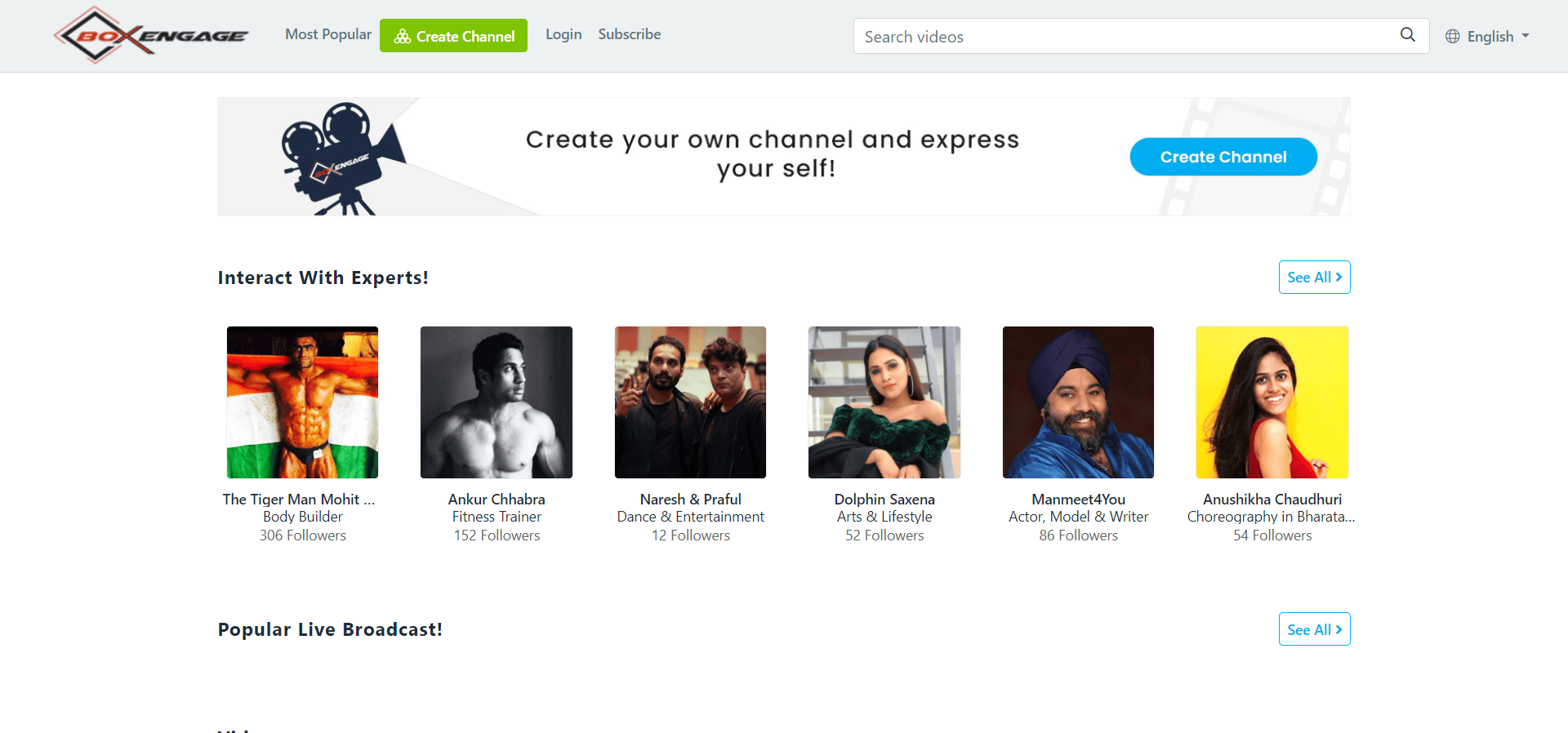
    GoParties pivoted to BoxEngage, an online video-sharing platform that is touted as the next Twitter. It became viral as the government banned 59 Chinese Apps throughout the Indian subcontinent. With more than a million users currently using the platform, it is seeing organic growth to the tune of 70% to 80% and there are plans to launch an app soon.

    An advertisement for BoxEngage on the GoParties Facebook page
    Advertising BoxEngage on GoParties Facebook Page
    Fig 4.4 [Source- https://www.facebook.com/goparties/]
    Fig 4.5 [Source- https://boxengage.com/home]

    Want to read more about how the pandemic affected businesses? You might enjoy this article.

    References

  • Business beyond Reputation: Equipping Sustainability

    Business beyond Reputation: Equipping Sustainability

    “Sustainability” is a term that we hear quite often these days; businesses are often heard using this word with much weight and for good measure. The dictionary defines “Sustainability” as “The ability to be maintained at a certain rate or level” or “Avoidance of the depletion of natural resources to maintain an ecological balance.” Sustainability is the way forward. As Macroeconomics teaches us, resources are scarce, and people’s wants are unlimited. Hence, in a world that is increasingly crowded by finished products, at the cost of depletion of the natural ones, it is only safe to say that Sustainability has a long way to go, and it is high time that sustainable practices are applied onto every facet of our lives. It is worthwhile to note that Sustainability by businesses need not necessarily cover only the grave issues that humankind as a whole face today, but it can be small, seemingly trivial issues as well.

    Sustainability through societal marketing

    Societal Marketing takes into consideration the long-term benefits and interests of the entire society, and Sustainability being one of the benefits of society, do come under Societal Marketing. By taking a people-centered approach, organizations can truly commit to the mantra of sustainability through Societal Marketing. Companies like Star Bucks, GE and the Body Shop has been increasingly using Social Responsibility to preserve the environment all the while sustainably growing its business.

    With increasing consumer awareness, companies and firms have to up their entire business processes to suit the changing needs of their consumers. With this in mind, Sustainability has been a hot topic for years now; it is only getting somewhat traction in the form of actual landmark events now. However, marketers must also call to action the common man (consumers) to support these businesses in their initiative, thereby increasing people engagement from the grassroot level.

    Examples of corporate sustainability

    a)     Unilever recently achieved a landmark 100 percent renewable energy target which means that all of its Warehouses, Data Centres, Research and Development (R&D) Centres, Distribution Offices are powered by one hundred percent renewable energy.

    b)     Pedigree’s Adopt a Homeless Dog initiative aims to find every dog with a loving owner.

    Source Pedigree’s dog adoption programme

    c)     GE publishes a sustainability report (Environmental, Social and Governance Results) that outlines its emission data and relevant discussions on the same can be found in the report as well.

    Link- https://www.ge.com/sustainability/sites/default/files/GE_ESG_KPIs_RY2017_r13_Aug2018.pdf

    d)     Nike adheres to its goal of fighting climate change and has an initiative called “Move to Zero” that aims at 100% renewable energy operated and owned facilities latest by 2025. Another unique prospect about Nike is the fact that it uses more than a billion plastic bottles to make fabric and shoes out of.

    Source- https://news.nike.com/news/nike-move-to-zero-climate-change-initiative

    How technology supports sustainability

    Sustainability analytics is the new hotshot in town-by collecting a multitude of data points from a myriad number of sources including greenhouse gas emissions, resource and energy usage, the performance of the supply chain, companies can draw out relevant statistics with the help of big data analytics. This enables the companies to clearly find out trends and gives them a clear picture of where to start acting. Metrics is extremely important in today’s data-driven economy and sustainability is just another addition to the growing ecosystem.

    With the tools at their disposal companies can conduct real time analysis of sustainability performance and set goals accordingly.

    The business benefits of sustainable products

    Gone are the days when companies used sustainability only to boost its corporate brand image and place itself in the mind of its consumers in a positive manner. Research has backed up the fact that companies using sustainability practices experience better functioning and better profit margins.

    Continuing with one of the previous examples, Unilever has stated that its Sustainable line of products has witnessed a staggering 69% more growth than its other product lines.

    Source Unilever’s 2019 release on Sustainable Living Brands

    ·        Sustainability practices enables a company to stay ahead of its competitors. The business can also impress its ever-knowledgeable consumers by showing them hard evidence through data points- this is how important data combined with sustainability is. And with social media at its disposal, companies can not only impress its global audience but also attract prospective investors and venture capital firms willing to invest.

    ·        Sustainability has long hinged on a few common topics till date- global warming, depleting natural resources, ecological imbalance- environmental sustainability to be precise. But now it has been observed that sustainability can be applied to other areas of business processes as well, such as production levels, number of employees, the volume of sales, the productivity of a particular facility to name a few.

    Putting sustainability into day-to-day operations

    Employees in the organization have to be trained in the new processes of sustainability management, thereby adding value to both the employee (in terms of learning and career growth) as well as the organization. Also, with changing sustainability needs, companies need to continuously polish the methods and tools available at their disposal, thereby keeping on (or sometimes ahead) with the times.

    Exhibit- 1 below shows the practical advantages that a company gets when it incorporates sustainability in its day to day practices.

    EXHIBIT-1

    McKinsey survey exhibit on corporate sustainability actions. Cutting energy use and waste ranked ahead of reputation management.
    View Exhibit 1 in the original McKinsey survey

    Source- https://www.mckinsey.com/business-functions/sustainability/our-insights/the-business-of-sustainability-mckinsey-global-survey-results

    EXHIBIT- 2

    McKinsey survey exhibit on integrating sustainability into business functions. Mission and values ranked highest, while supply chains and budgets were near the bottom.
    View Exhibit 2 in the original McKinsey survey

    Source- https://www.mckinsey.com/business-functions/sustainability/our-insights/the-business-of-sustainability-mckinsey-global-survey-results

    The exhibit above shows that although companies have integrated the basic flavors of sustainability into their mission and values, integrations into the supply chain, budgeting, marketing has been low.

    EXHIBIT- 3

    McKinsey survey exhibit comparing attention to sustainability in 2010 and 2011. CEO priority and formal sustainability programs changed little.
    View Exhibit 3 in the original McKinsey survey

    Source- https://www.mckinsey.com/business-functions/sustainability/our-insights/the-business-of-sustainability-mckinsey-global-survey-results

    However, it is disheartening to see that the upper management in businesses doesn’t pay much importance to sustainability management, as is evident from Exhibit- 3. A change in perception is necessary where the importance of sustainability is understood by all stakeholders in the organization- from its employees to its middle and upper management to its board of directors. Only then can much more effective practices be put into play which will further the help the company streamline its processes and increase its productivity and revenue.

    To conclude, although sustainability has been incorporated into the business ecosystem a lot better than before, a massive chunk of it is still left to be effectively organized, especially the technology part. The world will be a much better place the day every last company decides to integrate sustainability into its core values and functioning. After all, it is a win-win situation for everybody.


    References and sources-

    https://www.theguardian.com/sustainable-business/blog/social-marketing-behaviour-change

    Click to access dttl-analytics-us-ba-sustainability3minguide.pdf

    https://www.unilever.com/news/press-releases/2019/unilevers-purpose-led-brands-outperform.html

    https://news.nike.com/news/nike-move-to-zero-climate-change-initiative

    P.S- This article was my submission for a Business Article Writing Competition.

    Read next