Tag: China

  • Will the prolonged Corona Virus problem in China destabilise business in India and around the world?

    Will the prolonged Corona Virus problem in China destabilise business in India and around the world?

    The COVID-19 is an illness that is caused by a member of the coronavirus family that has been wrecking across the globe for quite some time now. This article serves to show that the devastation that Coronavirus has wrought has not just harmed China but the global economy as well. A pandemic has almost always had far-reaching consequences and throughout history, whenever there has been the slightest hint of a global pandemic, business, health, economy, and public life have suffered gravely.

    Effect of Corona Virus globally

    The Airline Industry is perhaps the most hit because of the virus, with a gross loss of $29 Bn in losses for the entire aviation industry and it is only expected to exacerbate further in the coming days. Most of these losses are concentrated in the Asia-Pacific region, which is currently facing a 13% decline in demand. Qantas airline said that it could expect losses between $66 Million to $99 Million because of the virus outbreak. Many prominent airlines have cancelled their flights to the Wuhan district or even China in general.

    The Electronics and Mobile industry is sluggish, owing to China being an important manufacturer of mobile and electronics components. Factories are operating on less than half the workers due to the lockdown. Foxconn, a key supplier for Apple, has announced that its revenue will take a hit.

    The Oil and Gas and Automobile Industries are very closely related to each other and affecting one industry will affect the other. The Chinese Passenger Car association stated that dealership sales had dropped by a massive 92%; this has affected the U.S. oil industry with per barrel cost dropping to a 3.7% low. 

    The Banking Industry is worse hit, as one would expect, with China’s banks lowering borrowing costs to encourage people and companies to spend to kickstart the economy. 

    As logic would dictate, the travel and tourism industry has been devastated, China was on its way to becoming a global tourist destination, and with globalisation making the world interconnected, the aviation, stock market, tourism, electronics, banking, hospitality industries have been affected very severely.

    Effect of Coronavirus in the U.S.

    A historic week for the stock market that ended with a big question: What are the steps that the government and the Federal Reserve do about the coronavirus outbreak that threatens to decimate the longest-running bull market on record? The infectious disease, COVID-19, which reportedly originated in Wuhan, China, late last year, reached viral proportions this week on Wall Street — and literally throughout the world. Approximately 550,000 plus cases have emerged, and almost 25,500 people have died, with several countries reporting their incidences of COVID-19, including Brazil, Georgia, New Zealand and Norway.

    The structural damage to Wall Street’s bullish patina is undeniable, as the Dow Jones Industrial Average DJIA, -1.39%, the S&P 500 SPX, -0.82% and the Nasdaq Composite COMP, +0.01% booked their worst weekly declines since the 2008 financial crisis. All three stock gauges fell into correction territory with drops of at least 10% from recent peaks. All totalled, global equity markets had wiped out $7 trillion from the levels as of Feb. 19, when the S&P 500 notched its record, and the U.S. market alone has lost $4.3 trillion.

    Effect of Corona Virus on India

    As the stock markets all over the world are becoming more and more volatile, investors have started looking for other places where their money can reside safely. Investors have begun parking their money in stock markets of countries that are relatively well guarded against the pandemic, Gold as well as and Government Bonds of countries. Indian treasuries are expected to gain due to this volatility, as treasury bonds of countries are considered to be very safe instruments, thanks to the ability of countries to print money as and when required. So, India, with its ever-widening fiscal deficit, could be seeing an uptick in investments on treasuries, as investors all over the world have started hunting for safe-havens. This, in turn, would result in an increased probability of meeting the fiscal target for this financial year.

    In early February, India was ranked 17th in the list of countries that are most at risk of coronavirus infection. In case the virus starts wreaking havoc in the country, it would not just result in increased Government spending to curb the outbreak, but would also result in an outflow of foreign investments, as panicking investors would inevitably start looking for other safe-havens.

    China exports its steel, but with demand having been impacted more than supply, the accumulating inventory is putting pressure on domestic prices which further affects prices outside China. Earnings of TATA Steel and SAIL have been impacted more due to the fact they are more price sensitive.

    A lower refining margin for petrochemical products affects organisations such as BPCL, IOCL, RIL and HPCL as they are downstream in nature while upstream companies like Indian Oil and ONGC will be affected due to reduction in demand.

    Impact on the Indian financial market

    Indian equities extended declines for the sixth straight session, with the S&P BSE Sensex falling as much as 3.2 per cent and the NSE Nifty 50 tumbling up to 3.31 per cent. Nifty 50’s Relative Strength Index, according to analysts, has fallen below 30 into the oversold zone. The Indian indices mirrored the global peers that are set for their worst week since the crisis of 2008, down more than 10 per cent from this month’s peak, as the Coronavirus spreads from China to across the world. Heavyweights TCS, ICICI RIL and HDFC slumped between 4% and 5%. Among other major losers SBI, Bajaj Finance, Infosys, M&M, Tech Mahindra and Tata Steel fell between 6% and 8%.

    Source

    Macroeconomic Implications

    1. Both supply and demand to shift towards left, resulting in price being constant but output decreasing, thus resulting in declining GDP
    2. In the case of healthcare, demand is increasing, and a lot of R&D has started, and new hospitals have sprung up. So, in this case, the price remains constant but output increases
    3. In case India sees an uptick in foreign investments, the A.D. curve would shift to the right, increasing prices as well as the overall output (GDP). However, if India also gets affected by the pandemic, it would result in the outpouring of foreign investments, resulting in the A.D. curve shifting towards the left, reducing prices as well as the GDP.
  • India’s stance on Regional Comprehensive Economic Partnership

    India’s stance on Regional Comprehensive Economic Partnership

    India walked out on the Regional Comprehensive Economic Partnership deal and this article will serve to look at the critical aspects of India’s exit and explain the consequences in a broader aspect.

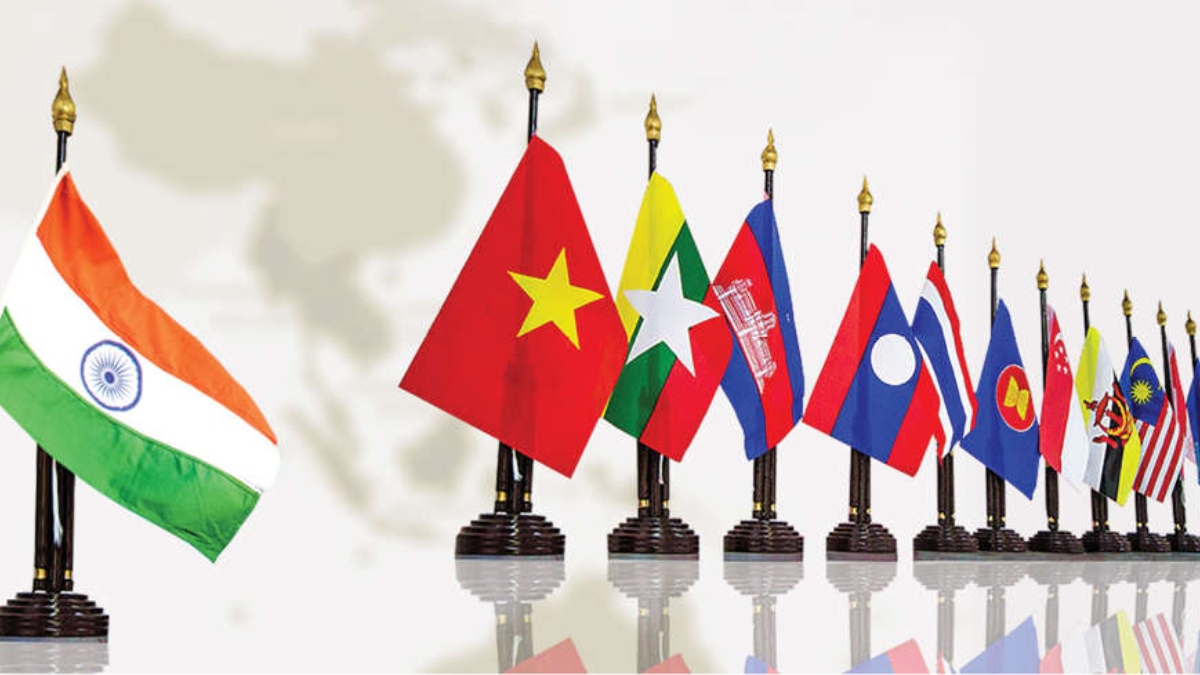
    Coming to what Regional Comprehensive Economic Partnership is, a free trade agreement between several countries in the Asia Pacific region that includes member nations of the Association of Southeast Asian Nations (ASEAN); namely Indonesia, Brunei, Myanmar, Singapore, Thailand, Philippines, Laos, Malaysia, Vietnam and Cambodia. The ASEAN also includes five partners namely Australia, Japan, South Korea, China, and New Zealand. India which was supposed to be the sixth partner opted out of the agreement on November 4th, 2019.

    The RCEP countries had a combined GDP at Purchasing Power Parity of $49.5 trillion and accounted for half of the world’s population and almost 40% of the world’s GDP, according to 2017 figures. RCEP was basically an answer to combat the already powerful NATO and G-8 countries’ influence throughout the world in terms of trade and influencing power.

    Source

    The agreement was primarily formed to increase the free trade between the member nations by reducing trade barriers which would consequentially improve the economies of these countries.

    Advantages and Disadvantages

    To begin with, India’s businesses would have access to a huge market that accounts for 40% of the International Trade. And with the little to no trade barriers, Indian products can easily penetrate the deep reaches of these countries giving the country a much-needed economic boost. With the factors of production on a full drive, the country’s GDP would improve exponentially, that is what basic Macroeconomics dictates. But there is a catch here, and that catch is a huge economic powerhouse by the name of China.

    Source

    The opening of markets is a dual effect, that is in reciprocation of other countries opening their markets to India, it is expected that India will do the same. The problem is that China is extremely good at flooding any country with its low-cost goods and at the present moment, over 60% of India’s trade deficit is on account of China. The situation is further complicated by the fact that India exports services (like IT/ITES services) and these services do not feature prominently in the RCEP agreement.

    Source

    RCEP would bring in opportunities and growth in manufacturing through the process of GVC or Global Value Chain where big corporations delegate production to multiple countries like Vietnam, India and Thailand. But because of a lack of infrastructure, experts think that this benefit would be nullified in India. With labour costs rising in China (as it progresses), companies are looking to shift their bases of production to other countries. Chinese corporations could use this window to dump in extensive products in the country. In addition, India currently has a running trade deficit with the RCEP countries and RCEP countries account for almost 27% of the trade that India does throughout the world. This puts India in further peril as India exports than imports when ideally, it should be the other way around.

    Source

    Modi’s stance on the agreement

    Prime Minister Modi, in his address at the RCEP summit held in Bangkok said, “The present form of the RCEP Agreement does not fully reflect the basic spirit and the agreed guiding principles of RCEP,”(ref). Piyush Goyal, our commerce Minister also lauded the Prime Minister’s decision and said that the move would develop the domestic industry under the “Make In India” campaign.

    “Today, when we look around, we see during seven years of RCEP negotiations, many things, including the global economic and trade scenarios, have changed. We cannot overlook these changes. The present form of the RCEP Agreement does not fully reflect the basic spirt and the agreed guiding principles of RCEP. It also does not address satisfactorily India’s outstanding issues and concerns In such a situation, it is not possible for India to join RCEP Agreement,” (ref) Modi added in the Bangkok RCEP summit.

    Goyal, in a meeting with the MPs, explained that while several small countries have only opened 50% of their markets to foreign players, India opened 74%. Thus, it is easily understandable that with foreign players looking to expand into India, the domestic players would be highly underplayed in the process.

    Source

    “India has maintained that we will not be a signatory to the RCEP unless our domestic concerns have been addressed. We are just one among the 16 countries who have not signed. We were able to take this firm stand because of our strong and stable leadership,”(ref) Goyal said in his meeting before the BJP Parliamentary Party.

    To conclude

    India is a big market and a global economic powerhouse and without India, the whole FTA (Free Trade Agreement) within the RCEP countries would fall short of the ultimate objective of mutual progress. It remains to be seen whether India can convince the other member nations to put pressure on China to accept its terms. But for the time being, the remaining 15 member nations are ready to seal the deal coming year (tentative) and India as of today is out of the RCEP deal. India should use this opportunity to improve its uncompetitive export market which is the primary reason for a huge trade deficit with any advanced economy country in the world. Where Modi’s decision is right, however, remains to be seen. As the proverb goes, “Time will tell”.

    Sources-

    https://economictimes.indiatimes.com/news/economy/foreign-trade/india-decides-to-opt-out-of-rcep-says-key-concerns-not-addressed/articleshow/71896848.cms

    https://www.indiatoday.in/india/story/india-pm-modi-decide-to-not-join-rcep-agreement-1615655-2019-11-04

    https://economictimes.indiatimes.com/news/economy/foreign-trade/india-decides-to-opt-out-of-rcep-says-key-concerns-not-addressed/articleshow/71896848.cmshttps://foreignpolicy.com/2019/11/19/modi-pull-out-rcep-india-manufacturers-compete-china/