Tag: Economy

  • Why India stayed out of the Regional Comprehensive Economic Partnership

    Why India stayed out of the Regional Comprehensive Economic Partnership

    India walked out on the Regional Comprehensive Economic Partnership deal and this article will serve to look at the critical aspects of India’s exit and explain the consequences in a broader aspect.

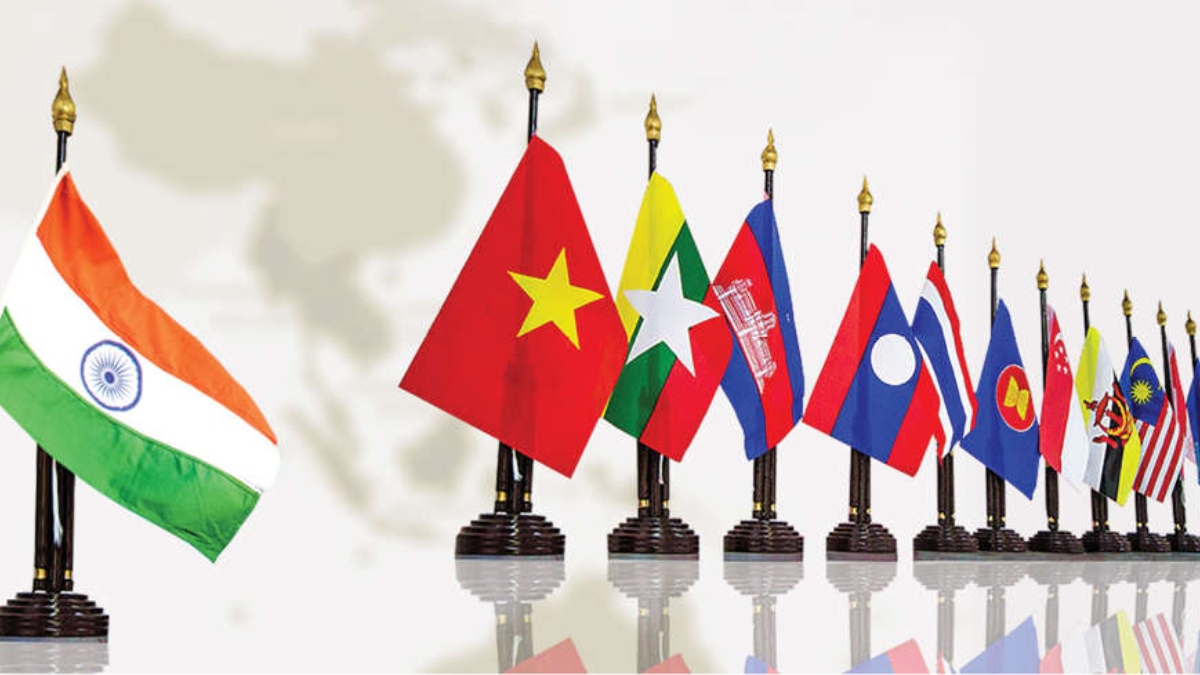
    Coming to what Regional Comprehensive Economic Partnership is, a free trade agreement between several countries in the Asia Pacific region that includes member nations of the Association of Southeast Asian Nations (ASEAN); namely Indonesia, Brunei, Myanmar, Singapore, Thailand, Philippines, Laos, Malaysia, Vietnam and Cambodia. The ASEAN also includes five partners namely Australia, Japan, South Korea, China, and New Zealand. India which was supposed to be the sixth partner opted out of the agreement on November 4th, 2019.

    The RCEP countries had a combined GDP at Purchasing Power Parity of $49.5 trillion and accounted for half of the world’s population and almost 40% of the world’s GDP, according to 2017 figures. RCEP was basically an answer to combat the already powerful NATO and G-8 countries’ influence throughout the world in terms of trade and influencing power.

    Source

    The agreement was primarily formed to increase the free trade between the member nations by reducing trade barriers which would consequentially improve the economies of these countries.

    Advantages and Disadvantages

    To begin with, India’s businesses would have access to a huge market that accounts for 40% of the International Trade. And with the little to no trade barriers, Indian products can easily penetrate the deep reaches of these countries giving the country a much-needed economic boost. With the factors of production on a full drive, the country’s GDP would improve exponentially, that is what basic Macroeconomics dictates. But there is a catch here, and that catch is a huge economic powerhouse by the name of China.

    Source

    The opening of markets is a dual effect, that is in reciprocation of other countries opening their markets to India, it is expected that India will do the same. The problem is that China is extremely good at flooding any country with its low-cost goods and at the present moment, over 60% of India’s trade deficit is on account of China. The situation is further complicated by the fact that India exports services (like IT/ITES services) and these services do not feature prominently in the RCEP agreement.

    Source

    RCEP would bring in opportunities and growth in manufacturing through the process of GVC or Global Value Chain where big corporations delegate production to multiple countries like Vietnam, India and Thailand. But because of a lack of infrastructure, experts think that this benefit would be nullified in India. With labour costs rising in China (as it progresses), companies are looking to shift their bases of production to other countries. Chinese corporations could use this window to dump in extensive products in the country. In addition, India currently has a running trade deficit with the RCEP countries and RCEP countries account for almost 27% of the trade that India does throughout the world. This puts India in further peril as India exports than imports when ideally, it should be the other way around.

    Source

    Modi’s stance on the agreement

    Prime Minister Modi, in his address at the RCEP summit held in Bangkok said, “The present form of the RCEP Agreement does not fully reflect the basic spirit and the agreed guiding principles of RCEP,”(ref). Piyush Goyal, our commerce Minister also lauded the Prime Minister’s decision and said that the move would develop the domestic industry under the “Make In India” campaign.

    “Today, when we look around, we see during seven years of RCEP negotiations, many things, including the global economic and trade scenarios, have changed. We cannot overlook these changes. The present form of the RCEP Agreement does not fully reflect the basic spirt and the agreed guiding principles of RCEP. It also does not address satisfactorily India’s outstanding issues and concerns In such a situation, it is not possible for India to join RCEP Agreement,” (ref) Modi added in the Bangkok RCEP summit.

    Goyal, in a meeting with the MPs, explained that while several small countries have only opened 50% of their markets to foreign players, India opened 74%. Thus, it is easily understandable that with foreign players looking to expand into India, the domestic players would be highly underplayed in the process.

    Source

    “India has maintained that we will not be a signatory to the RCEP unless our domestic concerns have been addressed. We are just one among the 16 countries who have not signed. We were able to take this firm stand because of our strong and stable leadership,”(ref) Goyal said in his meeting before the BJP Parliamentary Party.

    To conclude

    India is a big market and a global economic powerhouse and without India, the whole FTA (Free Trade Agreement) within the RCEP countries would fall short of the ultimate objective of mutual progress. It remains to be seen whether India can convince the other member nations to put pressure on China to accept its terms. But for the time being, the remaining 15 member nations are ready to seal the deal coming year (tentative) and India as of today is out of the RCEP deal. India should use this opportunity to improve its uncompetitive export market which is the primary reason for a huge trade deficit with any advanced economy country in the world. Where Modi’s decision is right, however, remains to be seen. As the proverb goes, “Time will tell”.

    Sources-

    https://economictimes.indiatimes.com/news/economy/foreign-trade/india-decides-to-opt-out-of-rcep-says-key-concerns-not-addressed/articleshow/71896848.cms

    https://www.indiatoday.in/india/story/india-pm-modi-decide-to-not-join-rcep-agreement-1615655-2019-11-04

    https://economictimes.indiatimes.com/news/economy/foreign-trade/india-decides-to-opt-out-of-rcep-says-key-concerns-not-addressed/articleshow/71896848.cmshttps://foreignpolicy.com/2019/11/19/modi-pull-out-rcep-india-manufacturers-compete-china/
  • Technology: A Major Driver for India’s Growth in the Next Decade

    Technology: A Major Driver for India’s Growth in the Next Decade

    “India is the cradle of the human race, the birthplace of human speech, the mother of history, the grandmother of legend, and the great grandmother of tradition. Our most valuable and most instructive materials in the history of man are treasured up in India only.”

    Mark Twain

    How India Has Changed Since Independence

    India is one of the major economies in today’s modern, dynamic world and is at the forefront of being positively affected by technology. Today, after more than 70 years of independence, there have been a lot of massive improvements made in almost every field, and a significant chunk of that can be attributed to technology. Indian GDP (both overall and per capita) has increased significantly, and HDI has risen by almost 50%. Life expectancy and schooling have also improved. All these developments are easily overshadowed by one glaring weakness, one chink in India’s armour- overpopulation. 

    This is both a boon and a bane. It’s a boon because more population directly correlates to a higher number of scientists, technologists, doctors, and engineers that would be able to work for the country and take it towards the path of prosperity. However, more population also means an ever-increasing number of people who suffer from poverty.

    Source.
    Source

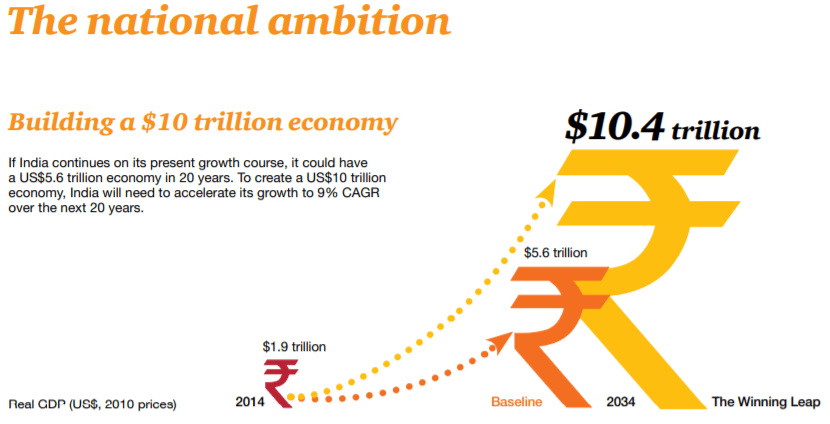
    India wants to become a $ 10 trillion economy soon, and this can only be achieved by leveraging the power of technology. Although the penetration of technology throughout the Indian sub-continent has been impressive, it needs to be pervasive enough in the near future to carry the entire country on its shoulders.

    Source

    What India Has Already Solved

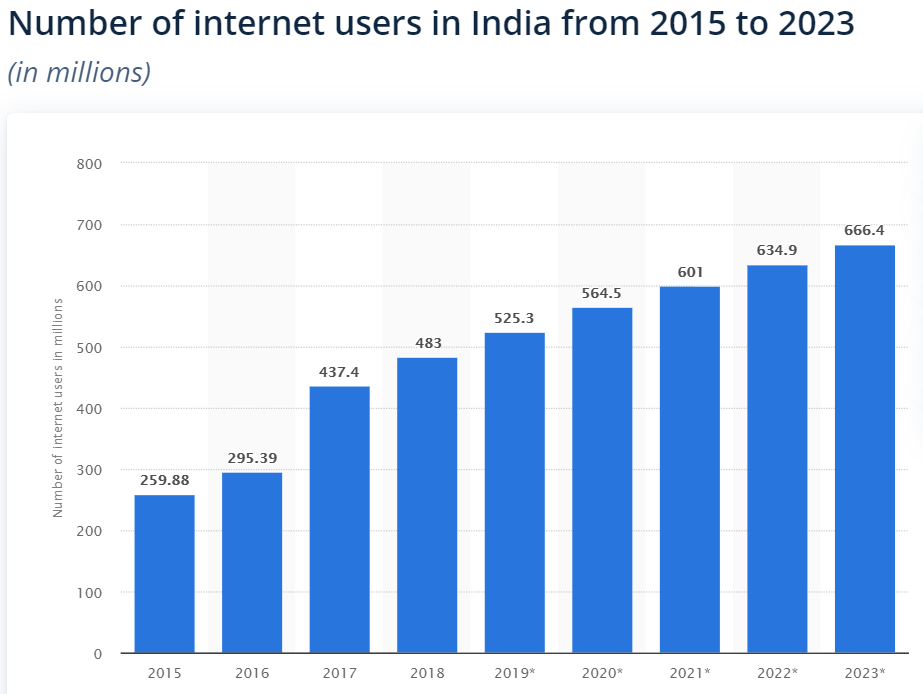
    Internet penetration is now a major criterion in determining the technological quotient of a country. The internet represents the true democratization of information, and capable people can quickly turn this information into valuable knowledge without the requirement of outside help (the formal education system of a country). As mobile phone (smartphone) penetration increases, the number of internet users will increase, thereby triggering a technological wave and creating a completely new era of technological superiority.

    Source

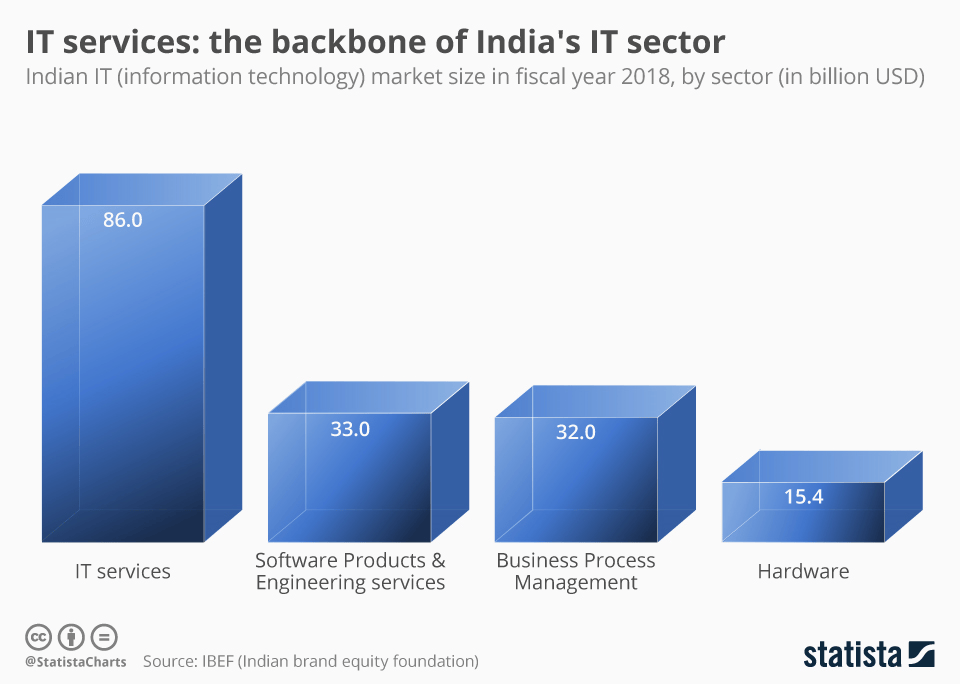
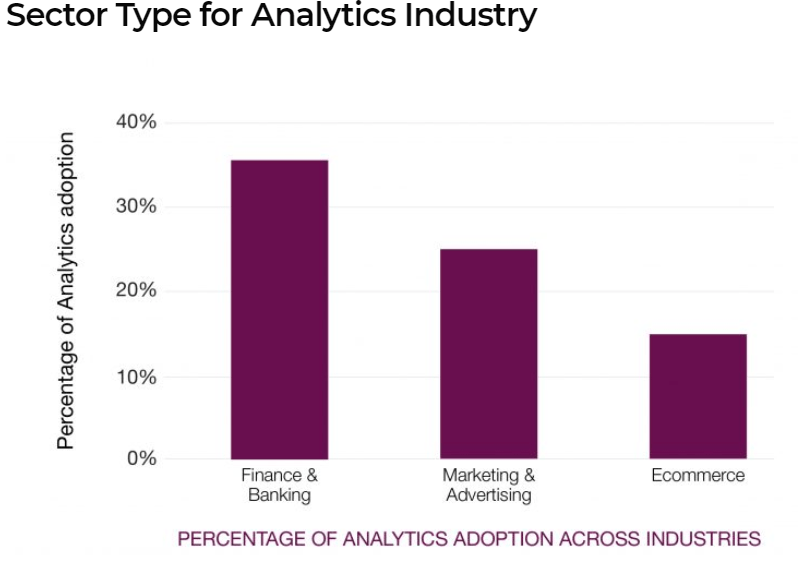
    IT Services make up a significant chunk of what Indian technology means to many (even to the outside world), but that will change soon. Indian IT services are favoured because of how inexpensive they were. With the increasing use of automation, artificial intelligence and data science, all repetitive manual work will be rendered useless, making the point of cheap labour rate moot. Indian software firms like Tata Consultancy Services, Infosys, and Tech Mahindra are increasingly spending on training employees to use these technologies to remain competitive in the global environment. The pie chart shows that large IT companies like the ones mentioned are the most equipped to implement these technologies into their existing projects or to pick up new projects/clients based on these technologies.

    Source
    Source
    Source

    Start-ups are so much more than just a buzzword today. They help bring in foreign investment in the form of funding, provide much-needed employment to people and ease some weight off the governments’ shoulders, making people’s lives simpler through the solutions they provide. Almost all start-ups mentioned in the image below provide solutions through technology.

    Source

    The Challenges and the Road Ahead

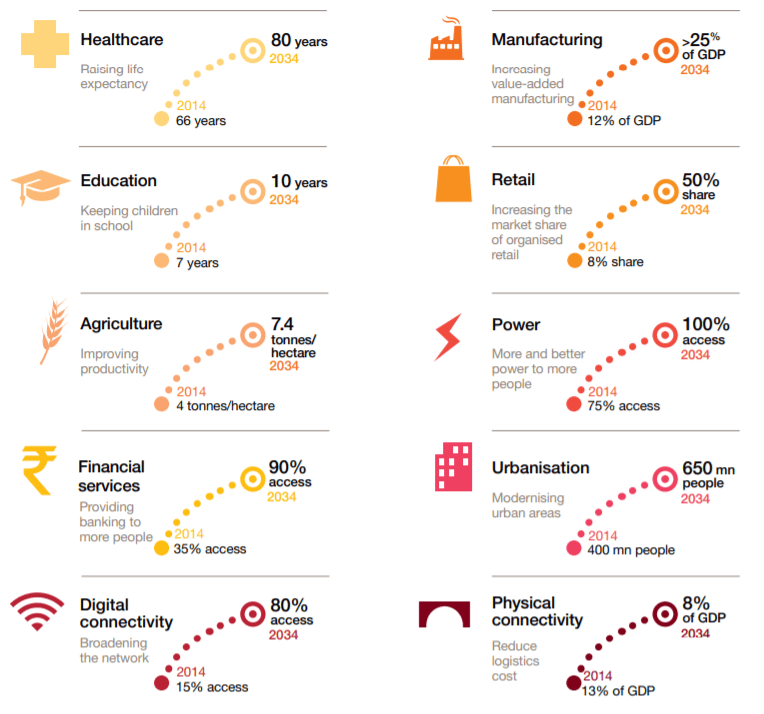
    The goal at hand is simple: using technology to leverage every industry and sector in the country to become competitive in the global scenario, eventually making India a technological, economic, and commercial powerhouse. However, the road ahead is full of obstacles. The picture taken from a PWC report highlights the goals of the country in the coming years. To reach that goal, technology can intervene in several ways:

    • Government schemes like Start-up India are a much-needed boost to the technological scenario in India. In 2019, a total of more than 1,300 start-ups were added, making the total tech-based start-ups tally a massive 8,900. However, a major chunk of these start-ups doesn’t even end up seeing the light of the day, and thus governments must ensure that these start-ups are effectively incubated, thereby reducing the failure rate.
    • The top engineering colleges in India need to be monitored and private players have to be encouraged to improve themselves continuously. Modern technologies must be implemented in the course curriculum, and the decades-old syllabus needs to be revised to ensure that students learn about modern technological advancements.
    • Ease of business in India has seen a tremendous improvement in rankings, but it needs to be continuously worked on and improved. As old laws and policies preventing business get abolished, the ease of opening a company/start-up improves dramatically, thereby contributing to the chance of letting the start-up be profitable shortly.
    Source

    Conclusion

    As discussed previously, technologies like analytics and decision science must be implemented across industries to leverage their benefits. As these get implemented, there will be an acute shortage of employees who are trained in these technologies. Today tech startups are training their people and setting up an entire ecosystem at work in the country. The education sector needs to improve to drive technological benefits throughout the country, starting from the grassroots to the higher echelons in a complete chain of value creation.

    Source

    Do you like reading about technology and how it affects the world of business? You might like this article.