Tag: Education

  • Accessible infrastructure for people with disabilities in India

    Accessible infrastructure for people with disabilities in India

    Introduction

    The lexicon defines a “differently-abled individual” as someone who has a physical or mental disability that limits the individual from performing normal day to day functions. But the cold-hearted definition does not take into account emotions, it only defines the term as it is. It is therefore much prudent to refer such individuals not as disabled, but differently-abled, as there are examples aplenty wherein differently-abled people have achieved so much more than people without disabilities.

    Statistics

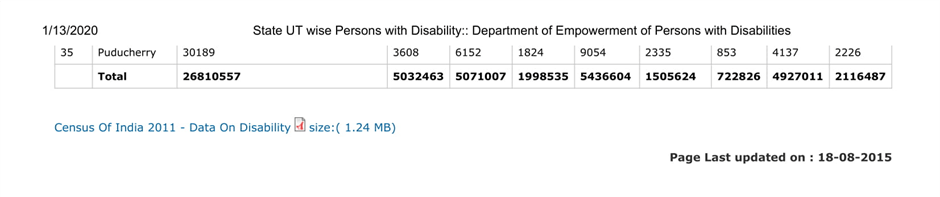
    In India, according to the 2001 census, over 21 million people (2.1% of the population) are classified as differently-abled. Disability is sight is leading the list (owing to a severe shortage of corneas for replacement) followed by others.
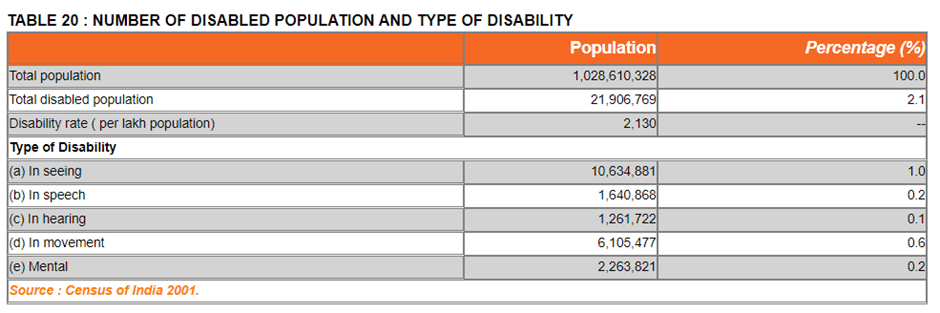
    Indian census figures showing the population by type of disability
    Source

    Statewise, Uttar Pradesh leads the tally in the total disabled population and Lakshadweep has the lowest amongst all the states and the Union Territories.

    Source
    Figures on people with disabilities by Indian state and union territory
    Source
    Additional state and union territory disability figures
    Source

    Infrastructure

    Infrastructure can be both tangible and intangible and in the case of differently-abled, both hold equal and paramount importance. A country should not see its differently-abled population as a liability but as an opportunity.

    Corporates

    Law in developed countries such as Germany requires that at least 5% of their organizations must be filled by the differently-abled which if flouted will lead to heavy penalties by the government. Sensitivity training is another important issue that needs to be addressed by corporations in India; given how people are prone to treating the differently-abled as second class citizens.

    Education

    Education is of primary importance to a developing country such as India, and more so for its differently-abled personnel and for this, the universities, schools, and colleges must take up combined onus. Firstly, differently-abled students must be facilitated into various courses and basic guidance regarding career choices must be provided to all such students. Awareness and sensitization of teachers and fellow students and scholars is of utmost need, and of the ways of doing this is to observe important days like World Disability Day.

    Basic infrastructures

    Basic infrastructure must not be forgotten, and the following are some of the ways basic infrastructure can be enabled across a plethora of important landmarks-

    • All Banks, ATM’s and other places of importance should have a ramp for differently-abled individuals
    • Offices and even public restrooms must have a differently-abled section (there is a handbook of guidelines under the Swachh Bharat Mission)
    • Specialized entry and exit for differently-abled across the public transportation system
    • Footpaths (both outside and within public buildings/offices) that are friendly to walk for the differently-abled
    • Applications (mobile and PC based) that help in navigation and day to day functionality to be made more accessible to the differently-abled so that they gain value from the same.
    • Differently-abled people should have special legal support to ensure they don’t face discrimination.

    Conclusion

    To conclude, it is sufficient to say that gradual and steady steps in this direction, as mentioned above, will not only help the differently-abled, but will help the country and its economy as a whole.
    References-

  • Technology: A Major Driver for India’s Growth in the Next Decade

    Technology: A Major Driver for India’s Growth in the Next Decade

    “India is the cradle of the human race, the birthplace of human speech, the mother of history, the grandmother of legend, and the great grandmother of tradition. Our most valuable and most instructive materials in the history of man are treasured up in India only.”

    Mark Twain

    How India Has Changed Since Independence

    India is one of the major economies in today’s modern, dynamic world and is at the forefront of being positively affected by technology. Today, after more than 70 years of independence, there have been a lot of massive improvements made in almost every field, and a significant chunk of that can be attributed to technology. Indian GDP (both overall and per capita) has increased significantly, and HDI has risen by almost 50%. Life expectancy and schooling have also improved. All these developments are easily overshadowed by one glaring weakness, one chink in India’s armour- overpopulation. 

    This is both a boon and a bane. It’s a boon because more population directly correlates to a higher number of scientists, technologists, doctors, and engineers that would be able to work for the country and take it towards the path of prosperity. However, more population also means an ever-increasing number of people who suffer from poverty.

    Source.
    Source

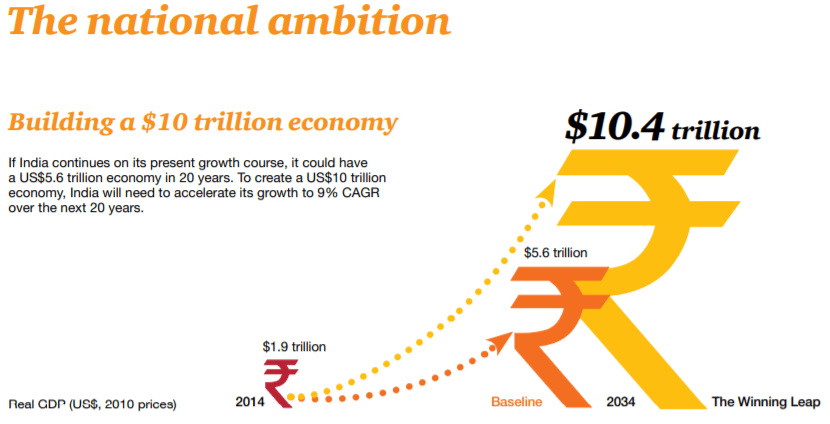
    India wants to become a $ 10 trillion economy soon, and this can only be achieved by leveraging the power of technology. Although the penetration of technology throughout the Indian sub-continent has been impressive, it needs to be pervasive enough in the near future to carry the entire country on its shoulders.

    Source

    What India Has Already Solved

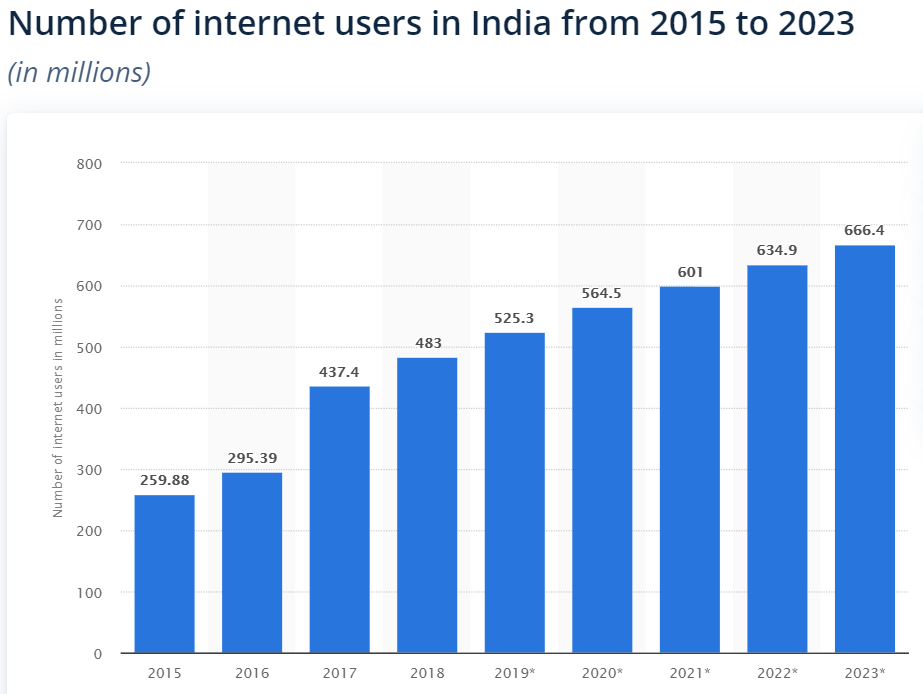
    Internet penetration is now a major criterion in determining the technological quotient of a country. The internet represents the true democratization of information, and capable people can quickly turn this information into valuable knowledge without the requirement of outside help (the formal education system of a country). As mobile phone (smartphone) penetration increases, the number of internet users will increase, thereby triggering a technological wave and creating a completely new era of technological superiority.

    Source

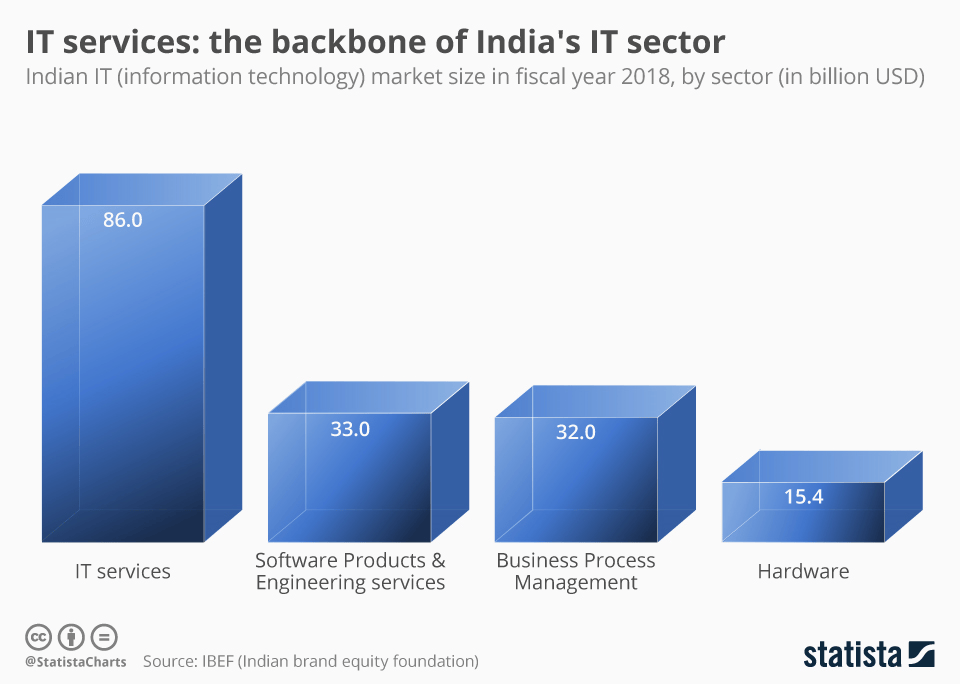
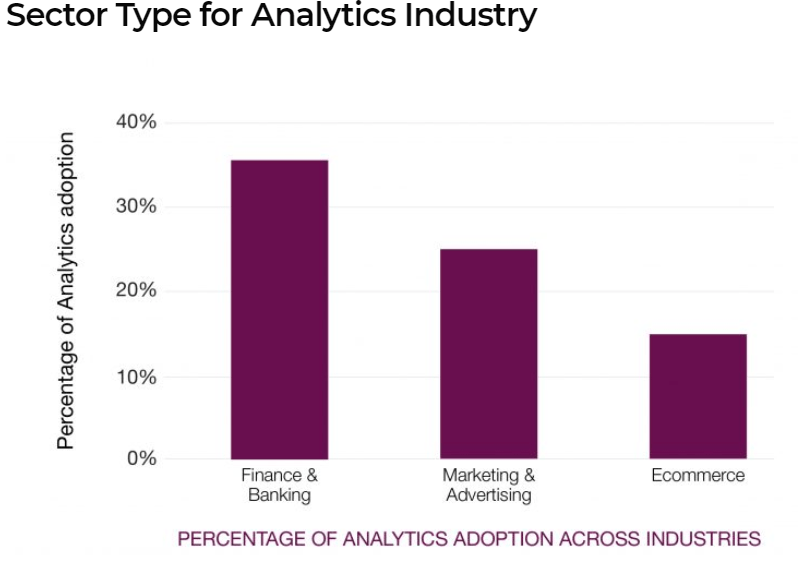
    IT Services make up a significant chunk of what Indian technology means to many (even to the outside world), but that will change soon. Indian IT services are favoured because of how inexpensive they were. With the increasing use of automation, artificial intelligence and data science, all repetitive manual work will be rendered useless, making the point of cheap labour rate moot. Indian software firms like Tata Consultancy Services, Infosys, and Tech Mahindra are increasingly spending on training employees to use these technologies to remain competitive in the global environment. The pie chart shows that large IT companies like the ones mentioned are the most equipped to implement these technologies into their existing projects or to pick up new projects/clients based on these technologies.

    Source
    Source
    Source

    Start-ups are so much more than just a buzzword today. They help bring in foreign investment in the form of funding, provide much-needed employment to people and ease some weight off the governments’ shoulders, making people’s lives simpler through the solutions they provide. Almost all start-ups mentioned in the image below provide solutions through technology.

    Source

    The Challenges and the Road Ahead

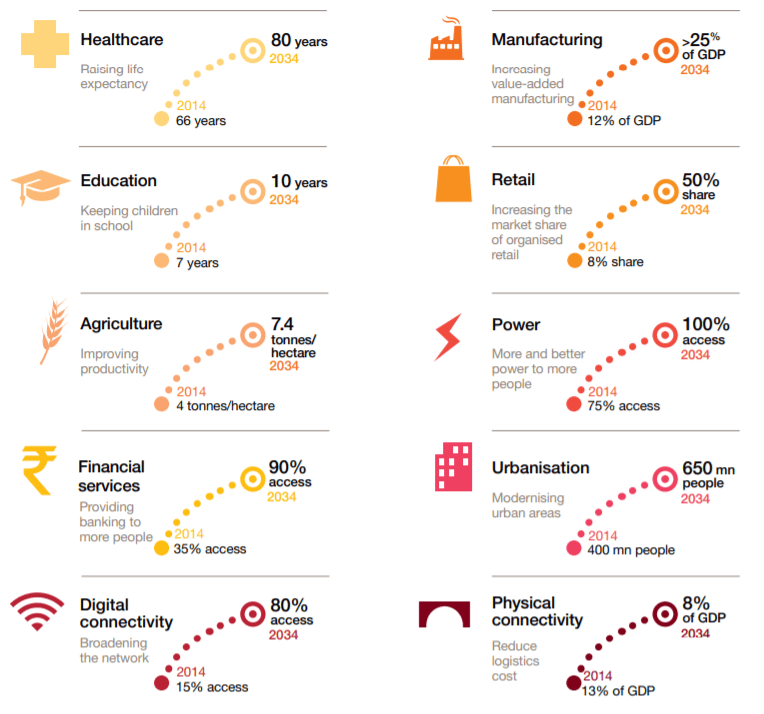
    The goal at hand is simple: using technology to leverage every industry and sector in the country to become competitive in the global scenario, eventually making India a technological, economic, and commercial powerhouse. However, the road ahead is full of obstacles. The picture taken from a PWC report highlights the goals of the country in the coming years. To reach that goal, technology can intervene in several ways:

    • Government schemes like Start-up India are a much-needed boost to the technological scenario in India. In 2019, a total of more than 1,300 start-ups were added, making the total tech-based start-ups tally a massive 8,900. However, a major chunk of these start-ups doesn’t even end up seeing the light of the day, and thus governments must ensure that these start-ups are effectively incubated, thereby reducing the failure rate.
    • The top engineering colleges in India need to be monitored and private players have to be encouraged to improve themselves continuously. Modern technologies must be implemented in the course curriculum, and the decades-old syllabus needs to be revised to ensure that students learn about modern technological advancements.
    • Ease of business in India has seen a tremendous improvement in rankings, but it needs to be continuously worked on and improved. As old laws and policies preventing business get abolished, the ease of opening a company/start-up improves dramatically, thereby contributing to the chance of letting the start-up be profitable shortly.
    Source

    Conclusion

    As discussed previously, technologies like analytics and decision science must be implemented across industries to leverage their benefits. As these get implemented, there will be an acute shortage of employees who are trained in these technologies. Today tech startups are training their people and setting up an entire ecosystem at work in the country. The education sector needs to improve to drive technological benefits throughout the country, starting from the grassroots to the higher echelons in a complete chain of value creation.

    Source

    Do you like reading about technology and how it affects the world of business? You might like this article.