Tag: Industry

  • Will the prolonged Corona Virus problem in China destabilise business in India and around the world?

    Will the prolonged Corona Virus problem in China destabilise business in India and around the world?

    The COVID-19 is an illness that is caused by a member of the coronavirus family that has been wrecking across the globe for quite some time now. This article serves to show that the devastation that Coronavirus has wrought has not just harmed China but the global economy as well. A pandemic has almost always had far-reaching consequences and throughout history, whenever there has been the slightest hint of a global pandemic, business, health, economy, and public life have suffered gravely.

    Effect of Corona Virus globally

    The Airline Industry is perhaps the most hit because of the virus, with a gross loss of $29 Bn in losses for the entire aviation industry and it is only expected to exacerbate further in the coming days. Most of these losses are concentrated in the Asia-Pacific region, which is currently facing a 13% decline in demand. Qantas airline said that it could expect losses between $66 Million to $99 Million because of the virus outbreak. Many prominent airlines have cancelled their flights to the Wuhan district or even China in general.

    The Electronics and Mobile industry is sluggish, owing to China being an important manufacturer of mobile and electronics components. Factories are operating on less than half the workers due to the lockdown. Foxconn, a key supplier for Apple, has announced that its revenue will take a hit.

    The Oil and Gas and Automobile Industries are very closely related to each other and affecting one industry will affect the other. The Chinese Passenger Car association stated that dealership sales had dropped by a massive 92%; this has affected the U.S. oil industry with per barrel cost dropping to a 3.7% low. 

    The Banking Industry is worse hit, as one would expect, with China’s banks lowering borrowing costs to encourage people and companies to spend to kickstart the economy. 

    As logic would dictate, the travel and tourism industry has been devastated, China was on its way to becoming a global tourist destination, and with globalisation making the world interconnected, the aviation, stock market, tourism, electronics, banking, hospitality industries have been affected very severely.

    Effect of Coronavirus in the U.S.

    A historic week for the stock market that ended with a big question: What are the steps that the government and the Federal Reserve do about the coronavirus outbreak that threatens to decimate the longest-running bull market on record? The infectious disease, COVID-19, which reportedly originated in Wuhan, China, late last year, reached viral proportions this week on Wall Street — and literally throughout the world. Approximately 550,000 plus cases have emerged, and almost 25,500 people have died, with several countries reporting their incidences of COVID-19, including Brazil, Georgia, New Zealand and Norway.

    The structural damage to Wall Street’s bullish patina is undeniable, as the Dow Jones Industrial Average DJIA, -1.39%, the S&P 500 SPX, -0.82% and the Nasdaq Composite COMP, +0.01% booked their worst weekly declines since the 2008 financial crisis. All three stock gauges fell into correction territory with drops of at least 10% from recent peaks. All totalled, global equity markets had wiped out $7 trillion from the levels as of Feb. 19, when the S&P 500 notched its record, and the U.S. market alone has lost $4.3 trillion.

    Effect of Corona Virus on India

    As the stock markets all over the world are becoming more and more volatile, investors have started looking for other places where their money can reside safely. Investors have begun parking their money in stock markets of countries that are relatively well guarded against the pandemic, Gold as well as and Government Bonds of countries. Indian treasuries are expected to gain due to this volatility, as treasury bonds of countries are considered to be very safe instruments, thanks to the ability of countries to print money as and when required. So, India, with its ever-widening fiscal deficit, could be seeing an uptick in investments on treasuries, as investors all over the world have started hunting for safe-havens. This, in turn, would result in an increased probability of meeting the fiscal target for this financial year.

    In early February, India was ranked 17th in the list of countries that are most at risk of coronavirus infection. In case the virus starts wreaking havoc in the country, it would not just result in increased Government spending to curb the outbreak, but would also result in an outflow of foreign investments, as panicking investors would inevitably start looking for other safe-havens.

    China exports its steel, but with demand having been impacted more than supply, the accumulating inventory is putting pressure on domestic prices which further affects prices outside China. Earnings of TATA Steel and SAIL have been impacted more due to the fact they are more price sensitive.

    A lower refining margin for petrochemical products affects organisations such as BPCL, IOCL, RIL and HPCL as they are downstream in nature while upstream companies like Indian Oil and ONGC will be affected due to reduction in demand.

    Impact on the Indian financial market

    Indian equities extended declines for the sixth straight session, with the S&P BSE Sensex falling as much as 3.2 per cent and the NSE Nifty 50 tumbling up to 3.31 per cent. Nifty 50’s Relative Strength Index, according to analysts, has fallen below 30 into the oversold zone. The Indian indices mirrored the global peers that are set for their worst week since the crisis of 2008, down more than 10 per cent from this month’s peak, as the Coronavirus spreads from China to across the world. Heavyweights TCS, ICICI RIL and HDFC slumped between 4% and 5%. Among other major losers SBI, Bajaj Finance, Infosys, M&M, Tech Mahindra and Tata Steel fell between 6% and 8%.

    Source

    Macroeconomic Implications

    1. Both supply and demand to shift towards left, resulting in price being constant but output decreasing, thus resulting in declining GDP
    2. In the case of healthcare, demand is increasing, and a lot of R&D has started, and new hospitals have sprung up. So, in this case, the price remains constant but output increases
    3. In case India sees an uptick in foreign investments, the A.D. curve would shift to the right, increasing prices as well as the overall output (GDP). However, if India also gets affected by the pandemic, it would result in the outpouring of foreign investments, resulting in the A.D. curve shifting towards the left, reducing prices as well as the GDP.
  • Artificial Intelligence: Changing Business Amidst COVID-(AI Adoption before and during COVID-19)

    Artificial Intelligence: Changing Business Amidst COVID-(AI Adoption before and during COVID-19)

    Setting the context

    AI adoption is happening at a breakneck speed all around the world and this article aims to find if COVID-19 has sped up or slowed down the adoption amongst various industries. In order for comparing the adoption during COVID-19, it is important to check the adoption undertaken to date. That will strive to give a base reference point for further study of the same. The chart below shows in percentage the adaptation of AI in different industries and under different functions.

    Chart 1 – Adoption of AI in different industries under different functions (in %) (2019)

    As seen from the chart above, Service Operations function dominates in the overall category while Product/Service development comes in at a close second. The particular function where AI is adopted also depends heavily upon the type of business as evident from the fact that the Automotive sector use most of its AI adoption in Manufacturing and Telecom uses it in Service Operations. Businesses remain lukewarm towards the adoption of AI citing reasons such as spending increased amounts of resources like money and time.

    AI adoption entails a number of key factors and questions and some of them are enumerated below-

    • Whether it is relevant for the business in the long term
    • How much of a positive impact does AI adoption create?
    • Does the cost justify the benefits that can be reaped into the future?
    • What are the processes that are improved and how does that impact the current business?

    Therefore, even if it is evident for businesses to adopt AI, they do not do so keeping in mind the short- and long-term prospects and other factors like Return on Investment (RoI). 

    Diving deeper

    AI is an overarching term that encompasses many technologies such as Machine Learning and Natural Language Processing so it makes sense to look at the adoption rates keeping in mind the industry and the technology involved. The graph below shows the breakdown of AI Adoption in 2019 and again the type of technology used in a particular industry depends heavily upon the characteristics of the industry itself. High Tech is leading the other industries in usage and adoption of Machine Learning while Robotic Process Automation is rightly mostly used in Automotive Industry. Businesses in developing economies are increasingly utilizing the benefits of AI with each passing year. Reports by McKinsey show that high performing companies have a couple of key strategies that are similar to each other-

    • AI strategy is heavily aligned towards the business goals
    • Investing in AI training and talent pool
    • Collaboration that cuts across functional teams
    • Data Practices that follow a best practices pattern
    Fig 2.1- AI in depth
    Chart 2.2- Distribution of AI adoption under various specialized technologies (2019)

    AI Adoption amidst COVID-19

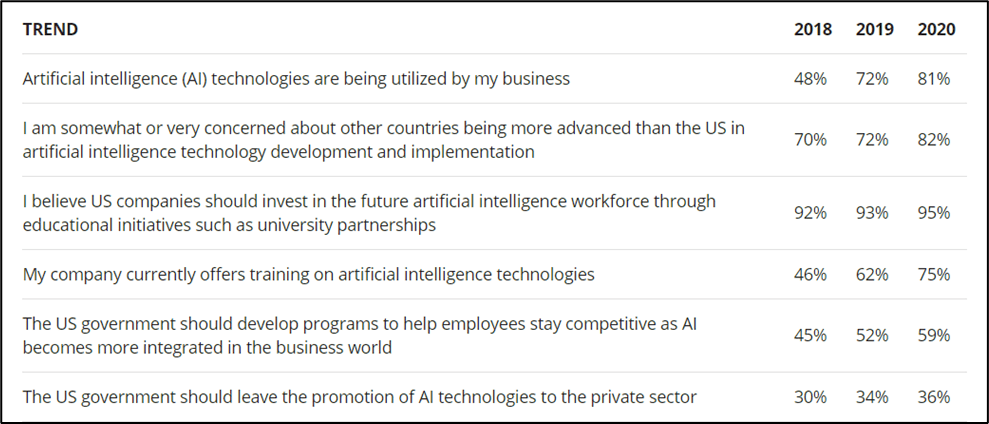
    COVID-19 has accelerated the adoption of AI across industries with the Bain COVID-19 IT Buyer Survey stating that three out of four companies are planning to accelerate automation initiatives due to COVID-19. It is very likely that COVID has transformed permanently, the way businesses are conducted and now many are considering AI adoption to stay ahead of the curve. According to a RELX survey dated October 2020, AI usage has shot up massively to 81% which is a huge 33 percentage points increment over 2018 in the USA. The following image shows a three-year trend in the usage and adoption of AI across industries.

    With COVID-19 dictating our lives and with the increased dependence on social distancing and work from home cultures, it is imperative that businesses embrace the AI advantage. AI ensures that there is minimal redundancy and the need for human labour for trivial, repetitive tasks is abolished. In addition, technologies such as the 5G will support and help AI adoption. Healthcare is one such area that is rapidly making use of AI amidst a massive paradigm shift. Some of the data points pertaining to AI adoption in COVID-19 are-

    • 68% increased the spending on AI during the pandemic
    • 77% of those surveyed agreed to the fact that AI technologies helped slow the spread of the virus
    • 63% businesses agreed that AI helped them achieve a strategic advantage amidst the pandemic

    However, there are concerns about the ethical usage of AI as many fear that in the wrong hands, AI can have devasting consequences. Decades of dystopian science fiction movies have done nothing to alleviate those fears and instead helped reinforce them. Fortunately, most AI usage in businesses are harmless and only strive to improve processes, optimize them and help reduce costs over the long run. AI adoption is one of the key factors of success against uncertainties and it is only fair that businesses start realizing that, for their own survival.

    Fig 3- Survey Results

    References

  • Technology: A Major Driver for India’s Growth in the Next Decade

    Technology: A Major Driver for India’s Growth in the Next Decade

    “India is the cradle of the human race, the birthplace of human speech, the mother of history, the grandmother of legend, and the great grandmother of tradition. Our most valuable and most instructive materials in the history of man are treasured up in India only.”

    Mark Twain

    How India Has Changed Since Independence

    India is one of the major economies in today’s modern, dynamic world and is at the forefront of being positively affected by technology. Today, after more than 70 years of independence, there have been a lot of massive improvements made in almost every field, and a significant chunk of that can be attributed to technology. Indian GDP (both overall and per capita) has increased significantly, and HDI has risen by almost 50%. Life expectancy and schooling have also improved. All these developments are easily overshadowed by one glaring weakness, one chink in India’s armour- overpopulation. 

    This is both a boon and a bane. It’s a boon because more population directly correlates to a higher number of scientists, technologists, doctors, and engineers that would be able to work for the country and take it towards the path of prosperity. However, more population also means an ever-increasing number of people who suffer from poverty.

    Source.
    Source

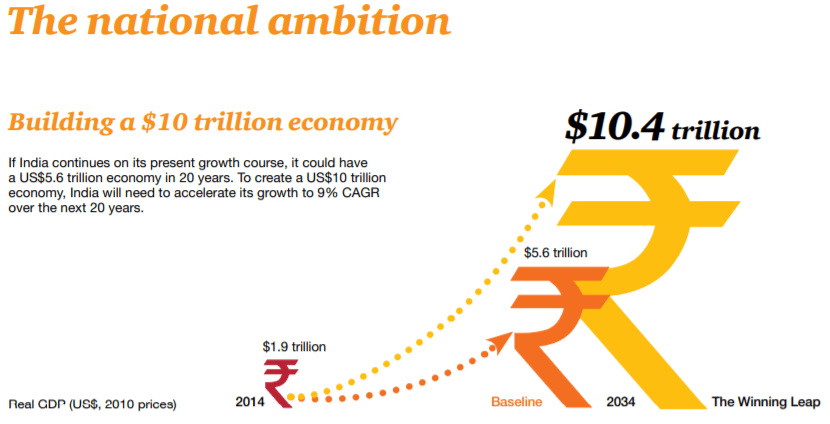
    India wants to become a $ 10 trillion economy soon, and this can only be achieved by leveraging the power of technology. Although the penetration of technology throughout the Indian sub-continent has been impressive, it needs to be pervasive enough in the near future to carry the entire country on its shoulders.

    Source

    What India Has Already Solved

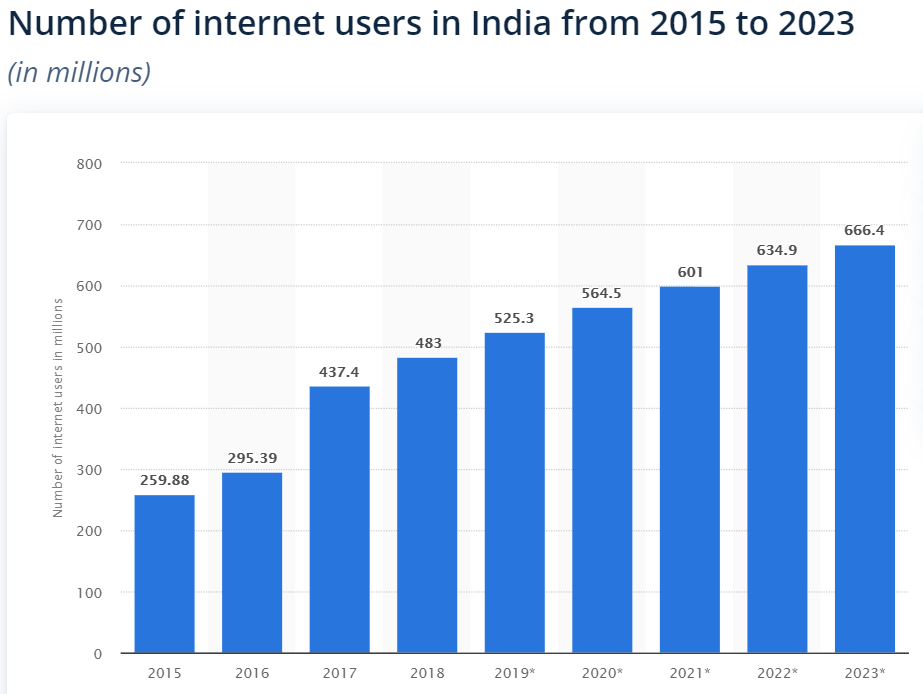
    Internet penetration is now a major criterion in determining the technological quotient of a country. The internet represents the true democratization of information, and capable people can quickly turn this information into valuable knowledge without the requirement of outside help (the formal education system of a country). As mobile phone (smartphone) penetration increases, the number of internet users will increase, thereby triggering a technological wave and creating a completely new era of technological superiority.

    Source

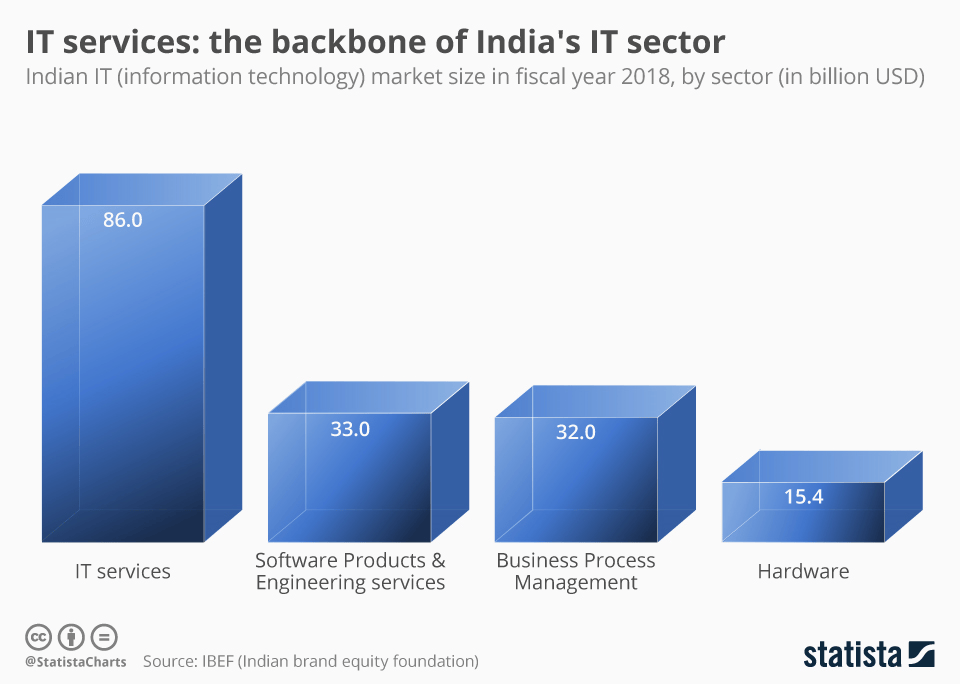
    IT Services make up a significant chunk of what Indian technology means to many (even to the outside world), but that will change soon. Indian IT services are favoured because of how inexpensive they were. With the increasing use of automation, artificial intelligence and data science, all repetitive manual work will be rendered useless, making the point of cheap labour rate moot. Indian software firms like Tata Consultancy Services, Infosys, and Tech Mahindra are increasingly spending on training employees to use these technologies to remain competitive in the global environment. The pie chart shows that large IT companies like the ones mentioned are the most equipped to implement these technologies into their existing projects or to pick up new projects/clients based on these technologies.

    Source
    Source
    Source

    Start-ups are so much more than just a buzzword today. They help bring in foreign investment in the form of funding, provide much-needed employment to people and ease some weight off the governments’ shoulders, making people’s lives simpler through the solutions they provide. Almost all start-ups mentioned in the image below provide solutions through technology.

    Source

    The Challenges and the Road Ahead

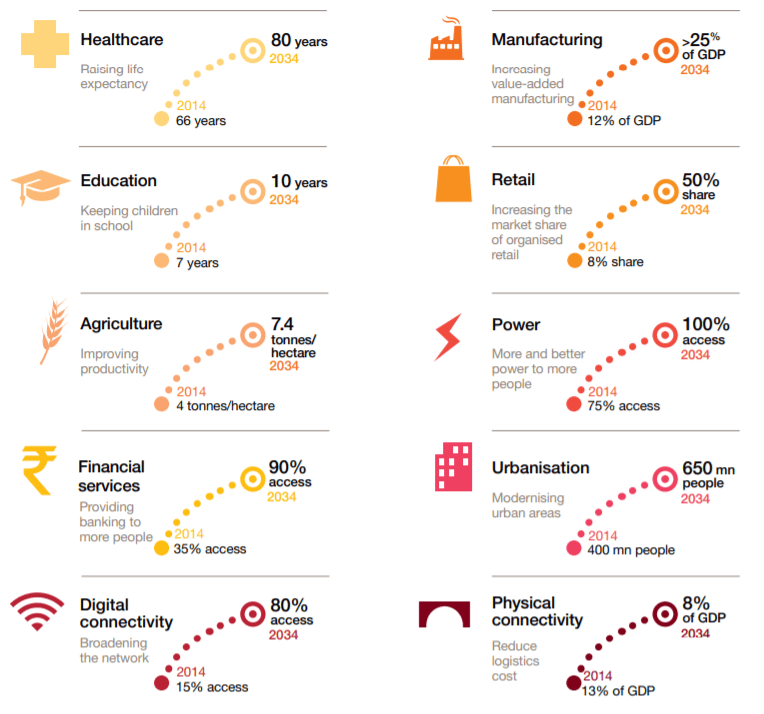
    The goal at hand is simple: using technology to leverage every industry and sector in the country to become competitive in the global scenario, eventually making India a technological, economic, and commercial powerhouse. However, the road ahead is full of obstacles. The picture taken from a PWC report highlights the goals of the country in the coming years. To reach that goal, technology can intervene in several ways:

    • Government schemes like Start-up India are a much-needed boost to the technological scenario in India. In 2019, a total of more than 1,300 start-ups were added, making the total tech-based start-ups tally a massive 8,900. However, a major chunk of these start-ups doesn’t even end up seeing the light of the day, and thus governments must ensure that these start-ups are effectively incubated, thereby reducing the failure rate.
    • The top engineering colleges in India need to be monitored and private players have to be encouraged to improve themselves continuously. Modern technologies must be implemented in the course curriculum, and the decades-old syllabus needs to be revised to ensure that students learn about modern technological advancements.
    • Ease of business in India has seen a tremendous improvement in rankings, but it needs to be continuously worked on and improved. As old laws and policies preventing business get abolished, the ease of opening a company/start-up improves dramatically, thereby contributing to the chance of letting the start-up be profitable shortly.
    Source

    Conclusion

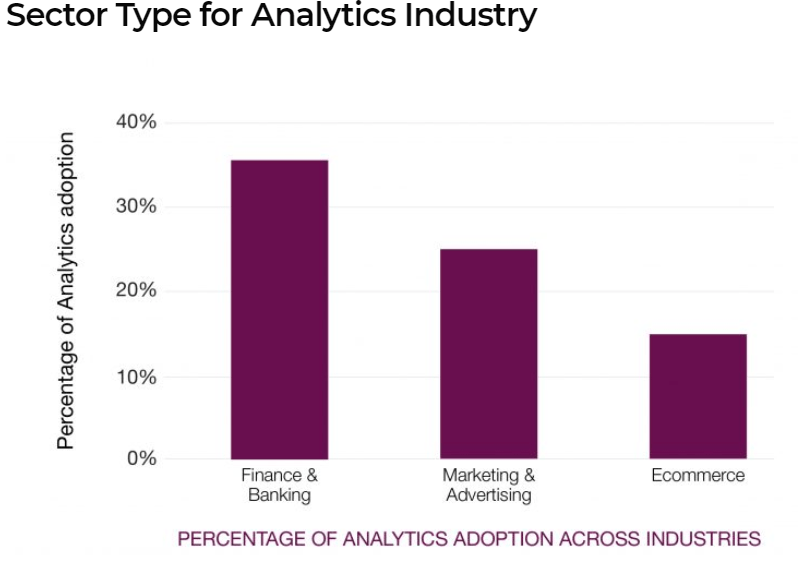
    As discussed previously, technologies like analytics and decision science must be implemented across industries to leverage their benefits. As these get implemented, there will be an acute shortage of employees who are trained in these technologies. Today tech startups are training their people and setting up an entire ecosystem at work in the country. The education sector needs to improve to drive technological benefits throughout the country, starting from the grassroots to the higher echelons in a complete chain of value creation.

    Source

    Do you like reading about technology and how it affects the world of business? You might like this article.