
Tag: Reviews

  • The unintended curse of the ultimate synergy

    The unintended curse of the ultimate synergy

    I have thought of writing on this topic for quite some time, but either due to being inherently lazy or waiting for the perfect impetus to push me over, I have laid off from this project—until now. It is almost 2:30 a.m., and I am rewatching Dexter. At the end of Season 5, I see Micheal C. Hall, who plays Dexter, break down after hearing devastating news from his partner in crime. For fans of the show, it is one of those rare moments when the character, a high-functioning psychopath, truly feels an emotion, that too, rather strongly (no more spoilers)! A familiar epiphany runs through me, as I am certain no other actor would have been able to do justice to the character other than Hall.

    Throughout entertainment history, we have had a plethora of actors who became one-off hits, so much so that they never had success playing any other character, or at least not to the level of the one that had immortalized them forever. To run through a few examples to prove my case, you have the likes of Jim Parsons (Sheldon Cooper, Big Bang Theory), Elijah Wood (Frodo Baggins, the Lord of the Rings series), almost the entire Seinfeld cast (Julia Louis-Dreyfus as Elaine, Micheal Richards as Kramer and Jason Alexander as George Costanza), Carrie Fisher (Princess Leia, Star Wars), Daniel Radcliffe (Harry Potter, Harry Potter series), Bryan Cranston (Walter White, Breaking Bad) and Jack Gleeson (King Joffrey Baratheon, Game of Thrones) to name a few. In the case of Gleeson, he allegedly stopped acting due to the amount of negative backlash he faced for portraying the dastardly character on screen.

    Thus, one thing is evident, playing the character so well leads to pretty strong and sometimes even violent reactions from the audience. They forget to separate the actor from the character; reel from real. At the heart of the phenomenon is the resultant effect of hundreds of critical as well as microscopic decisions at play—from being the casting director’s preferred choice to the director’s instructions, the actors portraying said characters following those instructions and maybe sometimes adding in some improvised speech or mannerisms that are fortunate enough to pass through the editor’s digital scissors. It is a true butterfly effect at work. I call this the perfect synergy—when both the actor and the character written for them achieve perfect amalgamation. Again, some might argue that this is what method actors essentially do, but then again, not all the examples I listed above are method actors. There must be something else at play here, simple luck? Maybe, maybe not.

    What matters at the end of the day, is that the finished product works, and it works damn well too. Because an actor’s popularity is directly correlated with how much money they make for the production houses which again is directly correlated with audience interest and attention. As Monk (Tony Shalhoub, the character playing Monk is another classic example of this phenomenon) would have said, “It’s a blessing and a curse!” A blessing because only a few fortunate actors through their characters, can boast of capturing the audience’s attention so exquisitely and in some rare cases, even the cultural zeitgeist through memes. A curse because it hinders them from ever moulding into a new character, in some cases leading to a possible financial ruin in the future. Royalty checks can support an actor’s lifestyle only for so long! Be that as it may, I am sure the audience who get to witness the visual treats are not complaining as they grab onto the edge of their seats in anticipation of the next scene.

    ~Biswadeep
  • Weaponizing awkwardness: the philosophy of “The Office”

    Weaponizing awkwardness: the philosophy of “The Office”

    My tryst with “The Office,” the popular US cousin of the British version of the show (also called The Office), began like everything else, through YouTube. I used to watch the most memorable parts of the show, digitally immortalised by their official YouTube channel. As the show took root in my impressionable mind, I often ran to Reddit communities, hosting debates on the best TV show in existence. Two likely contenders would often lock horns: Friends and The Office (the US version). I would contribute my fair share of logically structured sentences and sometimes even heated arguments when the situation got the better of me.

    No other species can defend their beliefs as fiercely as humans do; maybe that is what makes us so special. Or stupid. I cannot decide; I guess that is a topic for another day. But I digress…

    About the show

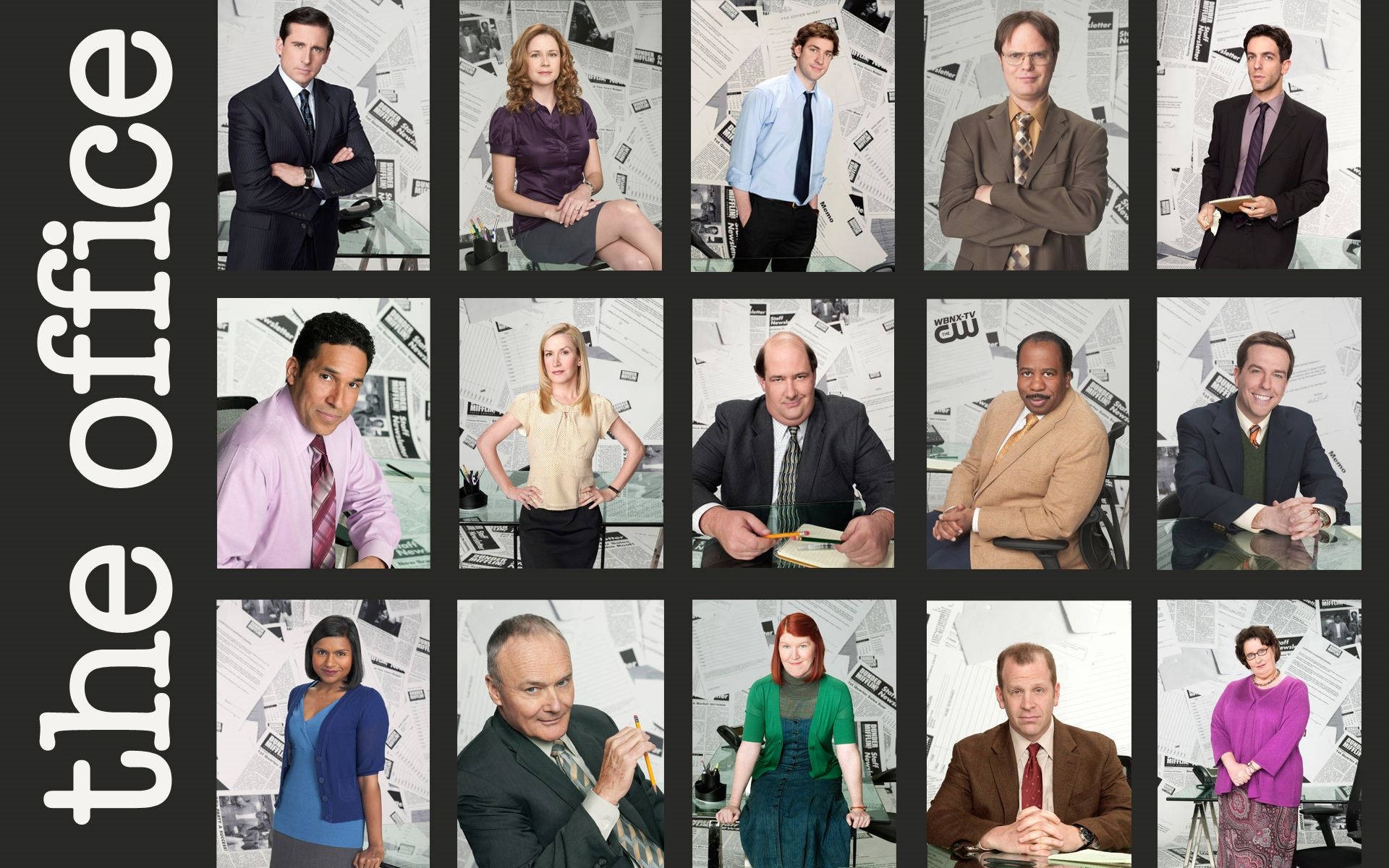
    The show is set in Scranton, Pennsylvania, and depicts the ongoings of a paper supply company, Dunder Mifflin. Throughout the show, there is always the looming possibility of either the Scranton branch closing, or Dunder Mifflin being completely wiped off the map by its competitors. Layoffs and employee transfers, therefore, are common cost-cutting measures taken by the company. These challenges act as external antagonists against the show’s characters, continuously chasing them and forcing them to make the next hasty decision and face unintended and often hilarious consequences.

    Awkwardness as a medium and Micheal as its harbinger

    The mockumentary also cleverly uses awkwardness to keep the story moving forward, so much so that it often becomes the ocean to the story’s ship. Michael Scott exemplifies this and embraces it until he becomes the personification of everything awkward this show throws into the audience’s face. A man-child in the truest sense of the term, his subordinates have no other options than to take care of his emotional and physical needs, working only when he is either distracted or asleep.

    However, as irritating and obnoxious as he may be, he always finds a way to redeem himself in his subordinates’ eyes. From attending Pam’s art show, displaying considerable stress whenever he is asked to fire anyone, and sometimes sharing genuine good advice, he displays he is only human and has a good side to him. I strongly think that his desperation to be loved by everyone stems from the loneliness that he experienced since he was a child. The show alludes to this when Micheal portrays a businessman in a dress-up competition who longs for friends. Now, he thinks of his subordinates as genuine friends and is not ashamed to leverage his position in a desperate bid to attain companionship. The only exception being Toby, whom Micheal hates with every fibre of his being. I wonder whether this is due to Toby’s not-so-cheerful disposition and his strict adherence to corporate rules (being an HR) that reminds Micheal of Dunder Mifflin HQ.

    This is why the show’s quality dips significantly after Steve Carell leaves the cast. None of the other bosses at the helm could effectively entice the audience towards the show. Characters like Robert California, Gabe Lewis, and Andy Bernard seemed extremely obnoxious, toxic, and overall unpleasant to watch. This is when the tolerable awkwardness gave way to visible disgust.

    Subtle humor is intelligent humor

    One of the positive aspects of the show is the absence of laugh tracks, which, in my opinion, severely limits the potential for comedy. Any show aiming to make the audience laugh need not give them instructions to do so. After all, I do not think any good could ever come out of forcing people to do something.

    Comedy flourishes in subtlety, not distractions; it flourishes when the viewer understands the external situations, the character’s motivations, and the unintended consequences the character faces because of said motivations. A laugh track negates everything the script stands for and robs the audience of the chance at their own interpretations. In rare instances, it works seamlessly, a case in point being Seinfeld.

    Each character is unique and represents something genuine

    The show fleshes out characters superbly, with each character and their relationships with other characters depicting something unique. For instance, the relationship between Dwight and Micheal portrays the meaninglessness of corporate hierarchy and designations.

    Dwight: “…and that’s why you have an Assistant Regional Manager.”
    Michael: “Yes it is…Assistant to the Regional Manager.”
    Dwight: “Same thing.”
    Michael: “No it’s not. It’s lower, so….”
    Dwight: “It’s close.”

    Jim and Pam obviously describe the long-term office fling that we all grew up seeing or hearing stories of, only in this case, they happened to successfully be together till the end; however, not without their fair share of problems.

    Ordinary workers like Stanley, Phyllis, Kevin, and Oscar, although might differ in their capacity to work, are all stuck in a low-wage job selling paper, the prospects of which are questionable in the long term. This is perfectly summarized by Stanley’s famous quote on Pretzel Day below-

    “I wake up every morning in a bed that’s too small, driving my daughter to a school that’s too expensive and then I go to work to a job for which I get paid too little,” he says in the episode. “But on pretzel day, well, I like pretzel day.”

    Jim and Dwight are more like brothers who cannot stand each other but are always there for a helping hand. They function as a well-oiled machine during sales calls, donning various personalities, and have helped each other through crises several times. Jim’s pranks sort of balance Dwight’s general obnoxiousness and fierce loyalty to Dunder Mifflin.

    All’s well that ends well

    Thus, in a nutshell, once one starts to peel off the layers that this show presents (however crude it might seem), a veritable shining gem starts peeking out. Granted, the show is an acquired taste for many, but I think there is much more acceptance for the US version than its grim, dry-witted UK version. Despite its many flaws, this will be one of those shows closest to my heart. Ending on a Micheal Scott note, because why not? “Catch you on the flippity flip!”