Every one of us has some form of social obligations to attend to, and companies and organizations are no different in this regard. Only when we help others in need will we progress both individually and as a species. Although businesses are profit-driven, companies still spend millions of dollars annually on CSR activities, thereby strengthening the benefits of these initiatives. Choosing the right subject to show support for also matters a lot, and organizations must ensure that their CSR activities align with their core values. For example, a pharmaceutical company may choose to focus on promoting basic health in developing countries.
Corporate Social Responsibility has many benefits for the employer, some of which are enumerated below-
CSR improves a company’s public image- Corporate Social Responsibility gives the company a chance to boost its reputation amongst target demographics, thereby improving its standing amongst its competitors. This helps drive a positive image in the minds of their target audiences. Also, companies with better and unique Corporate Social Responsibility policies get better media coverage, which gives them bonus brownie points and helps earn loyal customers for life.
CSR improves a company’s profit margins- Corporate Social Responsibility practices of a company or organization send a strong message that the company, although profit-driven, keeps in mind the ethical and moral standpoint and understands right from wrong. It strives to be an example of the company that implements rules that contribute to the sustainable development of at least its immediate surroundings. The average consumer is now more educated and knowledgeable than their previous counterparts. They prefer to buy products and services from organizations that take care of society and the environment.
CSR improves societies, people, and environments alike– The effects of Corporate Social Responsibility on the environment and societies are undeniable. The people who benefit from these activities start contributing towards the betterment of their local surroundings, thereby initiating a chain of helping and goodwill.
Corporate Social Responsibilities have immense benefits in enhancing the employer brand, too, by directly or indirectly boosting employee perception. Highlighting organizational values and goals attracts employees who feel proud to work for the organization. This, in turn, limits employee attrition and increases employee retention, thereby saving the company resources in recruiting new talent from time to time. A positive image helps the company recruit good talent.
The importance of hiring millennials– Millennials are knowledgeable, demand instant results, are motivated by what is happening around them, and drive positive changes in the environment and societies. Millennials bring diverse life stories and dynamism to the table, which companies can benefit from immensely. Naturally, organizations that practice positive Corporate Social Responsibilities will be more likely to hire much-needed talent in the form of modern-day millennials.
Transparency– Today, everyone, including employees and customers, demands transparency from organizations. CSR activities encourage employee participation and, in many cases, involve client and customer participation too. Employee participation leads to employee engagement at various levels of the organization, which has direct implications for employee pride (how proud employees are to be associated with the company).
To conclude, organizations should create a win-win situation for all stakeholders as it benefits everyone equally. Life itself is not a zero-sum game, and companies getting involved in CSR activities understand that. In addition, to make sure that Corporate Social Responsibility activities get the desired positive effect, companies must make optimum use of social media. Coordinating employees, clients, customers, and an organization’s social responsibility division will give the best results in terms of positive impact on society, environment, and its inhabitants, thereby boosting the organization’s image. It would also help the organization retain the right kind of talent and achieve its core mission and values in the long run.
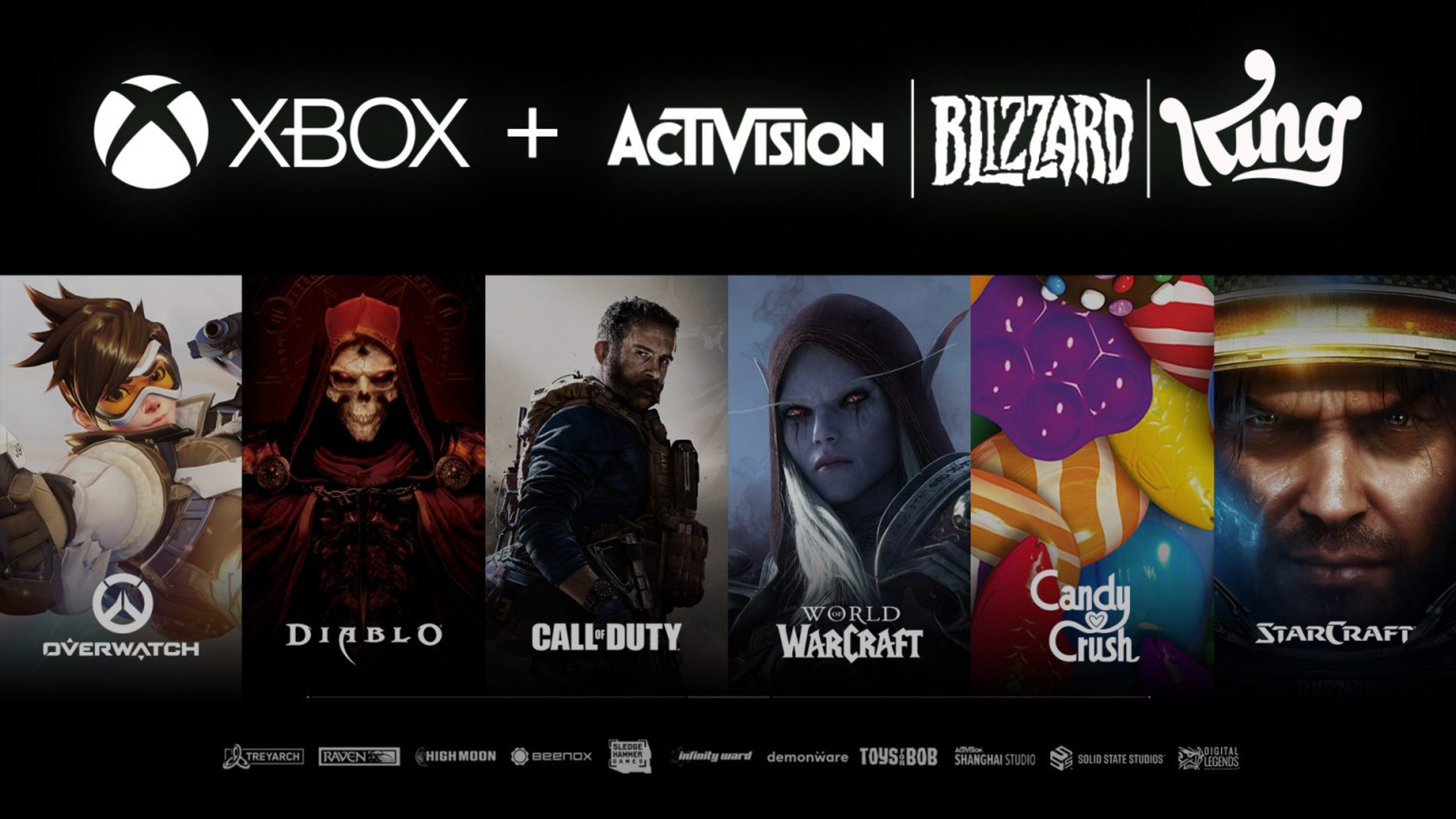
With emerging technology playing a crucial part in today’s gaming experience, it makes sense for Microsoft, a leading technology and gaming company, to acquire Activision, a leading game publisher. Microsoft is set to benefit from the deal to a great extent by leveraging an ecosystem composed of its products and services which complement one another. However, Activision brings many positives and negatives, and it is up to Microsoft to strategically address them. The path ahead is difficult but, if properly implemented, would prove invaluable for Microsoft’s global gaming domination.
Gaming is a multi-billion dollar industry today
From pixelated characters on screen to stunning visual graphics and player experience, the gaming industry surely has come a long way. It is a multi-billion-dollar industry currently and is expected to cross $200 Bn in 2023.
Current scenario of the gaming industry
Gaming has been an integral part of society, and as the world goes increasingly digital, the prospects of the gaming industry look even more enticing. The total gaming market is expected to balloon further as mobile penetration increases amongst the masses.
Some key gaming trends
Rise of mobile gaming
Mobile gaming has seen a tremendous rise since the advent of application stores like Google Play and Apple’s iOS store. Mobile gaming revenue reached $76.7 Bn at the end of 2020 and is expected to increase steadily. The pandemic’s negative impact on the mobile gaming section has also been largely limited since the hardware is not a limiting factor, unlike gaming PCs and consoles.
Popularity of e-Sports
Gaming is now a lucrative career option, and tournaments are watched by millions of eager spectators and sponsored by game publishing and developer companies. Esports is gaining both popularity and acceptance amongst the masses and is aided by a digital mediums like YouTube and Twitch where streamers play their favorite games and earn donations from fans.
Asia Pacific to be an important gaming region
The Asia Pacific is emerging as one of the most important geographies for gaming, accounting for almost half of worldwide gamers. The primary drivers for this leadership can be attributed to increasingly better internet infrastructure, an increase in online population, and affordable internet. Countries like Japan, China, and South Korea are the torchbearers of the Asian gaming industry.
Role of emerging technologies in gaming
Emerging technology is one of the key aspects of the gaming industry currently, as it is directly related to the overall gaming experience. Top gaming companies like Microsoft, Tencent, and Sony understand this well, and to a large part, their expertise in technology has enabled them to become leading gaming companies today.
For Microsoft, it can leverage its years of hardware experience in the form of its running Xbox consoles, its acquisition of several important gaming studios and developers, and its leadership in cloud and artificial intelligence to further strengthen its position as a go-to choice for gaming, especially when the role of emerging technologies is becoming ever so important.
What does the acquisition bring to Microsoft Xbox?
Although Xbox will have many potential advantages with the acquisition of Activision Blizzard, there are some areas of concern as well. The following pointers will strive to throw some light on them-
Benefits of the acquisition
I. Activision’s share in e-Sports
Activision has a good presence in the e-Sports industry as its subsidiary Blizzard entertainment owns massive IPs like Overwatch, StarCraft II, and Hearthstone, which are some of the best-known first-person shooters (FPS), strategy, and turn-based games respectively.
ii. Mobile gaming potential
Xbox can leverage the Candy Crush series developed by King, which Activision Blizzard acquired in 2016 to fulfill its mobile gaming aspirations. There is a huge market for cross-platform gaming, and mobile gaming is a key component of the PC-Console and Mobile trinity. Two of its highly rated games, Candy Crush Saga and Candy Crush Soda Saga each have more than a billion downloads on the Google Play store.
iii. Player base
Xbox can now use Activision’s existing player base of 400 million active players spread across 190 countries, in addition to 30 game development studios. This will also help Xbox add subscribers to its cloud-based gaming subscription service, Game Pass, which is already 25 Mn subscribers strong. The acquisition will also add around 10,000 of Activision’s experienced gaming employees to the Xbox umbrella.
iv. Popular Activision IPs
Activision owns popular games like Call of Duty, Candy Crush Saga, and World of Warcraft. Its most popular title, Call of Duty has been running since 2003 and has sold millions of copies to date. With the current subscription-type revenue model in gaming combined with Activision’s massively popular IPs, Xbox is well-positioned to benefit to a great extent.
v. Technology additions
Activision’s IW engine, created by Infinity Ward has been powering its Call of Duty franchise and is currently in its eighth version. Microsoft can make use of the IW engine for further developing large map-based first-person shooter games and combine it with XNA, a set of frameworks and tools which helps develop games.
Detriments of the acquisition
i. Declining sales
The sale of Call of Duty has dropped in recent years, with the peak sales being attributed to Black Ops which was released in 2010. In the UK, in 2021, Call of Duty: Vanguard sold 36% fewer copies compared to its previous year’s game, Call of Duty: Black Ops Cold War. Xbox will have the hefty task of reigniting public interest in the series. Maybe we will see much more marketing and perhaps several e-Sports tournaments being organized around the game in the near future.
ii. Losing brand value
Activision’s brand value has been taking a hit as it has been embroiled in scandals, specifically in 2021 when-
California’s Department of Fair Employment and Housing (DFEH) sued Activision Blizzard for violations related to equal pay, sex discrimination, and sexual harassment in July. Former female employees of the company shared negative experiences during their term at the company, and a massive walkout and protest were organized by the employees during the same time.
Activision Blizzard in September agreed to settle a lawsuit by the U.S. Equal Employment Opportunity Commission (EEOC) which alleged discrimination and harassment in the workplace. Activision, as a result, will create an $18 Mn fund to compensate and fund claimants, and any remaining amount will be divided between charities
iii. Revenue performance
Although Activision seems to have performed well in recent years, its revenue growth dropped steeply from ~25% in 2020 to 8.9% in 2021 with periodic crests and throughs throughout, suggesting which is an area of concern. In its Q4FY21 earnings, its quarterly earnings fell by 10.3% as compared to last year driven by low sales in its Call of Duty franchise.
iv. Lack of new games
Activision has essentially not put a new game on the market since Overwatch, in 2016. Although, in late January this year, it announced via Twitter it is building a new survival game which would be the studio’s first survival game. Time will tell how this would compare with the best out there in this category, namely The Forest, DayZ, Subnautica, and of course, Minecraft.
Microsoft’s strategy to become the gaming market leader
Key acquisitions by Microsoft in the past
It should be noted that Microsoft’s acquisition of Activision Blizzard is not the first gaming-related acquisition; it has been busy acquiring gaming studios for the past few decades. However, this acquisition, in monetary terms, is more than 8 times its next most expensive gaming acquisition, that of Zenimax Media.
Although the Rare deal happened decades ago, it set into motion Microsoft’s subsequent game studio acquisitions. It is also one of the major deals for Microsoft right after it started Xbox. It is the market consolidation, in terms of adding exclusive present and future titles and active players that Xbox has aimed at with these acquisitions. Brand value plays an important role in this aspect as well as adding well-known titles will translate to better Xbox subscriptions and console sales.
Another important aspect is the fact that Microsoft has allowed several of its acquired studios to function as independent bodies under the Xbox banner. This has allowed the studios creative freedom and enabled them to make their own decisions for their respective game titles. It remains to be seen whether Microsoft will function independently as well.
The Metaverse angle
Metaverse is now much more than just a buzzword, and the gaming industry is uniquely aligned with the metaverse concept. Interaction and digital worlds are at the very heart of the metaverse, and the gaming industry provides just that. Minecraft, developed by Mojang studios already has a huge digital world in place with in-game player interactions in the form of combat, base building, and exploration. Another important aspect is digital transactions, and because of micro-transactions already being a major revenue-driving force in the gaming industry, the synergy between gaming and metaverse is greatly increased. Microsoft has already put in place a metaverse technology stack that makes use of its present ecosystem of products and services, and the gaming component will act as an experience layer with which the user will interact.
Microsoft wants to position its Xbox ecosystem (including Xbox Game Studios, Game Pass subscriptions, and gaming consoles) to be an overarching destination for all things related to gaming. Since 2018, Microsoft has combined all its Xbox hardware and software services comprising Xbox Live subscriptions, advertising and transactions, video games, and third-party video game royalties into a condensed section called gaming. Microsoft also appointed Phil Spencer as the CEO of Microsoft Gaming in January 2022, after the acquisition. This strengthens the reason that Microsoft is viewing Xbox not solely as a game console division but as a one-stop destination for all things gaming.
Xbox’s revenue has been continuously on the rise in the past couple of years, and with this acquisition, it is only expected to increase as loyal Activision fans will be added to Xbox’s player numbers who in turn will get involved with micro-transactions inside the game.
Xbox has been battling Sony’s PlayStation for many years now in the console games market, and this acquisition is aimed at strengthening its position in the console and games market. The scale of Microsoft’s Activision acquisition can be appreciated much more when we consider that at $ 68.7 Bn, it is only $ 1.3 Bn short of the combined value of its next 5 biggest acquisitions. The addition of Activation games into the subscription services will help Microsoft further position its subscription service as a preferred alternative to Sony’s PlayStation Plus.
With the acquisition, Xbox will most probably become the third biggest gaming company by revenue after Sony and Tencent. This trend of acquisitions is expected to continue for Microsoft as they will always be on the lookout to acquire popular gaming titles for their Xbox portfolio.
Conclusion
To conclude, Microsoft, with this acquisition will not only strengthen its gaming portfolio but will also be able to fortify its place in the metaverse race with the help of its already flourishing ecosystem of products and services. Microsoft is well on the path to making use of this ecosystem in the increasing trend of cloud-based cross-platform gaming that is being observed across the industry. This acquisition is thus a key move made at a strategic time when the importance of emerging technologies and an ever amalgamation of the physical and digital world is becoming increasingly prevalent.
For Activision, aligning with a technology giant will allow it to have the crucial assets it needs to become future-ready. Additionally, its brand will definitely get a much-needed boost. For Microsoft, it gained strong steps toward realizing its aspirations of becoming a gaming market leader by adding Activision’s huge player base, popular I.P.s, and employees. What matters next is how the integration will be done as it is key for Microsoft to reap the intended benefits which in turn will dictate the return on investment.
The COVID-19 is an illness that is caused by a member of the coronavirus family that has been wrecking across the globe for quite some time now. This article serves to show that the devastation that Coronavirus has wrought has not just harmed China but the global economy as well. A pandemic has almost always had far-reaching consequences and throughout history, whenever there has been the slightest hint of a global pandemic, business, health, economy, and public life have suffered gravely.
Effect of Corona Virus globally
The Airline Industry is perhaps the most hit because of the virus, with a gross loss of $29 Bn in losses for the entire aviation industry and it is only expected to exacerbate further in the coming days. Most of these losses are concentrated in the Asia-Pacific region, which is currently facing a 13% decline in demand. Qantas airline said that it could expect losses between $66 Million to $99 Million because of the virus outbreak. Many prominent airlines have cancelled their flights to the Wuhan district or even China in general.
The Electronics and Mobile industry is sluggish, owing to China being an important manufacturer of mobile and electronics components. Factories are operating on less than half the workers due to the lockdown. Foxconn, a key supplier for Apple, has announced that its revenue will take a hit.
The Oil and Gas and Automobile Industries are very closely related to each other and affecting one industry will affect the other. The Chinese Passenger Car association stated that dealership sales had dropped by a massive 92%; this has affected the U.S. oil industry with per barrel cost dropping to a 3.7% low.
The Banking Industry is worse hit, as one would expect, with China’s banks lowering borrowing costs to encourage people and companies to spend to kickstart the economy.
As logic would dictate, the travel and tourism industry has been devastated, China was on its way to becoming a global tourist destination, and with globalisation making the world interconnected, the aviation, stock market, tourism, electronics, banking, hospitality industries have been affected very severely.
Effect of Coronavirus in the U.S.
A historic week for the stock market that ended with a big question: What are the steps that the government and the Federal Reserve do about the coronavirus outbreak that threatens to decimate the longest-running bull market on record? The infectious disease, COVID-19, which reportedly originated in Wuhan, China, late last year, reached viral proportions this week on Wall Street — and literally throughout the world. Approximately 550,000 plus cases have emerged, and almost 25,500 people have died, with several countries reporting their incidences of COVID-19, including Brazil, Georgia, New Zealand and Norway.
The structural damage to Wall Street’s bullish patina is undeniable, as the Dow Jones Industrial Average DJIA, -1.39%, the S&P 500 SPX, -0.82% and the Nasdaq Composite COMP, +0.01% booked their worst weekly declines since the 2008 financial crisis. All three stock gauges fell into correction territory with drops of at least 10% from recent peaks. All totalled, global equity markets had wiped out $7 trillion from the levels as of Feb. 19, when the S&P 500 notched its record, and the U.S. market alone has lost $4.3 trillion.
Effect of Corona Virus on India
As the stock markets all over the world are becoming more and more volatile, investors have started looking for other places where their money can reside safely. Investors have begun parking their money in stock markets of countries that are relatively well guarded against the pandemic, Gold as well as and Government Bonds of countries. Indian treasuries are expected to gain due to this volatility, as treasury bonds of countries are considered to be very safe instruments, thanks to the ability of countries to print money as and when required. So, India, with its ever-widening fiscal deficit, could be seeing an uptick in investments on treasuries, as investors all over the world have started hunting for safe-havens. This, in turn, would result in an increased probability of meeting the fiscal target for this financial year.
In early February, India was ranked 17th in the list of countries that are most at risk of coronavirus infection. In case the virus starts wreaking havoc in the country, it would not just result in increased Government spending to curb the outbreak, but would also result in an outflow of foreign investments, as panicking investors would inevitably start looking for other safe-havens.
China exports its steel, but with demand having been impacted more than supply, the accumulating inventory is putting pressure on domestic prices which further affects prices outside China. Earnings of TATA Steel and SAIL have been impacted more due to the fact they are more price sensitive.
A lower refining margin for petrochemical products affects organisations such as BPCL, IOCL, RIL and HPCL as they are downstream in nature while upstream companies like Indian Oil and ONGC will be affected due to reduction in demand.
Impact on the Indian financial market
Indian equities extended declines for the sixth straight session, with the S&P BSE Sensex falling as much as 3.2 per cent and the NSE Nifty 50 tumbling up to 3.31 per cent. Nifty 50’s Relative Strength Index, according to analysts, has fallen below 30 into the oversold zone. The Indian indices mirrored the global peers that are set for their worst week since the crisis of 2008, down more than 10 per cent from this month’s peak, as the Coronavirus spreads from China to across the world. Heavyweights TCS, ICICI RIL and HDFC slumped between 4% and 5%. Among other major losers SBI, Bajaj Finance, Infosys, M&M, Tech Mahindra and Tata Steel fell between 6% and 8%.
Both supply and demand to shift towards left, resulting in price being constant but output decreasing, thus resulting in declining GDP
In the case of healthcare, demand is increasing, and a lot of R&D has started, and new hospitals have sprung up. So, in this case, the price remains constant but output increases
In case India sees an uptick in foreign investments, the A.D. curve would shift to the right, increasing prices as well as the overall output (GDP). However, if India also gets affected by the pandemic, it would result in the outpouring of foreign investments, resulting in the A.D. curve shifting towards the left, reducing prices as well as the GDP.
This article describes the effect of COVID-19 till the month of February.
India walked out on the Regional Comprehensive Economic Partnership deal and this article will serve to look at the critical aspects of India’s exit and explain the consequences in a broader aspect.
Coming to what Regional Comprehensive Economic Partnership is, a free trade agreement between several countries in the Asia Pacific region that includes member nations of the Association of Southeast Asian Nations (ASEAN); namely Indonesia, Brunei, Myanmar, Singapore, Thailand, Philippines, Laos, Malaysia, Vietnam and Cambodia. The ASEAN also includes five partners namely Australia, Japan, South Korea, China, and New Zealand. India which was supposed to be the sixth partner opted out of the agreement on November 4th, 2019.
The RCEP countries had a combined GDP at Purchasing Power Parity of $49.5 trillion and accounted for half of the world’s population and almost 40% of the world’s GDP, according to 2017 figures. RCEP was basically an answer to combat the already powerful NATO and G-8 countries’ influence throughout the world in terms of trade and influencing power.
The agreement was primarily formed to increase the free trade between the member nations by reducing trade barriers which would consequentially improve the economies of these countries.
Advantages and Disadvantages
To begin with, India’s businesses would have access to a huge market that accounts for 40% of the International Trade. And with the little to no trade barriers, Indian products can easily penetrate the deep reaches of these countries giving the country a much-needed economic boost. With the factors of production on a full drive, the country’s GDP would improve exponentially, that is what basic Macroeconomics dictates. But there is a catch here, and that catch is a huge economic powerhouse by the name of China.
The opening of markets is a dual effect, that is in reciprocation of other countries opening their markets to India, it is expected that India will do the same. The problem is that China is extremely good at flooding any country with its low-cost goods and at the present moment, over 60% of India’s trade deficit is on account of China. The situation is further complicated by the fact that India exports services (like IT/ITES services) and these services do not feature prominently in the RCEP agreement.
RCEP would bring in opportunities and growth in manufacturing through the process of GVC or Global Value Chain where big corporations delegate production to multiple countries like Vietnam, India and Thailand. But because of a lack of infrastructure, experts think that this benefit would be nullified in India. With labour costs rising in China (as it progresses), companies are looking to shift their bases of production to other countries. Chinese corporations could use this window to dump in extensive products in the country. In addition, India currently has a running trade deficit with the RCEP countries and RCEP countries account for almost 27% of the trade that India does throughout the world. This puts India in further peril as India exports than imports when ideally, it should be the other way around.
Prime Minister Modi, in his address at the RCEP summit held in Bangkok said, “The present form of the RCEP Agreement does not fully reflect the basic spirit and the agreed guiding principles of RCEP,”(ref). Piyush Goyal, our commerce Minister also lauded the Prime Minister’s decision and said that the move would develop the domestic industry under the “Make In India” campaign.
“Today, when we look around, we see during seven years of RCEP negotiations, many things, including the global economic and trade scenarios, have changed. We cannot overlook these changes. The present form of the RCEP Agreement does not fully reflect the basic spirt and the agreed guiding principles of RCEP. It also does not address satisfactorily India’s outstanding issues and concerns In such a situation, it is not possible for India to join RCEP Agreement,” (ref) Modi added in the Bangkok RCEP summit.
Goyal, in a meeting with the MPs, explained that while several small countries have only opened 50% of their markets to foreign players, India opened 74%. Thus, it is easily understandable that with foreign players looking to expand into India, the domestic players would be highly underplayed in the process.
“India has maintained that we will not be a signatory to the RCEP unless our domestic concerns have been addressed. We are just one among the 16 countries who have not signed. We were able to take this firm stand because of our strong and stable leadership,”(ref) Goyal said in his meeting before the BJP Parliamentary Party.
To conclude
India is a big market and a global economic powerhouse and without India, the whole FTA (Free Trade Agreement) within the RCEP countries would fall short of the ultimate objective of mutual progress. It remains to be seen whether India can convince the other member nations to put pressure on China to accept its terms. But for the time being, the remaining 15 member nations are ready to seal the deal coming year (tentative) and India as of today is out of the RCEP deal. India should use this opportunity to improve its uncompetitive export market which is the primary reason for a huge trade deficit with any advanced economy country in the world. Where Modi’s decision is right, however, remains to be seen. As the proverb goes, “Time will tell”.
“Marketing is no longer about the stuff you make; but about the stories you tell.”
-Seth Godin
Defining Experiential Marketing
Experiential Marketing may be defined as a marketing strategy that aims to engage customers into participating in the primary brand experience. Experiential Marketing aims to directly involve customers into active co-creation rather than just being passive respondents. A glaring example of this would be Apple retail stores.
Delving deeper
We are living in the era of the experience economy; more focus is being given upon creating a positive and relatable consumer experience. The entire marketplace has gotten rid of the primordial concept of selling a product and has embraced the concept of selling experiences. And storytelling is one of the major pathways that brands choose to share their side with their consumers.
In essence, any experiential marketing campaign must have the following three key elements-
Participation in the form of active engagement from the audience
Brand promotion (about its core message and values)
With the ongoing digital revolution and the interconnectedness of technologies and industries, consumers now look towards brands that provide them with much-needed value addition in their lives. And allowing the consumers to experience that value addition changes the game entirely, to a level that experiential marketing is a disruptor; disrupting the way primitive marketing used to work.
A positive value addition in a customer’s life reflects on the company too. One of the most efficient forms of marketing is the word of mouth which experiential marketing taps in effectively. Customers are more likely to believe their friends and family members than a campaign run by a brand.
Examples of Experiential Marketing
Following are few of the prime examples of experiential marketing-
Sensodyne in 2013 set up three zones beside the iconic Tower Bridge in London that provided different experiences to the people; Zone 1 had a dental check, Zone 2 had a giant molar where interested people could take selfies and Zone 3 served as an official Guinness World Record attempt for the Largest Oral Hygiene Lesson in the world.
Globetrotter in 2016 introduced a weather room in their stores that allowed customers to test out the German sporting and outdoor company’s gear on a more realistic level.
What is common in all these examples
In all the above examples, customer interaction with the brands was the maximum, thereby allowing customers the prime control on the steering wheel of decision and answer questions like- why to buy the product, how does this impact my life positively, what value addition will I get from this and so on. Today, companies and brands have already realized the effectiveness of experiential marketing and are leaving no stone unturned to effectively implement the same.
COVID-19 has delivered a devastating blow to the world economy and has forced companies to drastically change the way business is done. Seeing the condition at hand, companies must choose between two options. Either drastically reinvent themselves and their business process in the wake of the worldwide pandemic or succumb to the virus and surrender everything to it. Functional units within companies, therefore, need to reinvent the wheel in terms of basic business processes that drive the entire organization forward. Marketing, as an important function of any company, is no different in this regard.
Delving Deeper
Organizations are inherently very slow to change and require careful strategic planning in case of massive overhauling. This is truer for organizations that span multiple countries and geographies than start-ups that are quite reactive to macro-economic changes. The image below shows the three levels of Management of an organization. The bottom level has all the employees while the middle level has the middle Management, and the top tier consists of business leaders who steer the company’s growth and direction.
Operational Management contains within it, all the functional units like Marketing, Operations, HR, Sales, and Accounts, to name a few. Each function of a company serves a different purpose that together makes up the company as a whole. This Digital Dribble article will focus on marketing and how it has evolved during the pandemic to better serve the customer and the company alike.
COVID-19 has drastically changed the way consumers behave, and therefore it is fundamental that marketing efforts also align in that direction. Certain industries like essentials, e-commerce, gaming, edtech, and entertainment have flourished during the lockdown and have seen increased activity/business while other industries like travel and tourism, and hospitality have seen better days. This section aims to cover the current trends in marketing during COVID-19 to understand how global catastrophes urge marketers to change their way of thinking to suit their customers.
Online Marketing Boom
The image below shows a comparison of Google Searches along with the graph of rising COVID-19 cases. Three of the most important search terms were, ‘online shopping’, ‘online doctor’, and ‘food delivery’ and the image shows that as cases started to rise, the frequency of these terms being searched rose alongside it. Companies like Zomato and Swiggy have upped their ad spending on digital marketing, especially their YouTube advertisements while simultaneously focusing on ‘No Contact Delivery’ of the customer’s favorite food.
E-Commerce sales skyrocketed (30.1%) from 2019 to 2020, thereby driving digital adoption in many cases. At the same time, retail growth has been limited to only 4% showing the declining scenario of retail in the country (USA) in data compared between the first six months of 2019 vs 2020. Online spending accounted for almost 19% of the total retail sales in the first two quarters of the year 2020
Amazon.com is one of the few companies that have received a significant boost since the lockdowns began with data showing steady growth YoY (year on year) from the previous year. As more and more lockdowns were announced traffic increased further contributing to sales on the website. Customers on Amazon spend a whopping US$ 11,000 per second!
User Content Consumption Pattern
To understand the marketing efforts, it is important to understand the potential customer/consumer first, and during COVID-19 user content consumption changed drastically. It is evident that digital mediums have gained traction in the pandemic, but it is difficult to estimate quantitively due to the recency of the data and the fact that work across all spectrums has not resumed with full force yet impeding research. People in isolation are turning to entertainment to keep themselves occupied. Thus, this section will primarily aim to study the before and after consumption patterns of certain websites/apps/channels.
1. Social Media Platforms
Platform
Facebook
Instagram
Snapchat
LinkedIn
Twitter
Reddit
Parent
Facebook
Facebook
Snap Inc.
Microsoft
Twitter
Advance Publications
Google Play Store Downloads
5 Bn+
1 Bn+
1 Bn+
500 Mn+
1 Bn+
50 Mn+
Unique Users
2.6 Bn
1 Bn
315 Mn
660 Mn
330 Mn
430 Mn
Average Minutes per User
58 Minutes
53 Minutes
30 Minutes
17 Minutes
3.39 Minutes
10.38 Minutes
Use Case (Facebook)-
Facebook monthly active users have increased from 2,498 Million to 2,603 Million (4.2% increase) from Q4, 2019 to Q1, 2020.
Voice and video calls have recorded a 50% usage increase, while group calls have surged over 1000%. In Italy, people are spending 70% more time on Facebook and its sister applications.
In March more than 3billionusers logged on to any of Facebook’s applications.
The chart shows the usage of YouTube in the USA increased in the pandemic significantly (63.7%) as opposed to before. The data was from a survey conducted during the initial months of the pandemic, and as time progresses, the increase is only going to be more apparent.
3. Miscellaneous-
There are several different aspects of content consumption, and although it would be impossible to cover them all, the miscellaneous section attempts to cover at least the most important among them.
Virtual Conferencing Applications-
Zoom, Microsoft Teams, Google Meet have gained millions of users with Zoom’s usage jumping 30-fold in April 2020
Microsoft Teams recorded 560 Million minutes on March 12, 2020, which increased to 2.7 Billion on March 31st
Fig 4.1 Google trends of virtual meetings
Online Gaming-
Paytm First Games reported a 200% increase in its user base during the lockdown
Rummy Circle grew by more than 100%, and the target age group playing these games is the 18-45 group
Games that have seen an uptick in their activity are-
Marketing is one of the most crucial areas for a company. It is also one of the most unique as it is one of the few functions that face both the customer and the company. This involves understanding the customer and collecting key data that drives insights and in turn, strategies for the organization.
Some of the key strategies that are being followed throughout industries in the case of marketing are enumerated below:
A.Observing changes in customer behaviour and sentiment closely
Customers have been more trustful of local businesses than big corporations, and COVID-19 has only accelerated this consumer behaviour. Therefore, it is imperative that brands now more than ever:
Listen to customers and understand what drives customer decisions: They can do this by studying the impact of global phenomena like recessions or pandemics like COVID-19 on customer actions and correlate these with why customers are distrustful of big brands.
Stay true and honest to the claims that the brand makes: Marketers need to protect the sanctity of customer relationships and must stay true to what the organization can and can’t deliver to the end consumer. Customer trust is an asset for the marketer as well as the organization as a whole
B. Making the marketing plan adaptable
A good marketing plan is any plan that adjusts for the future. It is prudent to use base, worst- and best-case scenarios for any decision-making related to campaign spending and otherwise. Other areas that need focus are:
Brands must develop creative, alternate marketing efforts since events that target large groups of people within places like malls is not possible at the moment. They should focus on digital marketing since it is an arena that is becoming increasingly relevant each day.
Since everyone has the same opportunities and channels available to them businesses must focus on securing media to ensure that their products are seen by a larger audience.
C. Being ready for operational impacts
COVID-19 has significantly impacted supply chains all across the world. Factories & manufacturing facilities are closed all over, and supply chains and logistics have been disrupted, affecting the supply side of the equation. This led to wild price fluctuations of products. In this scenario:
It is essential to strip everything down to the bare necessities. Marketers must coordinate with other departments (especially manufacturing and production, sales, logistics, and finance) to understand which products can and can’t be produced due to the capacity constraints along with supply chain difficulties. For products that cannot be produced in the current scenario, it is prudent to remove all campaigns related to it so that the bottom line can be given space to breathe, so to speak.
Digital marketing is the most effective and efficient tool at hand. Therefore, marketers must realize that during times of global unrest, it is best to fall back on something reliable. Digital delivery needs to be ramped up by promotion of Facebook/LinkedIn Pages, Mobile Applications, Amazon/eBay shops, and by incorporating payments into the website or application.
Leveraging technology for eliminating redundancies is crucial for cutting costs. Business Process Re-engineering is one of the ways to do it. This ensures that the return on investment for any function inside the company is good and keeps continuously improving.
D. Other trends to keep in mind
The following trends need to be followed to reap maximum benefits:
Market from home: Home is the current battleground, with almost all organizations making work from home an option for their employees. Keeping this in mind, marketers can quickly design and deploy campaigns from the comfort of their homes, thereby having an edge over others.
Engage with empathy: As said before, listening to customers is now extremely important, perhaps more than ever. Market research teams need to deliver real-time customer data so that they can be converted into insights and implemented to further marketing efforts by the company.
Analysing the changing marketing strategies gives an insight into what works during times of stress. Detailed research on how to adapt to these uncertainties can better guide the organization into the future.
Interested in reading about how brands can revive themselves? Check out this Digital Dribble article.
Established in 1981, Onida was the pioneer in the television industry in the country. There was a time when every household boasted of an Onida TV. Neighbours would flock over from adjoining homes to see India play Pakistan on an Onida, memories were made. Alas, Onida, the brand that redefined the TV watching experience during our childhood is suffering heavily today. In 2021, it clocked in a meager turnover of Rs. 762.69 crore. Although this projects a positive image in the sense that the brand has not entirely died out, a lot still needs to be done. What made Onida, a market leader in television sets, take such a huge blow? Digital Dribble has the answers for you.
Reasons for the Downfall of Onida
To look at ways to improve the Onida Brand, we must first understand why it failed in the first place. Here are a few reasons why Onida, which was once a powerful in-house name, has obscured into oblivion:
Failing and falling consumer connect (Brand Amnesia) If you’re a millennial, you’re probably well acquainted with Onida’s brand mascot, the Red Devil. Unfortunately, the current generation has no clue who he is. Onida’s strong brand connect was one of its major weapons against foreign competition which has now become obsolete.
A rise in foreign brands- Brands like LG and Samsung entered the Indian home space during the 1990s and things have never been the same for Onida. It struggled to hold on to its ground and with the technological offerings these brands had to offer to their consumers, Onida lost the battle.
Changing brand taglines- Through the years Onida changed its taglines far too many times. The following image is a testament to that fact. Changing brand taglines too many times confuse the consumer and reduce the mindshare that the brand enjoys. This also attests to the fact that Onida could not set its brand tagline to align with the changing future thus showing its lack of fore planning and thought.
No/Poor after Sales Services- Onida was not too keen on providing after-sales services which increased the dissatisfaction amongst its existing customers. Word of mouth spread fast and Onida started losing out on key and loyal consumers.
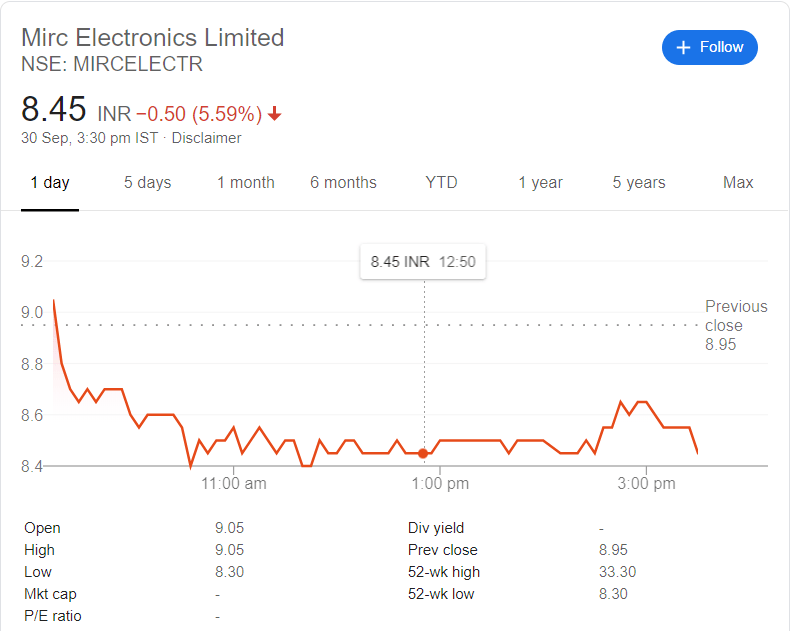
Conflicts among owners- One of the major reasons for the brand’s fall is the internal conflict between the primary owners of MIRC Electronics, Onida’s parent company. The brothers, Gulu and Somu Mirchandani, and their brother-in-law, Vijay Mansukhani have been engaged in a conflict that has affected its share and its reputation by a huge margin.
Frequently changing advertisement agencies- No two advertisement agencies are alike and when a company changes its agency, a lot of things get lost in translation in the process. Onida brand has suffered significantly because of this issue as well. Different agencies created different Onida devils that confused the customer.
Onida was undoubtedly one of the market leaders in CRT (Cathode Ray Tubes) televisions along with BPL and a few other companies. However, it failed to stay technologically relevant. When the CRT technology was slowly being pushed aside by LCD and LED innovations, Onida should have invested heavily in the R&D of the same. The company lacked foresight which is one of the ultimate necessities in a space that is dominated by volatile technology. Onida could have also leveraged the fact that it was an Indian company in the Indian market more effectively (which is a vital marketing strategy for companies like Patanjali) which would have allowed for greater sales figures.
It is not too late for Onida to prove that it can still effectively target and position itself as a leading provider of television.
Effective targeting- With a rise in disposable income, Onida can not only target the Tier 1 metro cities but also the Tier 2 and Tier 3 cities. It can choose to focus on the hostel, hotel, and restaurant segment as it is a huge segment that has almost limitless possibilities in terms of sales and brand-boosting.
Effective segmenting- Onida should segment its target consumers effectively. It can use segmentation on the lines of income, age, lifestyle, geography (rural and urban), and psychographics (attitude towards the brand) to name a few.
Effective positioning- Onida should stick to one advertising agency that understands Onida’s value proposition system and strives to project the same onto the minds of the customers.
Celebrity Endorsement- Celebrity endorsement is all the buzz these days. What Onida can do is to find someone whose public perception is in line with the values of the company.
Social Media Marketing- The age of digital is now. Onida can leverage its brand by using social media to its fullest capabilities. It can tie up with social influencers and YouTube stars to promote its products to the young adults of the country. As India is a young country, Onida has a huge potential consumer base in front of it.
Sales and Distribution channels- A robust SKU (stock keeping unit) along with automated inventory control and management is the need of the hour. Although it is implementing automation in its manufacturing plants and getting rid of a redundant workforce, Onida needs to work a lot harder if it wants to regain its old glory.
Rural markets- Onida can leverage its nostalgic brand positioning from its early days and reach out to senior citizens living in various tiered cities and the adjoining rural areas. Its ‘Igo’ branch of television has a major chunk of its revenue from rural areas. A strong distribution network along with good stockists will help Onida cater to the rising demand.
Onida is still struggling to take the reins of the market into its hand, but it can very well become its old self if it effectively follows the above steps.
Want to read more about marketing strategies? Read this article to learn more!
AI adoption is happening at a breakneck speed all around the world and this article aims to find if COVID-19 has sped up or slowed down the adoption amongst various industries. In order for comparing the adoption during COVID-19, it is important to check the adoption undertaken to date. That will strive to give a base reference point for further study of the same. The chart below shows in percentage the adaptation of AI in different industries and under different functions.
Chart 1 – Adoption of AI in different industries under different functions (in %) (2019)
As seen from the chart above, Service Operations function dominates in the overall category while Product/Service development comes in at a close second. The particular function where AI is adopted also depends heavily upon the type of business as evident from the fact that the Automotive sector use most of its AI adoption in Manufacturing and Telecom uses it in Service Operations. Businesses remain lukewarm towards the adoption of AI citing reasons such as spending increased amounts of resources like money and time.
AI adoption entails a number of key factors and questions and some of them are enumerated below-
Whether it is relevant for the business in the long term
How much of a positive impact does AI adoption create?
Does the cost justify the benefits that can be reaped into the future?
What are the processes that are improved and how does that impact the current business?
Therefore, even if it is evident for businesses to adopt AI, they do not do so keeping in mind the short- and long-term prospects and other factors like Return on Investment (RoI).
Diving deeper
AI is an overarching term that encompasses many technologies such as Machine Learning and Natural Language Processing so it makes sense to look at the adoption rates keeping in mind the industry and the technology involved. The graph below shows the breakdown of AI Adoption in 2019 and again the type of technology used in a particular industry depends heavily upon the characteristics of the industry itself. High Tech is leading the other industries in usage and adoption of Machine Learning while Robotic Process Automation is rightly mostly used in Automotive Industry. Businesses in developing economies are increasingly utilizing the benefits of AI with each passing year. Reports by McKinsey show that high performing companies have a couple of key strategies that are similar to each other-
AI strategy is heavily aligned towards the business goals
Investing in AI training and talent pool
Collaboration that cuts across functional teams
Data Practices that follow a best practices pattern
Fig 2.1- AI in depthChart 2.2- Distribution of AI adoption under various specialized technologies (2019)
AI Adoption amidst COVID-19
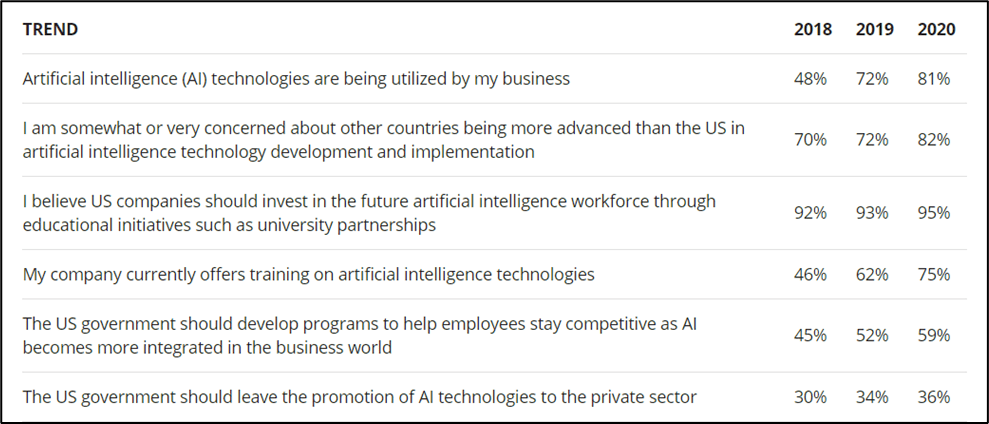
COVID-19 has accelerated the adoption of AI across industries with the Bain COVID-19 IT Buyer Survey stating that three out of four companies are planning to accelerate automation initiatives due to COVID-19. It is very likely that COVID has transformed permanently, the way businesses are conducted and now many are considering AI adoption to stay ahead of the curve. According to a RELX survey dated October 2020, AI usage has shot up massively to 81% which is a huge 33 percentage points increment over 2018 in the USA. The following image shows a three-year trend in the usage and adoption of AI across industries.
With COVID-19 dictating our lives and with the increased dependence on social distancing and work from home cultures, it is imperative that businesses embrace the AI advantage. AI ensures that there is minimal redundancy and the need for human labour for trivial, repetitive tasks is abolished. In addition, technologies such as the 5G will support and help AI adoption. Healthcare is one such area that is rapidly making use of AI amidst a massive paradigm shift. Some of the data points pertaining to AI adoption in COVID-19 are-
68% increased the spending on AI during the pandemic
77% of those surveyed agreed to the fact that AI technologies helped slow the spread of the virus
63% businesses agreed that AI helped them achieve a strategic advantage amidst the pandemic
However, there are concerns about the ethical usage of AI as many fear that in the wrong hands, AI can have devasting consequences. Decades of dystopian science fiction movies have done nothing to alleviate those fears and instead helped reinforce them. Fortunately, most AI usage in businesses are harmless and only strive to improve processes, optimize them and help reduce costs over the long run. AI adoption is one of the key factors of success against uncertainties and it is only fair that businesses start realizing that, for their own survival.
In order to establish the fact that Millets really are the future crop of the country, a couple of things must be looked at. This article, therefore, arrives at the answer to the heading by exploring Millets through a number of different headers-
Introduction
What makes Millets special?
Worldwide production & availability
Nutritional information
Health benefits of using millets
The business angle
The way forward
By exploring these topics in a somewhat detailed manner, it would be easier to support the fact that Millets truly are the crops of the future.
Introduction
Millet is the term given to a collective group of small-seeded grass (Poaceae, which is the scientific term for grass) that primarily grows in developing countries like India, Niger, Mali and Nigeria. Being one of the earliest cultivated crops, millets was primarily considered to be a major ingredient in bird seeds, but it is interesting to note that millets have been used in making beer, flatbreads, porridges and other fermented beverages for many years now.
Some of the most popularly cultivated millets and their scientific names are listed down below-
Finger millet (Eleusine coracana)
Pearl millet (Pennisetum glaucum)
Foxtail millet (Setaria italica)
Little Millet (Panicum sumatrense)
The genus Echinochloa contains the Indian and Japanese barnyard millets. There are several other variants of millets, but these listed are the most popular. Millets are divided into two broad categories- major and minor. While the major brand contains the most popular millets like pearl, foxtail, finger (Ragi in India) and Proso (White millet); the minor branch contains the unpopular ones like barnyard, little, Guinea, fonio, Kodo to name a few. It is heartening to note that Millets has been positively accepted in almost all parts of the world, especially the developed countries and many are now adding millets in their day to day diet because of its advantages.
What makes millets special?
One of the best qualities of the crop is its extremely high tolerance for droughts. To highlight how little water is needed for rearing these plants, it is insightful to notice that whereas to grow one kilogram of rice, almost 5000 litres of water is required, the same quantity of millets requires only 250 to 300 litres at maximum. Millets are widely referred to as the climate-smart crop as it has the potential to combat the ongoing global climate crisis. In addition, millets grow well in the absence of pesticide and insecticide, and in the hands of the trained farmer, they require little to no input labour.
After harvesting, the remaining stalks can be used for animal fodder, and millets themselves are used as bird feeds as well. In fact, in developed nations such as the United States and the United Kingdom, millets were primarily used as bird feed before their miracle qualities caught the public eye. In recent years, a trend towards organic farming and alternatives to the already well-established grains have made millets as a favourite go-to grain for many. Millets can also be used as the raw material for biofuels. There are several studies that have been conducted on the same.
Worldwide production & availability
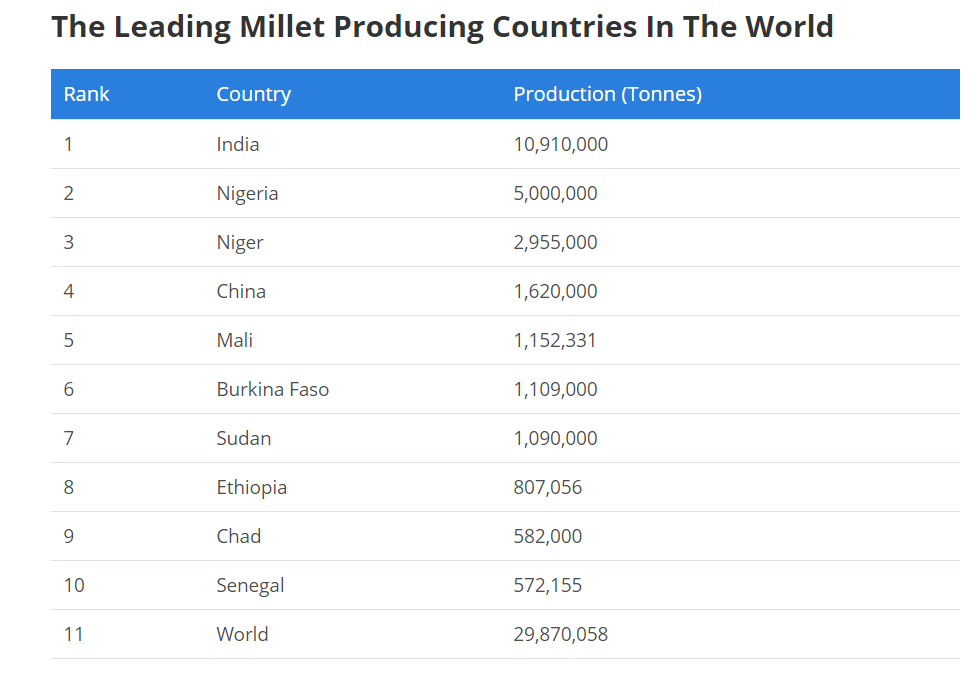
India currently leads the world in Millet production followed by the African countries of Nigeria and Niger. China is also present in the list as one of the leading producers, although it lags much behind India in this aspect. The figures shown here are for the year 2107. In India, as of 2018, the crop is grown in 21 states, and the states of Telangana, Andhra Pradesh, Madhya Pradesh, Karnataka, Haryana, Uttarakhand, Kerala and Jharkhand give high importance to the growth of millets.
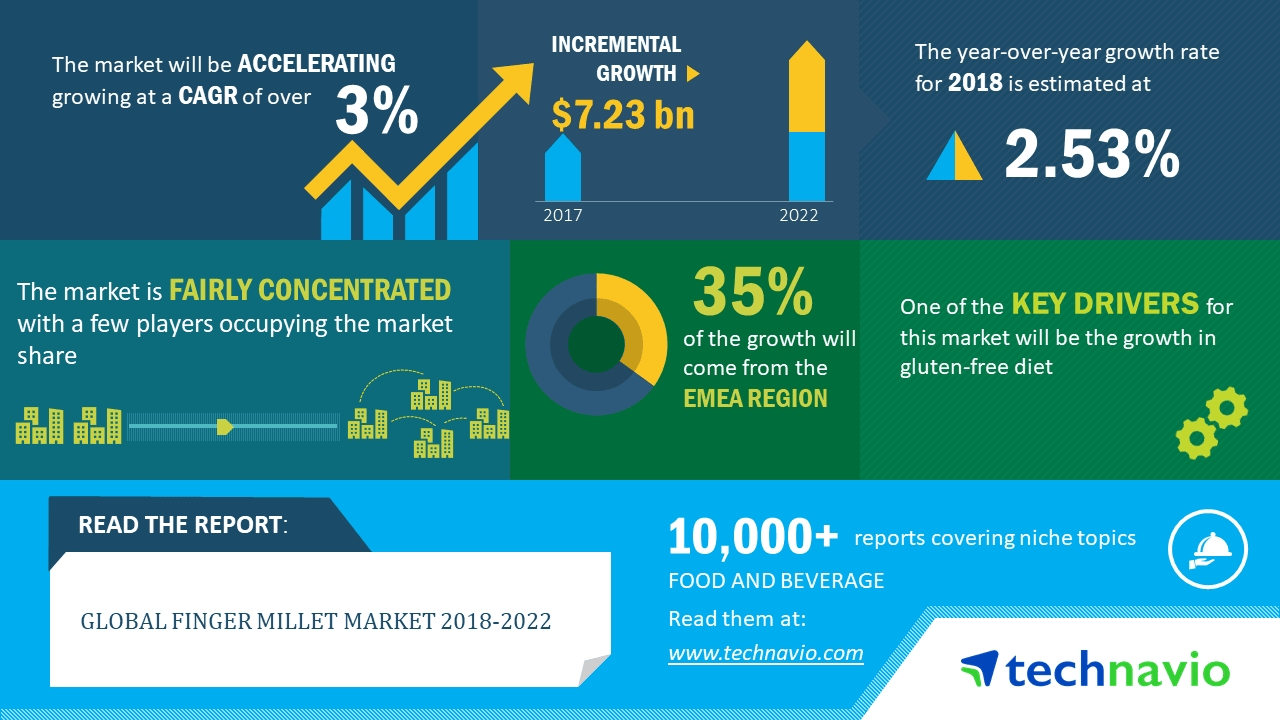
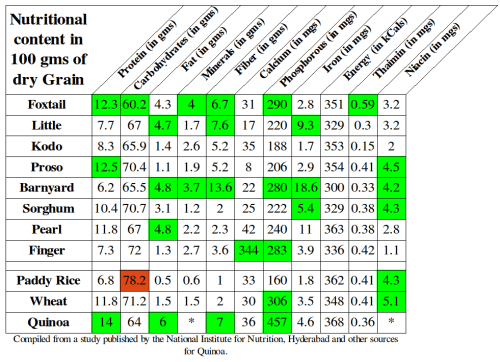
The image below compares the nutritional content of different kinds of Millet to Rice, Wheat and Quinoa, which are other crops widely consumed throughout the world. Raw Millet is composed of roughly 73% carbohydrates, 9% water, 11% protein and 4% fat, thereby making them low fat but high carb alternatives. Millets are rich in phenols, especially catechins and ferulic acid which act as antioxidants. Millets are also gluten-free, making them an ideal source of food for those inflicted by the celiac disease or for those who choose to eat gluten-free.
With increasing obesity and stress in the upcoming population, millets serve as a cancelling factor for many of the diseases that develop because of obesity and stress. These claims are made only after years of testing with multiple test subjects within which the improvements were noticed.
Healthy heart: Being a good source of Magnesium, millets help keep the heart beating strong. Magnesium-rich foods help reduce the effects of asthma, and the frequency of migraine attacks.
Lowering the risk of Type 2 Diabetes: Another reason to have millets is their uncanny ability to reduce the risk of diabetes which can again be attributed to the high concentration of magnesium present in the grains.
Gallstone prevention: Consumption of fibre rich foods have shown to reduce the chances of gallbladder stones forming within the individual. It is speculated that fibre-rich foods pass through the intestines rapidly and also reduces the bile secretion, thereby decreasing the chances of stone formation.
Breast Cancer shield: Fibres are shown to reduce the instances of breast cancer among women who are pre-menopausal.
The Business Angle
A strong business plan is extremely important for the success of a product. So, it is highly essential that a stakeholder analysis should be done keeping in mind, Millets. The potential stakeholders in India with respect to Millets would be-
The farmers
The Governments (both Central and State)
Entrepreneurs (preferably in the organic product area)
Suppliers and Distributors
Retailers and Wholesalers
The customers (People who buy might be different from the end-user, the consumer)
The consumers (People who cook and eat the Millets)
Workers employed across the value chain
It has to be kept in mind that for Millets, the competitor would be wheat, rice and other widely available and used grain crops.
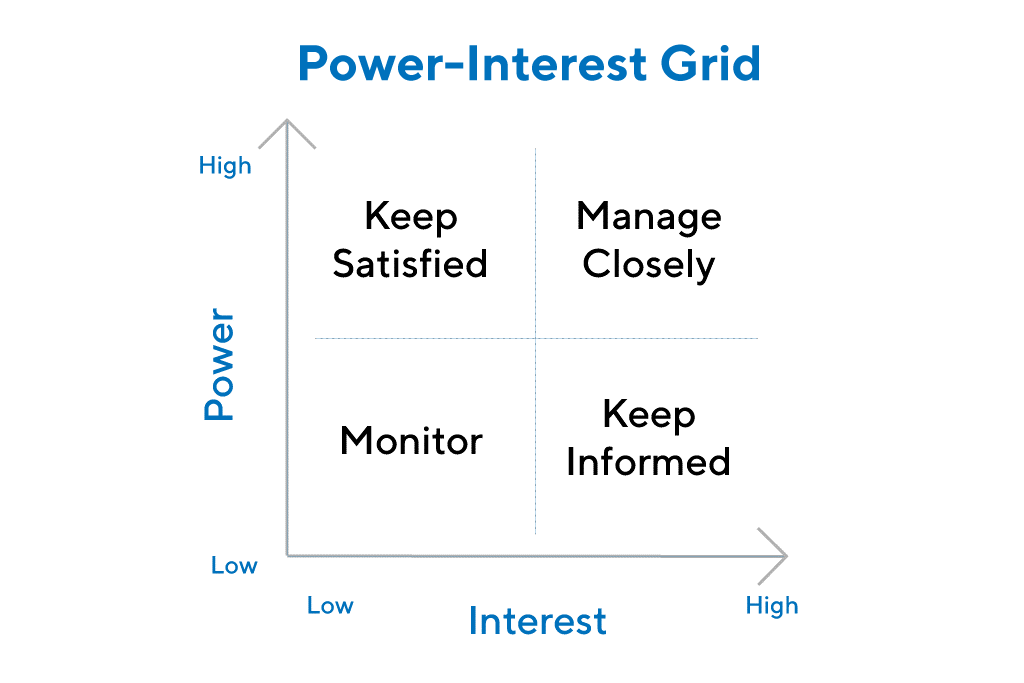
High power, high interest: These would be the farmers, as they have maximum involvement with maize. The customer, end consumer and Government belong in this category.
High power, low interest: Retailers, Suppliers, Wholesalers and Distributors who keep stock of competitor to Millets would belong in this category.
Low power, high interest: Entrepreneurs would belong in this category as when they are setting up a business; entrepreneurs don’t have much control over the external factors.
Low power, low interest: This would comprise of the workers that are employed across the value chain. These workers, while taking up the role of customer or consumer, automatically gets shifted to the high power-high interest segment.
It goes without saying that government impetus is extremely important in making Millet the star crop of the country. Several marketing campaigns that focus on the importance of millets have to be designed and circulated amongst the masses by the government in addition to Millet based initiatives. Odisha government has taken a number of steps in this regard, and the images below show the initiatives taken by the government towards the same.
A robust public distribution system of not only Millets but also other essential grains will ensure that Millets are helpful in satiating the hunger of the poor. In addition, farmers need to be incentivized properly regarding the production of Millets as a whole and a strategic team need to be deployed by the government that makes use of barren, low-quality lands to produce millets while useful well-nourished lands can be used for the production of other crops.
If India can successfully leverage the growing preference for Millets, both in the country and worldwide, improve its Yield per Hectare of Millets by commercializing it, incentivizing production amongst farmers and improving distribution using the PDS, then Millets will definitely be one of India’s top exports bringing in much-needed revenue from outside.
Artificial Intelligence is the buzzword. Everyone is speaking about it, irrespective of whether they are a scholar on the topic or not. But what must be considered is AI’s deep-reaching implications and how it has the ability to transform society for the better. In this article, we would look at how AI is currently being used in the banking industry to transform it for the better. It is important to note that while us commoners use the term Artificial Intelligence (AI) everywhere, in reality, it is a mixture of technologies like Machine Learning (ML), Robotic Process Automation (RPA), Predictive Analytics and not to mention, Artificial Intelligence (AI).
Before we dive into the application of AI in the banking industry, let us look into the definition of each term related to Artificial Intelligence, to get a clearer understanding of each term to appreciate their extensive usage in the banking industry.
Artificial Intelligence-
In simple terms, Artificial Intelligence is the emulation of human intelligence by computer systems. They can be broadly categorized into weak and strong AI.
Weak Artificial Systems are those which are trained to perform a certain task and its programming does not allow the AI to learn from its fallacies. The Strong AI or Artificial General Intelligence (AGI), is generally associated with human intelligence and it is responsible for the popular fear in the general population of losing out jobs to increasingly efficient and smooth artificial intelligence.
Machine Learning-
Machine Learning is an application of Artificial Intelligence and as the name suggests, the algorithms enable the computers/machines to learn from its mistakes and mould itself to solve increasingly complex scenarios and problems by taking into account all of its previous data to provide an optimum solution. Machine Learning largely relies on patterns in the data to identify and make better decisions, as and when required.
Robotic Process Automation-
To define in layman’s terminologies, Robotic Process Automation is the method of combining AI and Machine Learning to process data in high volumes as well as automate repetitive tasks, thereby reducing the time required and human efforts. RPA is largely divided into three categories-
Probots- These follow simple rules which are repeatable in nature to process high volume data
Knowbots- Bots that are trained to graze the internet to collate much-needed user-specific information.
Chatbots- These bots are interactive in nature and are being extensively used in various industries as virtual agents to interact with customers.
Thus from the above pointers, one thing is pretty clear, banks and many other organizations use AI and other complementary technologies to reduce time while increasing efficiency.
Contrary to the global belief that AI is replacing humans, AI will work alongside humans to make the world a better place to live in. The banking industry today has been increasingly using AI in its day to day functions and it is only expected to rise from here on.
“According to Accenture’s recent Accenture Banking Technology Vision 2018 report, 83% of Indian bankers believe that AI will work alongside humans in the next two years — a higher than the global average of 79%. “93% bankers in India said they increasingly use data to drive critical and automated decision-making.”
The Business Insider AI in banking report states that the front office and the middle office have the largest capability of saving costs through the implementation of Artificial Intelligence in banks.
“According to Accenture’s recent Accenture Banking Technology Vision 2018 report, 83% of Indian bankers believe that AI will work alongside humans in the next two years — a higher than the global average of 79%. “93% bankers in India said they increasingly use data to drive critical and automated decision-making.”
The above facts in the images have been arrived at after analyzing the following financial institutions/companies- Citi, JPMorgan Chase, U.S. Bank, Personetics, HSBC, Quantexa and Capital One.
AI is benefitting all sectors of business and banking is no exception to this. Some of the recent uses of AI in the banking industry are enumerated as follows-
Personal Assistants and Chatbots- In this era of digitization, companies need to not only leverage mass digital marketing, but also customize their products and services for each customer. AI helps in individual customization through the use of chatbots and personal assistants. Customers can now not only choose a product of their liking but also leverage these platforms for redressing grievances, contacting customer support and writing reviews to name a few. Mobile banking, another successful effect of digitization, has been integrated with Artificial Intelligence to yield wonders for the banks.
“As per the survey by the National Business Research Institute, over 32 percent financial institutions use AI by the means of voice recognition and predictive analysis.”
Today’s knowledgeable customer uses mobile banking a lot as it is easier, faster and efficient. Thus, banks can get detailed information about their customers through predictive analytics based on their mobile app usage and they can then focus their attention on the products and services that are most liked.
Backend automation using Artificial Intelligence- Customer data and critical image documents (like Aadhar, Voter Card, Pan Card) can be processed extremely fast using Artificial Intelligence and Machine Learning to yield valuable information about the client(s). Robotic Process Automation can make this work easier by extracting only the valuable lines of information from these documents and analyzing them to create a complete profile of every customer the bank deals with, ever.
Security- AI can be successfully implemented in the middle office to detect fraud and money laundering. An Artificially Intelligent system can successfully detect these anomalies and report them to the higher management in the blink of an eye. Better fraud and money laundering activities detection will lead to better management of financial resources within the bank thereby leading to not only greater profits but it would also mean that more people would have access to the funds of the banks (as loans) thus helping the economy as a whole.
“Most banks are looking to deploy machine or deep learning and predictive analytics to examine all transactions in real-time. Machine learning can play an extremely critical role in the bank’s middle office.”
AI in ATMs- One of the most necessary places where Machine Learning and Artificial Intelligence is the need of the hour. Real-time facial recognition software supported by robust artificial intelligence and machine learning would lead to lessening of the incidences relating to ATM vandalism. India has already witnessed a lot of loss because of ATM thefts and vandalism and at times surprisingly pests (rats) chewing away through wads of cash inside the ATM storage locker!
“Bank heists have not gone out of fashion just yet, both as a cinematic trope, and also as a shortcut to riches. A total of 972 such incidents were reported in 2017-18, roughly three every day, according to data collated by the Reserve Bank of India (RBI). The banking sector lost a total of Rs 168.74 crore to organized crime directed at ATMs in the past three years. This includes figures for the first quarter of FY19. Between April and June 2018, 261 incidents were reported, entailing a loss of Rs 18.85 crore to banks.”
Trading and Securities- Robotic Process Automation (RPA) is extremely useful in trading and securities; an RPA could easily distinguish between the prices for the purchase of securities between an investment manager and a broker and then create an email message directed towards the broker on predetermined rules. RPA can also streamline several processes where one would need to skim through rows and columns of data to arrive at the correct financial decision.
Portfolio Management- Machine Learning, equipped with years of data on the stock market of various stock exchanges throughout the world are now able to construct near-perfect portfolios that minimize the risk all the while aiming to maximize the wealth over a period of time.
Challenges of implementation of AI
Any technology would have its fair share of challenges in implementation and AI is no exception in this regard. AI without data would be akin to a human without a heart and a brain. Also, the availability of the right data is another issue. Hence, there needs to be a structured process for collecting customer data and later, cleaning, processing, and finally analyzing the same to reveal the important insights that banks need so much. Then comes the additional burden of the language barrier in India, with tens of different languages and hundreds of dialects spoken, the process of collecting regional data would be a herculean task for sure. Banks from all over the country needs to come together to form a framework and a structure so that these challenges become easier to face. AI has the potential to become a trillion-dollar industry by the year 2035 and its explosive growth in the present times only strengthens the statistics.
In addition, government banks must also be willing to partake directly in forming the framework mentioned, so that the poorest of the poor in the economy benefit from these technologies. After all, no development can really be termed as such if it is not inclusive.