Category: Business Articles

  • The Role of Blockchain as a Future Technology Tool in Business

    The Role of Blockchain as a Future Technology Tool in Business

    The term ‘blockchain’ has almost become a buzzword today. So much so that even without knowing how a blockchain functions, people quote it as a possible alternative to almost every business process problem. Satoshi Nakamoto, with his white paper on blockchain in 2008, ushered in a whole new era of technological possibilities that baffle the average person even a decade later. This Digital Dribble article aims to examine the role of blockchain technology in businesses. 

    Challenges in the Adoption of Blockchain

    In the simplest of terms, blockchain essentially contains a chain of records (or blocks, hence the name) that keeps growing as more and more data is added to it. Each block of data has a timestamp of the previous block, thereby creating a ledger of sorts that can be used to store data and transactions.

    Although there are several major challenges that businesses face while adopting blockchain, there are ways these challenges can be overcome.

    • One of the major challenges in the implementation of blockchain is the lack of skilled developers. This also makes it one of the major skills that companies are on the lookout for. With several online courses available to train every level of learner, this problem can be easily addressed. It all boils down to whether an individual has the curiosity and determination required to explore new technology and start working on it.
    Source- https://technorely.com/blog/blockchain-adoption-challenges/
    • Regulation in the blockchain is a grey area that is an area of contestation for experts and novices alike. Some think that government intervention and regulation are necessary while others feel that the true essence of blockchain is its decentralized nature. Still, a little bit of regulation becomes important to protect those who only have a minimum amount of knowledge regarding blockchain. The primary point to keep in mind is that all the stakeholders must have all the benefits of using a blockchain-enabled system.
    • Privacy is another core issue that blockchain-enabled systems face. For example, a company that deals with sensitive customer data will never want to implement an open ledger system like blockchain. Therefore, areas will have to be discovered where blockchain principles can be used without exposing public data to the outside world. Again, this ties in with the problem of finding competent people to work on blockchain and extract its benefits optimally.
    Source- https://sdtimes.com/data/can-blockchain-solve-datas-privacy-problem/
    • Scalability is an issue because blockchain is not capable of handling thousands of transactions per second. For scaling blockchain to a big enough level to support transactions of such frequency, the whole system needs to be made robust and durable, especially when sensitive data is involved. Also, since blockchain works on hash functions that are cryptographically encoded, it takes a lot of processor power to run. To overcome these challenges, more research needs to be done on the blockchain, and best practices need to be followed to overcome this seemingly insurmountable challenge.
    Source- https://steemit.com/steem/@dantheman/the-real-blockchain-scalability-challenge
    • Last but not least is security. Blockchain is known for its security, but something known as the 51% attack can put this at risk. Through this, users (miners) controlling 51% of the blockchain can prevent the newer transactions in the chain from getting created, thereby halting the process for all new users.

    Regulations and Policies

    Anything that is widely used by the masses needs regulations and policies guiding it, not only to protect it from being abused but also to make the general public aware of the nuances of the system. The challenge is to regulate a decentralized system through a central institution. Two types of regulation can be followed in this scenario- horizontal regulation and vertical regulation.

    • Horizontal regulation focuses on the hierarchy of identifiable layers which are involved in the technical structure of applications. The layers which are identifiable in this case involve the blockchain (platform level), tools, and applications running on the platform, such as cryptocurrencies (application level) and the ledgers (the overall ecosystem).
    • Vertical regulation is the regulation of various sectors by forming vertical lines amongst the multitude of intermediary services in the targeted ecosystem. This is done by building interfaces with traditional, economic, and financial systems.

    While services such as Initial Coin Offerings (the blockchain equivalent of Initial Public Offering) are on the rise, there has been an increasing need for a regulatory body that deals with blockchain and its applications. Governments and financial institutions have either been lukewarm or strongly opposed to blockchain until now, but the situation needs to change dramatically soon.

    The Edge of Blockchain

    Blockchain has an inherent advantage over all other technology that deals with data. Consequently, blockchain can be used in industries that deal with registries. Since blockchain entries are time-stamped, data such as the registry for land ownership can be inherently stored in a blockchain-type platform. This would mean that in the event of any dispute, the title can be tracked through the chain to the point of origin. If blockchain can be implemented on a large enough scale, the caveman approach to storing data would change overnight. Another scenario where blockchain could be used is where contacts are stored only if they meet a certain specification or preference. An example would be insurance claims wherein the provider can put in certain specifications, and the claims can be disbursed provided the specifications are completely met by the claimant.

    Interested in reading more articles about technology and business? Check out this article.

  • The 1998 Financial Crisis of Russia

    The 1998 Financial Crisis of Russia

    The Russian Crisis of 1998, also known as the Ruble crisis, hit the country on August 17th, 1998, against the backdrop of the collapse of the Soviet Union. The Union was then broken down into 15 independent countries. With Mikhail Gorbachev resigning from his post as the President of the Soviet Union, Russia came out of the post-Soviet period into a market economy. This economy witnessed a massive drop in living standards and inflation rose to a massive 300%.

    As is common with many highly inflated currencies, people usually switch to a barter system rather than choosing to transact in the same currency. The massive inflation could be attributed to the fact that the Russian Government had huge deficits in their budget, which was financed by the Central Bank of Russia. This Digital Dribble article attempts to discuss the crisis in detail to understand the extent of the damage and pinpoint the effects it had on the Russian economy.

    Visualizing the Fall

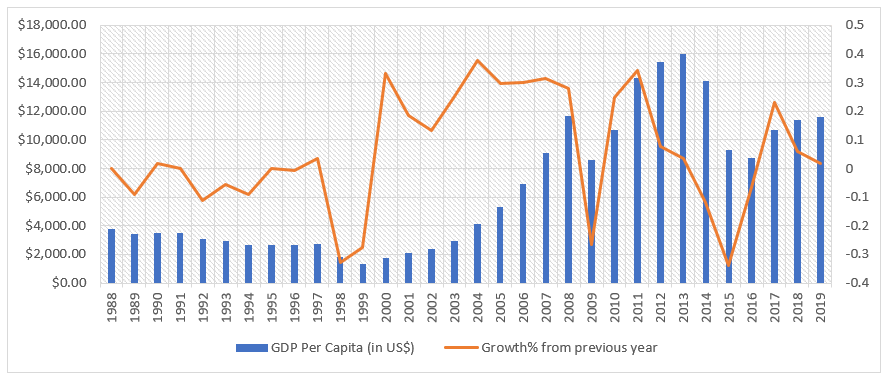
    The chart below shows the year-wise per capita GDP and the growth rate for the same period. 

    According to the chart, the highest per capita GDP was achieved during the year 2013 when it almost touched US$ 16,000, and the lowest point was in the year 2000 with a GDP per capita of only US$ 1331.

    Exhibit-1 (GDP Per Capita and Growth % over the years- 1988 to 2019)

    Exhibit-1 (GDP Per Capita and Growth % over the years- 1988 to 2019)

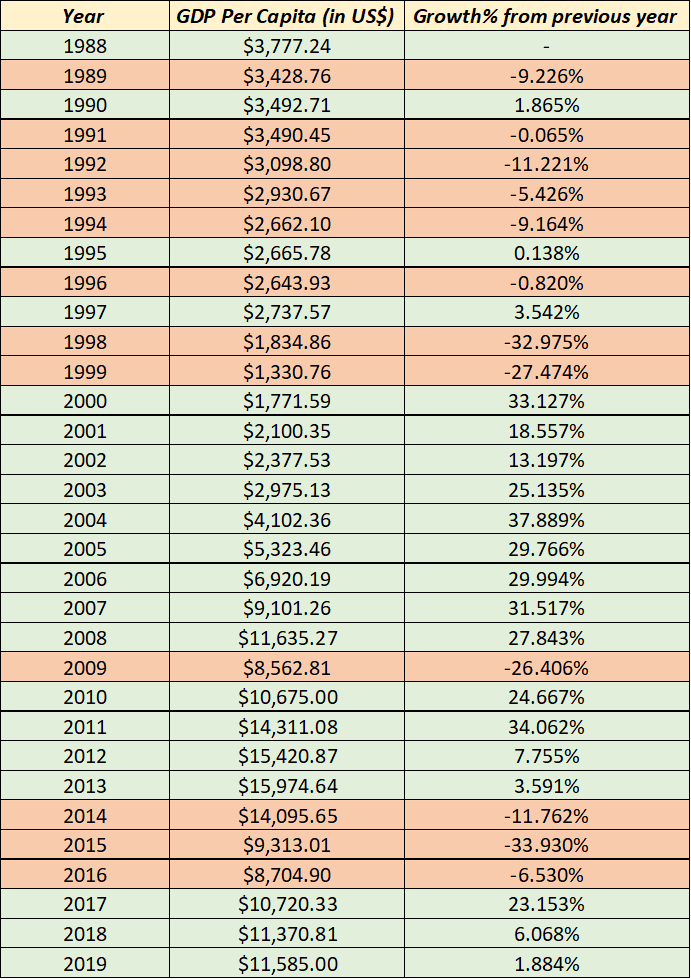
    In the table below, the negative growth rates are highlighted in red. In 1998, the per capita GDP fell by almost a third (33%) which was followed by another big fall of more than 27% in the year 1999.

    Exhibit -2 (Table of data showing the information for the graph above)

    Exhibit -2 (Table of data showing the information for the graph above)

    Surprisingly, the highest negative growth was not in the crisis of 1998 but in the 2014-16 Russian financial crisis in which the fall in per capita GDP was almost 34%, higher than that of 1998. The sharp dips in the growth percentage graph shown above will generally coincide with an economic crisis of epic proportions.

    Delving Deeper

    There is a need to dive deeper into the heart of the story of this crisis to analyze and dissect the lesson that can be learnt to steer clear of future mishaps.

    • There was some amount of effort, albeit feeble, to attempt to cut the deficit in the year 1995, before the crisis set in. The Government wanted to control the growth of money in inflation by maintaining the prices of the Ruble vis-à-vis the dollar
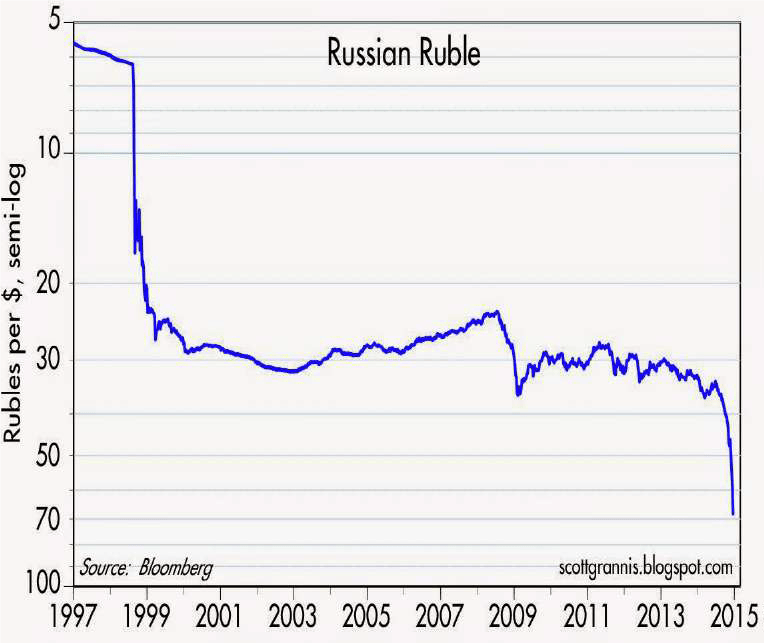
    Exhibit -3 (Comparing Rubles with Dollars for the stock market)

    Exhibit -3 (Comparing Rubles with Dollars for the stock market)

    • This helped in a way as the inflation was lowered to less than 50% in 1996 and Russia had access to strong international markets. Foreigners acquired Russian bonds, which helped in the appreciation of exchange rates. A rise in international reserves, a strong external current account and the appreciation of exchange rates helped cover the debt servicing costs of the country
    • The sudden onset of the Asian crisis in 1997 deteriorated Russia’s position and terms of trade. There was a net 25% fall in the total exports
    • There were lower inflows from international markets, and the cost of access to foreign capital also rose steadily. Faced with a massive US$ 20 Bn debt repayment directive, the Central Bank of Russia intervened and sold foreign exchange reserves to defend the exchange rate
    Exhibit-4 (Semi-log representation of Rubles per US$)

    Exhibit-4 (Semi-log representation of Rubles per US$)

    • All these uncertainties were beginning to pile up on top of each other. To make matters worse, there was no effective macroeconomic policy to counter the disastrous effects of the crisis for the initial 6 months.
    • One of the key reasons for the fall was the contemporary Asian crisis which pushed the Russian crisis in the worst direction.

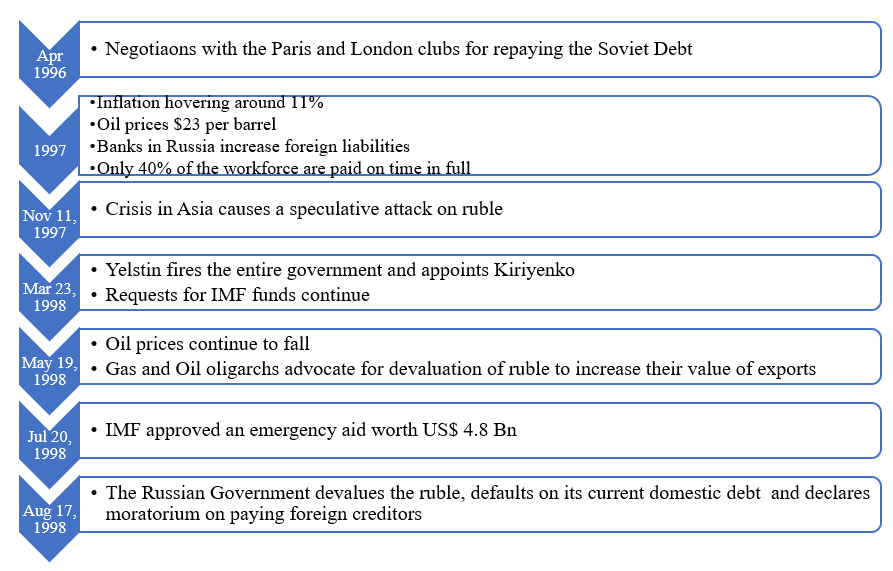
    Timeline of Events

    Impact on the Russian Economy

    The financial crisis served as a wake-up call for the entire country. Besides having an immediate effect, it had long-term consequences, especially towards Russia’s efforts toward becoming a market economy. 

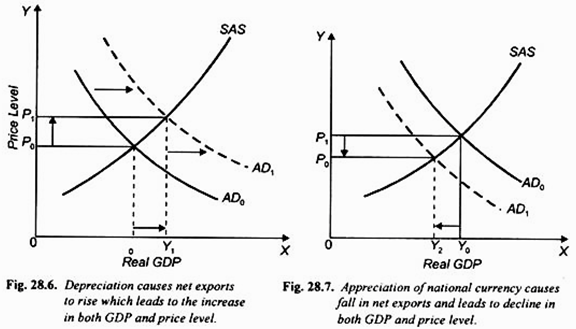
    • The depreciation of the ruble caused a rise in the prices of imported goods which led to greater inflation again. On the other hand, a devalued currency is more competitive for exports and aids in increasing the GDP of the country
    • Unpaid wages and pensions are another glaring issue that needs to be addressed for an estimated 30 billion rubles (US$ 1.7 billion by the end of 1998) remains unpaid
    Exhibit-5 (Effects of Depreciation on the net exports and output of a country)

    Exhibit-5 (Effects of Depreciation on the net exports and output of a country)

    • Investor confidence was also ruined because of the crisis; Russia had around US$ 40 billion in debt to both domestic and foreign investors, with foreign investors holding about US$ 17 billion of the debt share. The Central Bank of Russia announced that it wanted to pay back these investors using a combination of short-term zero-coupon bonds, cash and four-five-year-old coupon bonds paying variable interest rates (beginning with 30%)
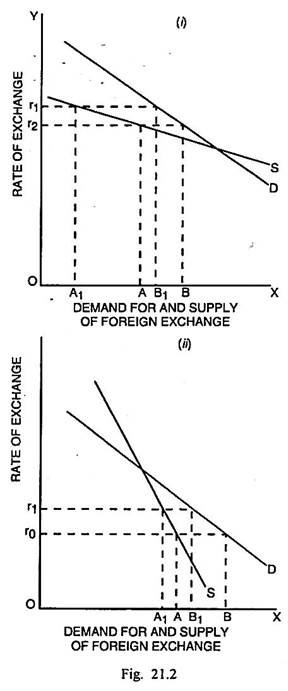
    Exhibit-6 (Effect of the exchange rate change on Forex)

    Exhibit-6 (Effect of the exchange rate change on Forex)

    • As shown by the picture above, the payments deficit for exchange rate r2 is AB and a depreciation in the exchange rates from r2 to r1 results in the reduction of export proceeds by an amount of AA1. This also reduces the payments for imports by BB1.

    Finding a Silver Lining

    Finding the good in the bad requires a lot of introspection, a positive outlook and courage. Here are some good things that came out of the financial crisis:

    • The high price of the imports (because of the devaluation of the currency) allowed local industries (like food processing) to manufacture goods and flourish, thereby setting up a strong domestic manufacturing system 
    • The crisis taught the banking system of the country to diversify its assets into a well-built portfolio
    • Exports now became competitive, and Russia could now sell oil at highly competitive prices

    Conclusion

    There was bound to be some amount of friction post the collapse of the Soviet Union because Russia essentially changed everything that it was defined by until that point in time. Since 1991 when the country embarked on executing reforms and becoming a market-driven economy, there has been a continuous fall in per capita GDP, as shown by the graph and image at the beginning of the article.

     The Ruble crisis further aggravated Russia’s journey toward a market-driven economy, and there has been a common consensus on this topic. However, history is not without invaluable lessons. With the lessons learnt, Russia could quickly recover from the crisis because of its dependence on oil prices which increased during 1999- 2000, leading to large trade surpluses with countries.

    As is evident, the Central Bank of a country needs to maintain a monetary policy. The primary lesson from this article, in my opinion, would be the fact that the central bank of a country should anticipate threats before their arrival and prepare the economy to absorb any shocks, no matter how harmful they may be.

    References

  • “Are you sure it isn’t photoshopped?” – The journey of Adobe

    “Are you sure it isn’t photoshopped?” – The journey of Adobe

    Adobe is one of those rare companies whose product (Photoshop) has become a verb. This Digital Dribble article aims to take a deep dive into Adobe’s history and understand what makes the company the behemoth that it is today. The reason we’re discussing Adobe is because of several factors- the primary being its improvement in ranks over the years and the fact that we wanted to choose a company that is not ranked in the top 200. This is because of the human tendency to only focus on the best of the best and ignore the underdogs.  Adobe has continuously impressed everyone with its growth and tenacity, and this article aims to analyze everything from the company’s strengths and weaknesses to the reasons for its success. 

    Currently, Adobe has an excess of 25,988 employees, its Net Income is US$ 4.82 billion, and its Revenue is US$ 15.785 billion with operating costs of US$ 9.983 billion.

    Source: Forbes Website

    History

    Adobe, like many other billion-dollar companies, had a humble beginning. It was founded in the garage of John Warnock, one of the founders. The company is named after Adobe Creek, which is a 23-kilometer-long stream originating in Santa Clara County, California, that flows behind Warnock’s home.

    Growth Drivers (in India and the World)

    One of the key drivers of growth for Adobe is the overall growth of digital marketing in India and around the world. Digital marketing is set to grow with improving disposable incomes and internet penetration in India as well as around the world. The need for digital tools is rapidly increasing and Adobe excels at making them. This will ensure that Adobe products are used continually, essentially making them perennial.

    Source
    Source

    Product Division

    Adobe has a wide variety of product lines that have enabled it to become the market leader it is today. Adobe’s website prudently allows classification by dividing its entire product category into four broad labels:

    A. Creativity and Design

    B. Marketing and Analytics

    C. PDF and E-Signatures

    D. Business Solutions

     These four are further sub-divided into several different segments, and the complete product segmentation is given below:

    A. Creativity and Design

    1. Design (Notable Products: Photoshop, Illustrator, InDesign, Aero, Adobe XD, Behance, Dimension, Dreamweaver, Dimension)
    2. Photography (Notable Products: Lightroom, Photoshop Elements, Lightroom Classic, Creative Cloud for Desktop and Mobile, Stock)
    3. Video and Audio (Notable Products: Premier Pro, Premier Rush, After Effects, Anywhere, Photoshop Camera)
    4. Web and UX (Notable Products: Animate, Comp, InCopy, Adobe Spark, Spark Page, Spark Post)

    B. Marketing and Analytics

    1. Advertising (Notable Products: Advertising Cloud, Experience Cloud, Media Optimizer and Dynamic Creative Optimization)
    2. Analytics (Notable Products: Analytics, Analytics Cloud, Audience Manager, Experience Cloud)
    3. Marketing (Notable Products: Campaign, Experience Manager, Primetime, Target)

    C. PDF and e-Signatures

    1. Documents (Notable Product: Document Cloud)
    2. E-Signatures (Notable Products: Acrobat Pro DC, Adobe Sign, Adobe Sign Mobile App, Fill and Sign)
    3. PDF (Notable Products: Adobe Scan, Acrobat Pro 2020)

    D. Business Solutions

    1. ColdFusion (Notable Products: ColdFusion on AWS, ColdFusion Standard (2018))
    2. E-Learning (Notable Product: Captivate)
    3. Enterprise (Notable Products: Creative Cloud for Enterprise, Document Cloud for Enterprise)
    4. Print Imaging (Notable Products: Design to Print, Adobe Embedded Print Engine, Adobe PDF Print Engine, Adobe PostScript)
    5. Technical Communication (Notable Products: Technical Communication (2019), XML Documentation for Adobe Experience Manager)
    Source

    Therefore, it is evident that Adobe has a huge stockpile of products that it uses to maintain its market dominance over its competitors. The four major areas that are mentioned above cover hundreds and thousands of businesses and individuals, and Adobe has successfully used that factor to market its products and successfully reap benefits from it.

    Mergers and Acquisitions

    Mergers and acquisitions are important for an organization from a growth perspective. They change the way the business operates strategically now as well as in the future. Adobe has, over the years, acquired all kinds of companies including those that were themselves considered giants. Some of Adobe’s notable acquisitions are listed below:

    Name of CompanyAcquired onAcquired for (in US $)
    MarketoSeptember 20184.75 billion
    MacromediaDecember 20153.573 billion
    OmnitureSeptember 20091.8 billion
    MagnetoMay 20181.68 billion
    FotoliaJanuary 2015.8 billion
    NeolaneJuly 2013.6 billion
    Frame TechnologyOctober 1995.57 billion
    • The quintessential and ubiquitous Adobe PDF that we see and use all around us has been made possible by several key acquisitions by Adobe over the years-
      • OCR Systems (1992)- The technology of this company made it possible to manipulate the documents that were scanned into PDFs.
      • Aldus Corp (1994)- This merger helped bring PDFs to desktops.
      • Accelio Corp. (2002)- This company’s server-based technology is implemented in Adobe LifeCycle Design.
      • Macromedia Inc. (2005)- Many of Adobe’s PDF features like mobile PDFs, media-rich PDFs, or online collaboration would not have been possible without this company
    • Adobe added Behance to its creative cloud community strengthening further its hold over the industry
    • By integrating Adobe Sign (EchoSign) into its ecosystem of products, Adobe ensured that one of the pain points- the inability to electronically sign PDFs was addressed.

    Marketing Strategy

    Adobe uses a strong content marketing strategy to bolster its position in the industry. The result has been nothing short of spectacular for Adobe. In 2018, it crossed several key landmarks, the most impressive of them being exceeding a market capitalization of $ 100 Bn. With its ‘always-on’ marketing, Adobe constantly reviews and analyses marketing data rather than spending crucial time building the perfect marketing plan. This allows the company to change whatever is needed while on the go, thereby making it much more agile. This policy has enabled the company to craft strategic marketing campaigns, fine-tune these strategies, and adopt effective practices.

    Factors That Made Adobe Successful

    It becomes important to understand the reasons behind the success of Adobe as a company, and that can be best done by using a couple of tools that help in analyzing the company as a whole.

    Competitor Analysis of Adobe

    This section analyses the position of Adobe and where it stands along with its competitors. The problem with a company like Adobe (which is also its strength and competitive advantage) is the fact that no other competitor offers a diverse bouquet of products that are so uniquely related in a common ecosystem as Adobe. Hence, to do a competitor analysis, different companies that belong to different sectors and segments need to be brought together.

    SWOT Analysis of Adobe

    Strengths

    • One of Adobe’s key strengths was its ability to transition from a perpetual licensing system to a subscription-based licensing system. This led to an increase in their ARR (Annualized Recurring Revenue) which will help provide the company with reliable cash flows in the future.
    • Adobe products are used and preferred all over the world, thereby adding to its brand equity. Its strong global presence can be rivaled only by a few of its competitors. Few of Adobe’s competitors have been able to consolidate a vast array of products under its portfolio as effectively as Adobe has.
    • Adobe distributes its offerings through a network of value-added resellers (VARs), original equipment manufacturers. (OEMs), a detailed network of distributors and independent software vendors (ISVs)
    • Adobe has an almost pure monopoly when it comes to designing, as Photoshop overshadows its competitors by miles. Similarly, Adobe caters to the film, web development, and the video game industry, to name a few.
    • The Adobe brand has been growing over the years and is now perceived to be a trusted one amongst designers and other users. It has steadily captured the market share by defeating all of its rivals.

    Weaknesses

    • The primary weakness of Adobe is its high price which deters many potential customers Adobe products are sold more in developed markets and less in emerging ones.
    • Poor customer service is also one of the key weaknesses of Adobe.
    • Adobe’s poor presence in the video animation industry, especially in 3D modeling is also a potential weakness as it is an empty void that competitors can now fill.

    Opportunities

    • With the increase and growth in industries like digital marketing, PR, branding, and a host of other industries, Adobe still has plenty of room to grow and expand globally.
    • The increasing demand for cloud computing coupled with the subscription model can lead to increased profitability for the company. Adobe Creative Cloud desktop apps are a set of Adobe products that give the user control to a set of applications that have optional cloud services as well. Adobe needs to expand on this cue.
    • Adobe and Microsoft have entered into a strategic alliance wherein each company will help the other in transforming businesses globally by leveraging the latest developments. Adobe has chosen Microsoft’s cloud platform Azure as its preferred choice for its cloud offerings- Adobe Document, Creative, and Marketing clouds.
    Source

    Threats-

    • The major threat for Adobe is the threat of piracy due to the thriving torrent sites and peer-to-peer networks. This severely harms the company as it essentially is robbed of its revenue. This mostly happens in emerging markets like Russia, Africa, Pakistan, and India.
    • There are several substitutes for Adobe products that are either free or cost minimal to purchase. Some of the best Photoshop alternatives are- Luminar, GIMP, Pixlr, and Paint. 
    Source
    •  Security threats are another set of worries that Adobe has to carry around with it all the time. Adobe has a lot of information about its customers, which is confidential. Hackers often try to attack Adobe servers, and they also are continuously developing malware and viruses for this very purpose. This also harms the brand image that Adobe has so painstakingly created over the years.

    Reasons for Adobe’s Success in India

    Adobe has gained a lot of traction in India, and in addition to the growth drivers mentioned above at the start of the article, a few key pointers that need to be highlighted

    • Adobe earned a spot in the Top 10 Best Places to work in India in the year 2019 and came in at a respectable 7th.
    • In 2018, Shantanu Narayen, the CEO of Adobe India, won the Global Indian of the Year. Shantanu has been with Adobe for a long time and has helped it in its key projects like the transition to a cloud-based subscription model rather than one-time licensing software.
    • Adobe first came into the country in the year 1997 and as of 2017 has more than 5,200 employees across four campuses in the cities in the cities of Bengaluru and Noida.
    • The India business for Adobe is one of its fastest-growing in the Asia Pacific regions
    • The strong growth is spearheaded by growing industries such as education, e-learning, fintech, insurance and retail.

    Evergreen market

    The picture below proves that Adobe’s very business model and the products it has been dealing with have suffered little to no consequences because of the global pandemic. Being largely digital products, they can be facilitated over the internet and the need for digital marketing and associated activities is always on the rise thereby contributing to the company’s revenues even during a global pandemic.

    Want to read about how COVID-19 affected business strategies for other companies? Check out this Digital Dribble article.

    Source
  • Redefining Supply Chains to Better Respond to Global Catastrophes

    Redefining Supply Chains to Better Respond to Global Catastrophes

    The Current Situation

    COVID-19 has made the majority of the world sit at home for the past two years resulting in a massive disruption in major industries like tourism, retail, aviation, hospitality, and realty, to name a few. Historically, every time there has been a global catastrophe, supply chains have taken a massive hit. It is, therefore, high time that businesses come together to reorganize, redefine, and redesign supply chains globally.

    This Digital Dribble article will touch upon the important points that need to be followed to establish supply chain management systems that are responsive to global as well as local threats. In addition to this, it will also talk about the perfect supply chain management system and the measures to reorganize, redefine, and redesign the supply chains in the current context or the context of any other global catastrophe.

    It is noteworthy to understand that all global catastrophes have similar effects on the supply chain management system in the sense that they either disrupt and disable the entire supply chain or slow it down enough to lead to difficulties in demand and production.

    Image Source- https://www.worldometers.info/coronavirus/

    According to the images above, the following statistics can be reported for the global pandemic wreaking havoc on all possible areas of our lives-

    [Data is taken as of 8:45 PM, IST, on 21st of August, 2020]

    Globally-

    • Mortality Rate- 3.48%
    • Recovery Rate- 67.95%
    • Currently Infected Rate- 28.57%

    USA-

    • Mortality Rate- 3.09%
    • Recovery Rate- 53.80%
    • Currently Infected Rate- 43.11%

    Brazil-

    • Mortality Rate- 3.20%
    • Recovery Rate- 75.69%
    • Currently Infected Rate- 21.09%

    India-

    • Mortality Rate- 1.89%
    • Recovery Rate- 74.37%
    • Currently Infected Rate- 25.63%

    India only accounts for 12.77% of the global cases and has a lower mortality rate and higher recovery rate than the rest of the world. India’s currently infected rate is also lower than the rest of the world.

    However, despite the data showing the fact that India is in good shape, it has managed to climb up the ranks of being one of the worst-hit countries in the world. This is primarily because of the following factors: 

    1. An ever-increasing population
    2. The growing disparity between the rich and the poor
    3. A failing public healthcare system
    4. Poor public and private transportation system
    5. Government laws about healthcare, resource management, sensitization of people

    The Ideal Supply Chain Management System

    Before moving to the topic of an ideal SCM (Supply Chain Management) System, it is imperative to revisit the definition of supply chain and SCM respectively.

    “Supply chain can be defined as the total network of people, information, processes and activities between a company and its suppliers with the sole aim of supplying a product or service to the consumer.”

    “Supply chain management is managing the flow of goods and services right from the time of procurement of raw materials to the transformation of the said raw materials into products and services”

    Thus, to understand the importance of supply chain management, it is worthwhile to analyze a supply and demand graph. It is common knowledge that the intersection of the demand and supply curves points out the equilibrium price of a product and the optimum quantity supplied. From a supplier’s point of view, it is always necessary to meet the demand at any point in time. Both scenarios where supply lags demand (leading to an excess demand) and supply leads demand (leading to a drop in demand) are harmful to businesses.

    A robust SCM system helps in countering the demand aided with the help of strong forecasting models and statistical methods. Thus, the SCM system plays a major role in meeting the demands of products and services when during global catastrophes, this elaborate network resembling the well-oiled cogs of a clock suddenly comes to a staggering halt. This leads to a drop in supply which generates a gap in demand to be filled.

    Coming to the sub-topic at hand, a perfect SCM must have several features that distinguish it from inferior SCM systems. These quantitative and qualitative factors are:

    1. The responsiveness and agility of the SCM
    2. Its ability to leverage technology
    3. How foresight enabled the SCM is
    4. If it is a correct mixture of ‘just In time’ and ‘inventory storage’
    5. Lean manufacturing of SCM
    6. Choosing the right suppliers and establishing long-term relationships with them
    7. Hyper efficient inventory management

    Measures of Resistance

    • Generic Measures
      • Now that businesses have understood how COVID-19 has impacted the supply chain, there will be investments in warehouses that are equipped with state-of-the-art 3D printing technologies and have their fleet of autonomous vehicles. Last Mile Deliveries, Reverse Logistics, and Digital Supply Chains are all potential possibilities shortly.
      • The ‘just in time (JIT)’ methodology assumes that global disruptions are a one-off occurrence. However, given the uncertainty (we’re living in a VUCA world after all) of the times, it is best to combine JIT with optimum levels of inventory management (like 45 days of inventory storage- Rebuffering).
      • Inventory counting mechanisms need to be automated which will lead to correct predictions for reordering point and improve the overall supply chain efficiency. Diversifying suppliers across geographies would allow organizations to have greater leverage in times of duress. Although in-transit inventory reduces the overall cost for a company, during times of stress, it becomes a company’s greatest bane because of the congestion in the gateways, terminals and hubs (nodes of the supply chain). This needs to be taken into account to reorganize, redefine and redesign supply chains globally.
    • Specialized Measures

    Certain measures must be undertaken to minimize the disruption caused by any global catastrophe. Certain tools equip SCM managers to effectively mitigate the effects of a global pandemic and enable the supply chain to function with minimal impact. Some of these necessary theoretical tools are-

    1. Institutional Theory– This theory in SCM deals with the fact that organizations with isomorphic structures will adopt the best practices from one another leading to fiercer competition and the need for frequent innovation. In the case of a catastrophe, an organization will mimic the supply chain responses and innovations of others. This will be increasingly legitimized across middle and top management tiers. Desperation in meeting the huge demand gap will lead to further copying of best practices
    2. Resource Dependence Theory– This tool studies the effect of external resources on an organization. Ideally, organizations should strive to reduce the dependency on these factors. PESTEL Analysis and Porter’s Five Forces study these factors deeply and help identify the areas to improve in this regard.
    3.  Game Theory– At its core, game theory strives to predict the actions of different decision-makers who are assumed to be rational aand who always try to maximize their payoffs. The vast array of interactions between these decision-makers helps organizations understand the relationship and various variables important to succeed. In light of the pandemic, the government will step in as a major player to alleviate the crisis which in turn will affect the way firms interact with each other. This will change the inherent rules of how Game Theory functions. Shifts in supply and demand will make forecasting a tedious job.

    Porter’s Five Forces cover the following aspects-

    1. Bargaining power of Suppliers
    2. Threat of substitutes
    3. The threat of New Entrants
    4. Bargaining power of buyers
    5. Rivalry amongst competitors

    PESTEL Analysis covers five important aspects-

    1. Political
    2. Economic
    3. Social
    4. Technological
    5. Environmental
    6. Legal

    The government’s effort to fight the pandemic directly affects the flow of resources between firms’ thereby widening the gap between supply and demand as seen above.

    Interested in reading more about how the pandemic has affected businesses? You might enjoy this article. 

    Sources-

  • The Adoption of Technology in Logistics and Multi-Modal Transport

    The Adoption of Technology in Logistics and Multi-Modal Transport

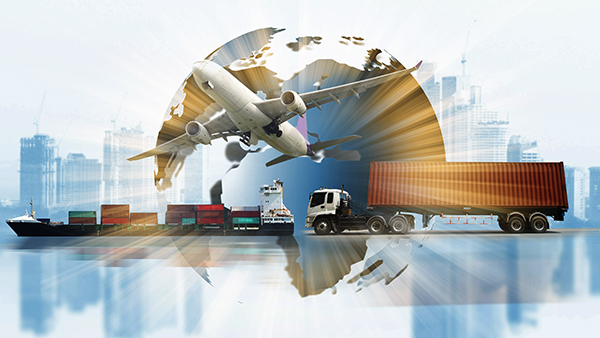
    Logistics throughout the world is primarily done via three main channels- air, water and roadways. With increasing globalization, these three modes of transport now intermingle with each other to form a combined system of transportation called Multimodal Transport. With the advent of e-commerce all over the world, Multimodal Transport is essential for the effective transport of goods & services all over the continent.

    This Digital Dribble article is divided broadly into 6 sections:

    1. Logistics Industry in India
    2. Upcoming Trends in Logistics
    3. Technology Adoption
    4. Technology in Multimodal Transport
    5. Conclusion
    6. References

    Logistics Industry in India

    The logistics industry in India is still largely unorganised and inefficient when looked at from a microscopic point of view. This section describes the current condition of the Indian logistics industry with the help of a few parameters.

     Developed and maintained by the World Bank , the  Logistics Performance Index (LPI) is a tool to identify the potential opportunities and challenges faced by countries in the domain of logistics. The list is maintained for 160 countries across the globe. The graph below shows India’s ranks and LPI scores where the maximum score is 5.

    Source: – https://lpi.worldbank.org/

    India’s LPI rank and scores  have fluctuated over the years. In 2018 India ranked 44th in the Logistics Performance Index. To improve the overall logistics of the country, India should aim to rank in the top 20. It is worth noting that almost all developed countries rank low on this scale.

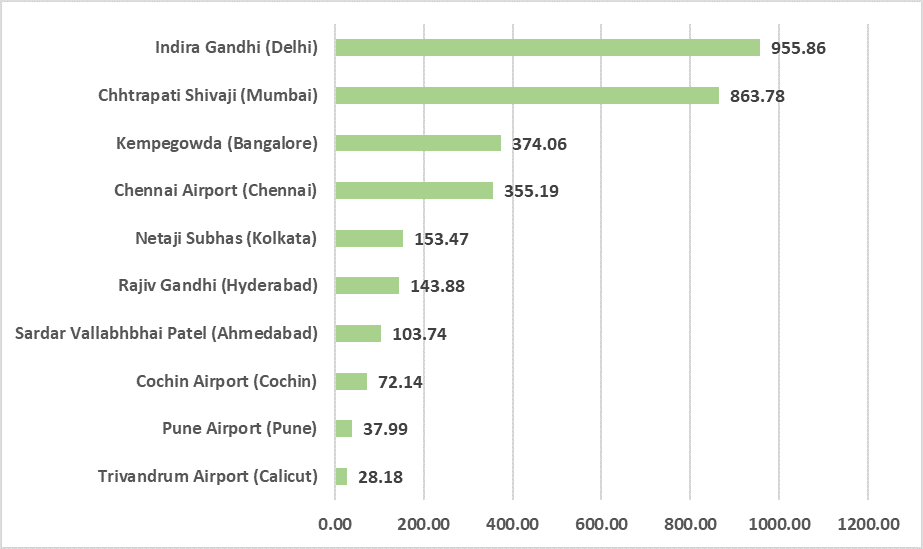
    Airports in India (2020) by volume of freight (in 1,000 metric tons)
    Source:- https://www.statista.com/statistics/589187/indian-airports-freight-traffic/
    Cumulative Cargo Capacity at Major Ports (in Million Tonnes) [CAGR- 18.4%]
    Cumulative Cargo Traffic at Major Ports (in Million Tonnes) [CAGR à -18.4%]
    Source (for both)- https://www.ibef.org/industry/ports-india-shipping/infographic
    These logistics providers are at the forefront in terms of organising this largely unorganised sector of the country. They also provide a steady source of employment to a large section of society.
    Source- https://en.wikipedia.org/wiki/State_highways_in_India

    The graphs and the excel image paint a clear picture of the country’s logistics performance. As is visible, there is ample room for improvement.  The visible drop in cargo traffic at major ports is due to the detrimental effects of COVID-19. The average State and National Highway length is 7,069 Kms. Most of the states or union territories from Assam to Chandigarh all have below-average lengths. As ports, cargo airways and road networks develop and grow stronger, logistics will follow suit.

    Upcoming Trends in Logistics

    Upcoming trends in Logistics (2020 and beyond)

    Technology is changing and will continue to change the future of logistics for the years to come. The 10 top technologies that will have the most impact in the coming years are:

    1. Internet of Things (IoT)
    2. Artificial Intelligence (AI)
    3. Robotic Process Automation (RPA)
    4. Last Mile Delivery
    5. Warehouse Automation
    6. Data Analytics
    7. Cloud Computing
    8. Blockchain
    9. Autonomous Vehicles and Drones
    10. Elastic Logistics

    Percentage breakdown of the trends in 2020 and beyond

    Technology Adoption

    This section will talk about the various advancements in technology and how it is combined with logistics to provide value addition to all its stakeholders.  Here is how the top 5 trends will affect impact logistics:

    1. Internet of Things (IoT)- Internet of Things simply means the provision of and the ability to connect and control a wide variety of physical objects (which are meant for normal day-to-day usage) with the help of the internet, sensors and software.

    • Proposal- Since IoT devices need an underlying internet connection all the time, a strong Wi-Fi connection is integral. The advent of 5G will increase the speed of data transfers, reducing latency. This technology will be particularly helpful in the logistics involved in perishable products.
    • Usage- Sensors built onto containers or RFID tags that help monitor the product will be used throughout the entire chain of the journey thereby helping achieve Supply Chain Visibility (SCV). Fully integrated logistics companies see a 20% rise in efficiency than non-integrated ones.
    • Start-up in the field-Fleetroot is an UAE based start-up which offers companies an IoT platform for effective fleet management. It provides fuel management solutions by generating detailed reports about fuel wastage and consumption.

    2. Artificial Intelligence (AI)- AI has made huge leaps in recent years and companies have leveraged it to their advantage. 

    • Proposal- AI algorithms juxtaposed with Machine Learning (ML) help companies in a plethora of ways. Artificial Intelligence and Machine Learning are being used by companies in every field possible. The high cost of initial investment is easily justified by the cost savings and returns in subsequent years
    • Usage- Demand forecasting, optimised routes with the help of Google Maps and process automation are some of the ways AI and ML can be used
    • Start-up in the field- Adiona is an Australia based start-up that helps other companies improve their logistic processes and reduce overall costs. It also optimises delivery routes and supports complex decision making.

    3. Blockchain- Satoshi Nakamoto’s can be used ingeniously in logistics management as well. Despite the fact that the intricacies of blockchain are largely unknown to the general public due to its complicated technicalities, the database is still used by industries across the globe.

    • Proposal- The open ledger system can be appropriately used to share sensitive data across the logistical journey of the product/asset. No third-party software or companies would be needed to interface at multiple points, a network of seamlessly updating ledgers would take their place
    • Usage- From enabling card-less B2B payments and tracking of perishable items, to tackling the influence of counterfeits in pharmaceuticals, blockchain is definitely a boon for the logistics industry
    • Start-up in the field- The USA based start-up,ShipChain manages the end to end shipping process by leveraging the power of blockchain. The platform provided by the start-up allows its customers to track shipment locations at every step of the logistical journey

    4. Robotic Process Automation (RPA)- RPA helps in eliminating the need for humans to do repetitive tasks thereby saving precious resources and enabling increased productivity, efficiency and reduced overhead costs and errors.

    • Proposal- There are a lot of manual, repetitive tasks in logistics that can be minimised  by implementing RPA. It is worth noting that RPA involves human processes amalgamated with technology.
    • Usage- Here are a few ways RPA can be implemented:
      • Using RFID tags within the logistical process to locate a product instantly
      • Automatic invoicing, automated inputs of purchase orders
      • To prevent the counterfeiting or smuggling of important assets using appropriate sensors
    • Start-up in the field- Actimai combines big data and AI along with RPA to provide customised solutions that are optimizable, manageable and deployable to its customers

    5. Autonomous Vehicles and Drones- One of the most anticipated technologies for logistics and warehousing companies is autonomous vehicle and drone technology. Once mainstream, this technology would help reduce human errors and also help connect the inaccessible terrains of any country to the mainland.

    • Proposal- Drone enabled delivery would increase the efficiency of logistics companies and would tie in with the overall technological strategy of the organisation. Amazon has even patented the idea of a floating warehouse which would have its own set of drones for easier accessibility and fulfilment of orders
    • Usage- Drones, Unmanned Vehicles and Trucks, Driverless Shipment Transport
    • Start-up in the field- A start-up from Germany called Spring offers an autonomous fleet of vehicles for transportation of goods along with analytics and intelligent systems

    Technology in Multimodal Transport

    Multimodal transport uses current as well as upcoming technological trends. Some of the technologies used in multimodal transport are:

    Intelligent Transport Systems (ITS)-

    • Traffic Management and Information Services- provides real time traffic management offering increased efficiency and transparency
    •  River Information Services- RIS is used for the smooth and effective optimization of traffic in the inland navigation and helps in the real time exchange of information between shore and water
    • Freight response management system- This is a kind of ICT (Information and Communication Technology) that improves operational efficacy, reduces empty runs with the help of better planning of routes, improves utilisation of infrastructure leading to customer satisfaction
    • Terminal & Port ICT- This technology reduces the unloading and loading times at terminals and improves the utilisation of the terminal infrastructure, achieving seamless transfer of cargo through efficient interfaces between transhipment points. It also reduces operational costs

    Conclusion

    The future of logistics depends as much on development in the channels (air, water and road) as development in technology.  This article aimed to provide a preliminary view into how technology is currently changing and will continue to change the face of logistics management all over the world. Interested in reading more about how technology affects businesses? Check out this article.

    References

  • Entrepreneurship in the Times of COVID-19

    Entrepreneurship in the Times of COVID-19

    “I knew that if I failed, I wouldn’t regret that, but I knew the one thing I might regret is not trying.”

    -Jeff Bezos, founder, and CEO of Amazon

    Entrepreneurship is tough and not everyone’s cup of tea. It means fighting continuously for an idea that someone believes in. This Digital Dribble article shows the various aspects of entrepreneurship during this global pandemic.

    We will begin by analyzing the current impact of COVID-19 on the world as a whole and India in particular. Then we will delve into the impact of COVID-19 on entrepreneurship. Finally, we will look at a few examples of entrepreneurs battling against the current and making their mark.

    The Impact of COVID-19

    Covid-19 has been disastrous for the world and although the death rate has steadily declined, it continues to wreak havoc even today. The deadly virus is now ubiquitous but not all countries have been hit equally hard. While there are supply chain issues that need to be addressed. vaccinations have already begun in several countries

    Despite its massive population, India has been able to control the virus much better than other countries. With mass vaccinations of target age groups already in progress, it is not long before India becomes completely free of the current nightmare.

    Impact of COVID-19 on Entrepreneurship

    COVID-19 has been pernicious for entrepreneurship, as is evident from the image below.  It shows the drop in the creation of firms/companies during March and April 2020, the inception of the pandemic, and a grim foreshadowing of the harshest months to come. Portugal’s 70% decline and Turkey’s almost 60% decline support the statement that COVID took a harsh toll on the economy.

    Fig 2.1 [Source- https://voxeu.org/article/challenges-and-opportunities-start-ups-time-covid-19]

    However, there is also a silver lining to be noted here. Many start-ups have emerged from crises. Uber, Airbnb, Groupon, and Pinterest were all formed post the global financial crisis. Companies that offer radical change and innovations in the fields of home delivery, telemedicine, ed-tech, and medicine delivery can become overnight stars in the age of the pandemic.

    The image below shows the amount of post-entry employment growth for digital and non-digital companies after a specific number of years. Digital companies have the highest post-entry employment growth which helps in job generation and changing the face of the economy.

    Fig 2.2 [Source- https://voxeu.org/article/challenges-and-opportunities-start-ups-time-covid-19]

    How has COVID-19 Changed the Entrepreneurship Landscape?

    In addition to disrupting entire industries, COVID-19 has turned the entrepreneurship landscape on its head. It has forced entrepreneurs to adapt to survive and become creative with the limited number of options in their hands. The transitional effect of COVID-19 is here to stay and entrepreneurs would be prudent to embrace the disruption instead of allocating resources to combat it.

    Some of the changes that have now become part and parcel of an entrepreneur’s life are enumerated below:

    The Increased Usage of Webinars

    With lockdowns and social distancing in effect for more than two years now, webinars have become the norm of the day. They are being actively used by entrepreneurs to discuss ideas, achieve thought leadership, get funding and find leads for their companies. These webinars offer a slew of advantages: 

    • Webinars have now taken the place of traditional conferences at a fraction of the cost of their counterparts
    • Webinars are soon to become a mainstream marketing strategy as they offer an excellent way to interact with customers and get them on board to buy the company’s new products/services.
    Fig 3.1 [Source- https://www.genglobal.org/bangladesh/webinar-future-startups-post-covid-19]
    Fig 3.2 [Source- https://inc42.com/videos/business-in-the-times-of-covid-19-webinar-by-women-entrepreneurship-platform-niti-aayog/]
    • Companies like Zoom, Microsoft Teams, Skype are facilitating the supply of catering to an increase in demand for video conferencing options. Zoom’s share price has more than tripled during the pandemic.

    Content=King!

    Research shows that COVID-19 has accelerated digital adoption by 2 to 3 years. As brands, entrepreneurs and organizations understand the importance of digital marketing and, more specifically social media marketing, the importance of content will become increasingly evident. Social media marketing has to be utilized effectively to reap benefits. For instance, being overtly promotional discourages potential customers from interacting with the brand. Content must add value to the customer’s life. 

    Fig 3.3 [Source- https://www.smartinsights.com/social-media-marketing/social-media-strategy/new-global-social-media-research/]

    Exemplary Entrepreneurship

    Entrepreneurship is one of the most challenging endeavours to take up during a pandemic. This section is the literal embodiment of the phrase, “when the going gets tough, the tough get going”.

    Combining Social Cause and Business

    This LinkedIn post is the perfect example of thinking out of the box and making decisions that benefit society. Kushal had an offer from one of the best colleges in the country (Indian School of Business) but instead chose to manufacture PPE kits to help frontline workers and essential personnel combat the pandemic. It is because of entrepreneurs like Kushal Agarwal that India which started as a country deficient in PPE kits, went to became its 2nd largest manufacturer during the span of the pandemic.

    Fig 4.1 [Source- https://www.linkedin.com/feed/update/urn:li:activity:6657850726628323328/]
    Fig 4.2 [Source- https://cutt.ly/CzmuPrk]

    What’s Cooking?

    Mumbai housewife Veena Manek’s life changed when she got a request to bake a birthday cake amid the ongoing lockdowns. This led to the inception of ‘Blissful Indulgence Mumbai’ which went from receiving 1 to 2 orders a week in the first month, to receiving 7 to 9 orders a day! This goes on to show that finding and exploiting someone’s niche area of interest can lead to successful businesses during times when even large corporations are struggling.

    Fig 4.3 [Source- https://www.facebook.com/blissfulindulgencemumbai/photos/a.129308825419283/252810606402437/]

    Women Power!

    GoParties was an entertainment tech start-up that focused on giving real-time updates about all things entertainment like parties, concerts, bands and artists in the user’s city. COVID-19 had hit the entertainment sector pretty hard and the founder Shivaarti Bajaj knew that the landscape post-COVID would be entirely different.

    GoParties pivoted to BoxEngage, an online video-sharing platform that is touted as the next Twitter. It became viral as the government banned 59 Chinese Apps throughout the Indian subcontinent. With more than a million users currently using the platform, it is seeing organic growth to the tune of 70% to 80% and there are plans to launch an app soon.

    Advertising BoxEngage on GoParties Facebook Page
    Fig 4.4 [Source- https://www.facebook.com/goparties/]
    Fig 4.5 [Source- https://boxengage.com/home]

    Want to read more about how the pandemic affected businesses? You might enjoy this article.
    References

  • Applying design thinking in content marketing

    Applying design thinking in content marketing

    “Marketing is telling the world you’re a rock star. Content Marketing is showing the world you are one.” – Robert Rose

    Content marketing, in simple layman’s terms, is the process of creating and dispersing content which adds value to the reader’s (customer’s) life, all the while creating interest about the product or service in question, thereby driving sales for the company. With the rising cut-throat competition among rivals and acquaintances alike, content marketing has occupied a pretty important position within the spectrum of marketing as a whole as it makes use of digital technologies and social media to reach out to potential customers throughout the globe.

    Source

    Broadly, there are five types of content marketing strategies and they are as follows-

    1. Infographics
    2. Webpages and Blogs
    3. Podcasts
    4. Videos
    5. Books

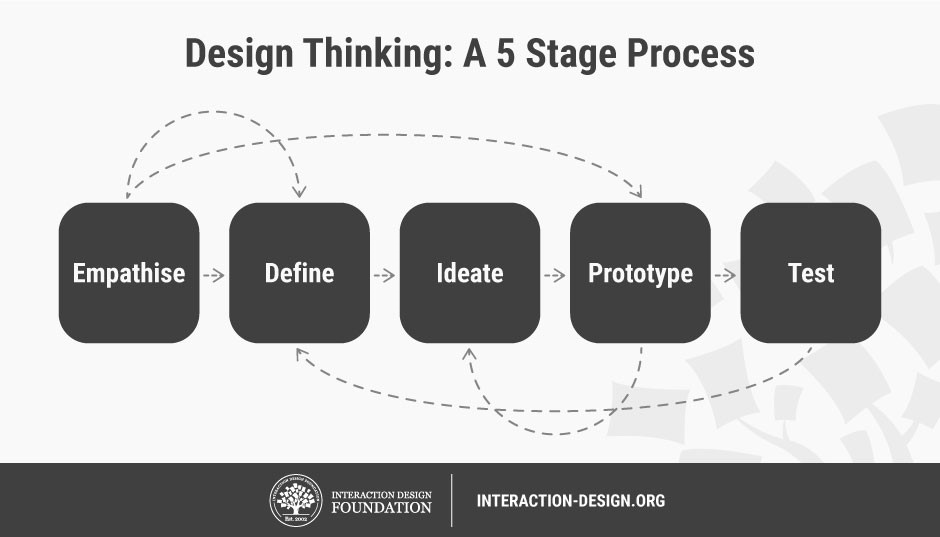
    Content marketing has been in the mainstream for a long time and the main challenge arises in structuring a pre-existing process or strategy to become relevant to the modern-day paradigm. This is where design thinking comes into the picture. In simple words, design thinking is a repetitive process that pains to understand the users and potential customers of a particular product by challenging assumptions and preconceived notions. It also strives to redefine problems and make innovative solutions as answers to those problems.

    It is worth mentioning that design thinking is an iterative, non-linear process where anyone can move around the five mentioned stages until they think that the product can be viably launched into the market.

    Design thinking consists of five stages-

    1. Empathize- This is perhaps the most important stage out of all five. Empathy is an extremely valuable resource in today’s world and the individual(s) undergoing the design thinking process must empathize with both the problem statement at hand and with the potential customers for whom the product will be designed.
    2. Define- Though it may sound easy, defining a problem statement can sometimes trouble even the best and most experienced of minds. Empathy needs to be high while defining the problem statement to encapsulate a wider range of possible solutions.
    3. Ideate- After the problem is well studied and analysed, keeping empathy in mind, the third spoke in the wheel is ideation where all possible solutions, no matter how insignificant and obvious, are enumerated. Later the best ones are chosen and worked upon to reach a possible functioning prototype.
    4. Prototype- The prototype will be a scaled-down model of the actual product/service which will tell about the viability and survival capacity of same in the real markets. Thus, prototyping leads to a further narrowing down of the solutions and picking the best contender amongst them.
    5. Test- The final step of the cycle after which the new product or service is uncovered to the whole world. Testing though the final step, doesn’t mean the end of the process. If someone/the team responsible feel that they might have missed out on ideas can go back to the ideation stage (or may even start from the beginning) and the process continues until the final product/service realized is free from errors.
    Source

    The final question arises, how to integrate the wonderful process of design thinking into content marketing strategies?

    As content is written for a target audience in mind, it would further help the cause if the writer empathizes with the target demographic and understand their plight instead of just taking the problem statement at face value. This makes the content many times better as the customer can relate with the content thereby driving engagement which in turn results into sales for the organization driving revenues. Defining the problem ‘by being the customer’ helps content marketers churn out relevant, relatable, engaging content. For websites, social media and blogs this amounts to fewer bounce rates and more impressions. People will lend their ears when they hear or see about the issues plaguing them and how they are addressed sustainably.

    The best process of ideation takes place when the content marketer or the writer asks unique but relevant questions. For example, while standard blogs while talking about 10 things to do in a fair talk about the amazing rides and local cuisines, a design thinking enabled blog will answer subtle questions like ‘How to pass time while waiting for the queue’ and ‘Which souvenirs to take home to for your loved ones’.

    Family and friends are the best sources of inputs and they can serve as the sample consumer while prototyping and testing the content. Inputs can be further incorporated into the final product making it more meaningful. At the end of the day, all content marketing is trying to do is bridge the gap between the real consumers and those bashing their heads for ideas to produce content on for organizations.

  • Technology: A Major Driver for India’s Growth in the Next Decade

    Technology: A Major Driver for India’s Growth in the Next Decade

    “India is the cradle of the human race, the birthplace of human speech, the mother of history, the grandmother of legend, and the great grandmother of tradition. Our most valuable and most instructive materials in the history of man are treasured up in India only.”

    Mark Twain

    How India Has Changed Since Independence

    India is one of the major economies in today’s modern, dynamic world and is at the forefront of being positively affected by technology. Today, after more than 70 years of independence, there have been a lot of massive improvements made in almost every field, and a significant chunk of that can be attributed to technology. Indian GDP (both overall and per capita) has increased significantly, and HDI has risen by almost 50%. Life expectancy and schooling have also improved. All these developments are easily overshadowed by one glaring weakness, one chink in India’s armour- overpopulation. 

    This is both a boon and a bane. It’s a boon because more population directly correlates to a higher number of scientists, technologists, doctors, and engineers that would be able to work for the country and take it towards the path of prosperity. However, more population also means an ever-increasing number of people who suffer from poverty.

    Source.
    Source

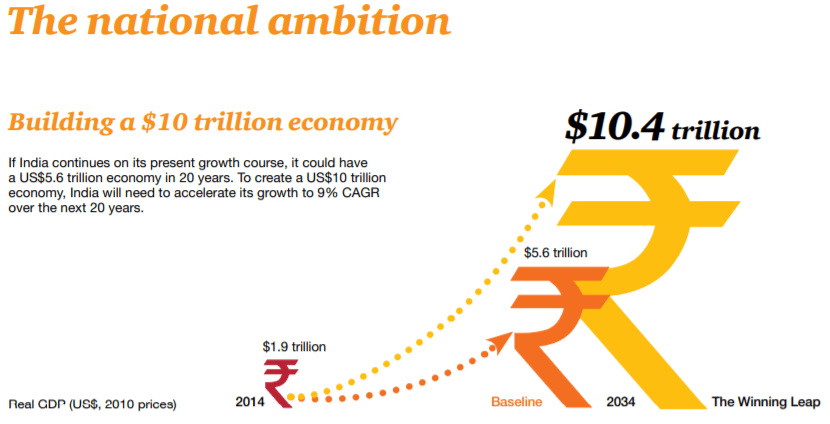
    India wants to become a $ 10 trillion economy soon, and this can only be achieved by leveraging the power of technology. Although the penetration of technology throughout the Indian sub-continent has been impressive, it needs to be pervasive enough in the near future to carry the entire country on its shoulders.

    Source

    What India Has Already Solved

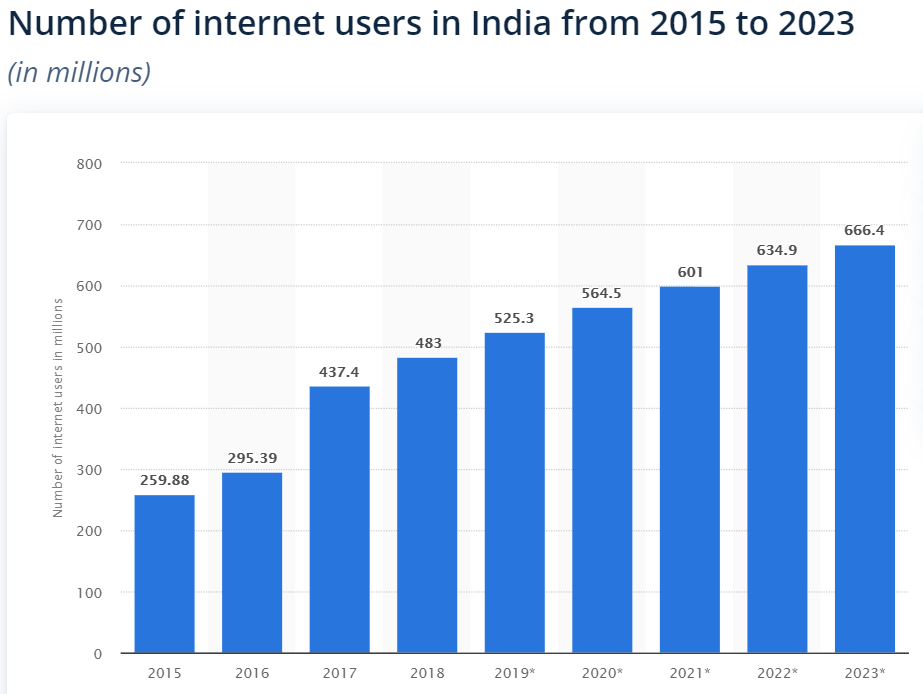
    Internet penetration is now a major criterion in determining the technological quotient of a country. The internet represents the true democratization of information, and capable people can quickly turn this information into valuable knowledge without the requirement of outside help (the formal education system of a country). As mobile phone (smartphone) penetration increases, the number of internet users will increase, thereby triggering a technological wave and creating a completely new era of technological superiority.

    Source

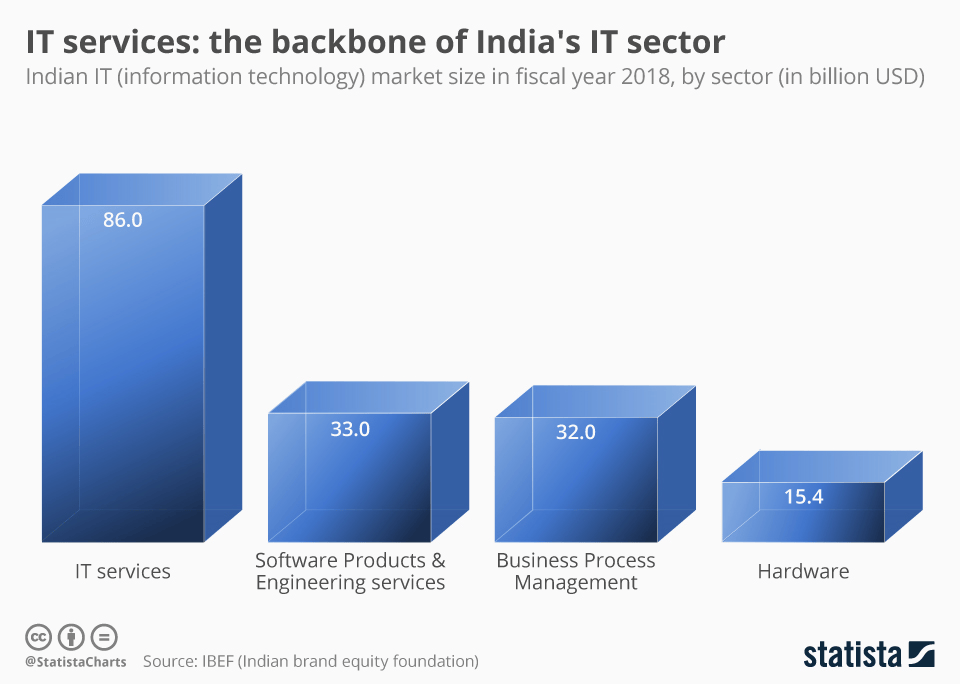
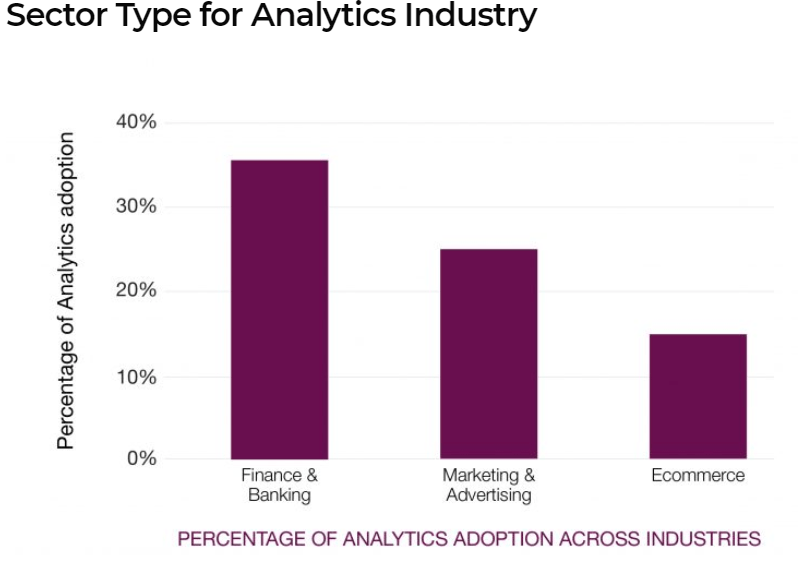
    IT Services make up a significant chunk of what Indian technology means to many (even to the outside world), but that will change soon. Indian IT services are favoured because of how inexpensive they were. With the increasing use of automation, artificial intelligence and data science, all repetitive manual work will be rendered useless, making the point of cheap labour rate moot. Indian software firms like Tata Consultancy Services, Infosys, and Tech Mahindra are increasingly spending on training employees to use these technologies to remain competitive in the global environment. The pie chart shows that large IT companies like the ones mentioned are the most equipped to implement these technologies into their existing projects or to pick up new projects/clients based on these technologies.

    Source
    Source
    Source

    Start-ups are so much more than just a buzzword today. They help bring in foreign investment in the form of funding, provide much-needed employment to people and ease some weight off the governments’ shoulders, making people’s lives simpler through the solutions they provide. Almost all start-ups mentioned in the image below provide solutions through technology.

    Source

    The Challenges and the Road Ahead

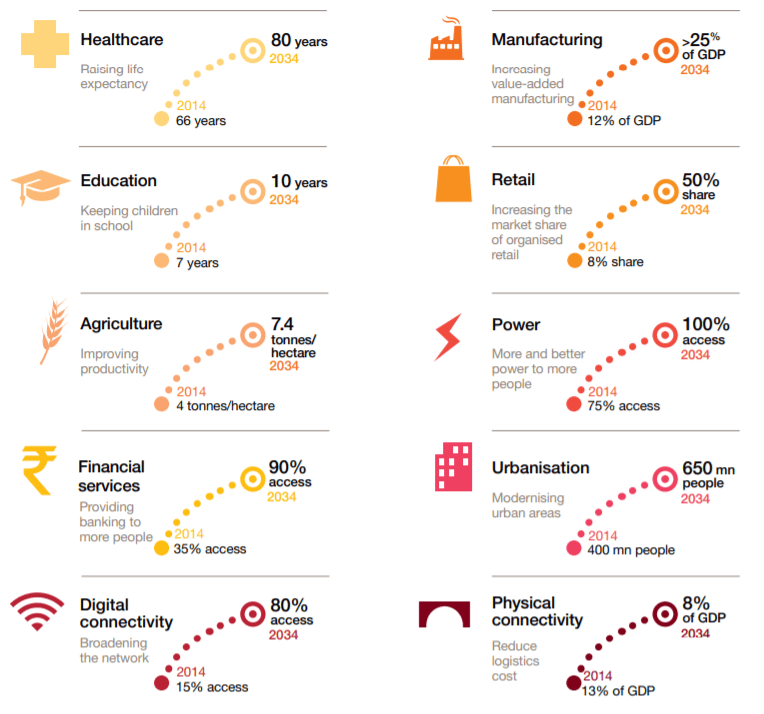
    The goal at hand is simple: using technology to leverage every industry and sector in the country to become competitive in the global scenario, eventually making India a technological, economic, and commercial powerhouse. However, the road ahead is full of obstacles. The picture taken from a PWC report highlights the goals of the country in the coming years. To reach that goal, technology can intervene in several ways:

    • Government schemes like Start-up India are a much-needed boost to the technological scenario in India. In 2019, a total of more than 1,300 start-ups were added, making the total tech-based start-ups tally a massive 8,900. However, a major chunk of these start-ups doesn’t even end up seeing the light of the day, and thus governments must ensure that these start-ups are effectively incubated, thereby reducing the failure rate.
    • The top engineering colleges in India need to be monitored and private players have to be encouraged to improve themselves continuously. Modern technologies must be implemented in the course curriculum, and the decades-old syllabus needs to be revised to ensure that students learn about modern technological advancements.
    • Ease of business in India has seen a tremendous improvement in rankings, but it needs to be continuously worked on and improved. As old laws and policies preventing business get abolished, the ease of opening a company/start-up improves dramatically, thereby contributing to the chance of letting the start-up be profitable shortly.
    Source

    Conclusion

    As discussed previously, technologies like analytics and decision science must be implemented across industries to leverage their benefits. As these get implemented, there will be an acute shortage of employees who are trained in these technologies. Today tech startups are training their people and setting up an entire ecosystem at work in the country. The education sector needs to improve to drive technological benefits throughout the country, starting from the grassroots to the higher echelons in a complete chain of value creation.

    Source

    Do you like reading about technology and how it affects the world of business? You might like this article.

  • Business beyond Reputation: Equipping Sustainability

    Business beyond Reputation: Equipping Sustainability

    “Sustainability” is a term that we hear quite often these days; businesses are often heard using this word with much weight and for good measure. The dictionary defines “Sustainability” as “The ability to be maintained at a certain rate or level” or “Avoidance of the depletion of natural resources to maintain an ecological balance.” Sustainability is the way forward. As Macroeconomics teaches us, resources are scarce, and people’s wants are unlimited. Hence, in a world that is increasingly crowded by finished products, at the cost of depletion of the natural ones, it is only safe to say that Sustainability has a long way to go, and it is high time that sustainable practices are applied onto every facet of our lives. It is worthwhile to note that Sustainability by businesses need not necessarily cover only the grave issues that humankind as a whole face today, but it can be small, seemingly trivial issues as well.

    Sustainability through Societal Marketing

    Societal Marketing takes into consideration the long-term benefits and interests of the entire society, and Sustainability being one of the benefits of society, do come under Societal Marketing. By taking a people-centered approach, organizations can truly commit to the mantra of sustainability through Societal Marketing. Companies like Star Bucks, GE and the Body Shop has been increasingly using Social Responsibility to preserve the environment all the while sustainably growing its business.

    With increasing consumer awareness, companies and firms have to up their entire business processes to suit the changing needs of their consumers. With this in mind, Sustainability has been a hot topic for years now; it is only getting somewhat traction in the form of actual landmark events now. However, marketers must also call to action the common man (consumers) to support these businesses in their initiative, thereby increasing people engagement from the grassroot level.

    Examples of Sustainability by businesses

    a)     Unilever recently achieved a landmark 100 percent renewable energy target which means that all of its Warehouses, Data Centres, Research and Development (R&D) Centres, Distribution Offices are powered by one hundred percent renewable energy.

    b)     Pedigree’s Adopt a Homeless Dog initiative aims to find every dog with a loving owner.

    Source- https://www.pedigree.com/helping-dogs/adopt

    c)     GE publishes a sustainability report (Environmental, Social and Governance Results) that outlines its emission data and relevant discussions on the same can be found in the report as well.

    Link- https://www.ge.com/sustainability/sites/default/files/GE_ESG_KPIs_RY2017_r13_Aug2018.pdf

    d)     Nike adheres to its goal of fighting climate change and has an initiative called “Move to Zero” that aims at 100% renewable energy operated and owned facilities latest by 2025. Another unique prospect about Nike is the fact that it uses more than a billion plastic bottles to make fabric and shoes out of.

    Source- https://news.nike.com/news/nike-move-to-zero-climate-change-initiative

    Technology and Sustainability- How companies can leverage new technologies

    Sustainability analytics is the new hotshot in town-by collecting a multitude of data points from a myriad number of sources including greenhouse gas emissions, resource and energy usage, the performance of the supply chain, companies can draw out relevant statistics with the help of big data analytics. This enables the companies to clearly find out trends and gives them a clear picture of where to start acting. Metrics is extremely important in today’s data-driven economy and sustainability is just another addition to the growing ecosystem.

    With the tools at their disposal companies can conduct real time analysis of sustainability performance and set goals accordingly.

    Benefits of using Sustainable products by businesses

    Gone are the days when companies used sustainability only to boost its corporate brand image and place itself in the mind of its consumers in a positive manner. Research has backed up the fact that companies using sustainability practices experience better functioning and better profit margins.

    Continuing with one of the previous examples, Unilever has stated that its Sustainable line of products has witnessed a staggering 69% more growth than its other product lines.

    Source- https://www.unilever.com/news/press-releases/2019/unilevers-purpose-led-brands-outperform.html

    ·        Sustainability practices enables a company to stay ahead of its competitors. The business can also impress its ever-knowledgeable consumers by showing them hard evidence through data points- this is how important data combined with sustainability is. And with social media at its disposal, companies can not only impress its global audience but also attract prospective investors and venture capital firms willing to invest.

    ·        Sustainability has long hinged on a few common topics till date- global warming, depleting natural resources, ecological imbalance- environmental sustainability to be precise. But now it has been observed that sustainability can be applied to other areas of business processes as well, such as production levels, number of employees, the volume of sales, the productivity of a particular facility to name a few.

    Need of the hour

    Employees in the organization have to be trained in the new processes of sustainability management, thereby adding value to both the employee (in terms of learning and career growth) as well as the organization. Also, with changing sustainability needs, companies need to continuously polish the methods and tools available at their disposal, thereby keeping on (or sometimes ahead) with the times.

    Exhibit- 1 below shows the practical advantages that a company gets when it incorporates sustainability in its day to day practices.

    EXHIBIT-1

    Source- https://www.mckinsey.com/business-functions/sustainability/our-insights/the-business-of-sustainability-mckinsey-global-survey-results

    EXHIBIT- 2

    Source- https://www.mckinsey.com/business-functions/sustainability/our-insights/the-business-of-sustainability-mckinsey-global-survey-results

    The exhibit above shows that although companies have integrated the basic flavors of sustainability into their mission and values, integrations into the supply chain, budgeting, marketing has been low.

    EXHIBIT- 3

    Source- https://www.mckinsey.com/business-functions/sustainability/our-insights/the-business-of-sustainability-mckinsey-global-survey-results

    However, it is disheartening to see that the upper management in businesses doesn’t pay much importance to sustainability management, as is evident from Exhibit- 3. A change in perception is necessary where the importance of sustainability is understood by all stakeholders in the organization- from its employees to its middle and upper management to its board of directors. Only then can much more effective practices be put into play which will further the help the company streamline its processes and increase its productivity and revenue.

    To conclude, although sustainability has been incorporated into the business ecosystem a lot better than before, a massive chunk of it is still left to be effectively organized, especially the technology part. The world will be a much better place the day every last company decides to integrate sustainability into its core values and functioning. After all, it is a win-win situation for everybody.


    References and sources-

    https://www.theguardian.com/sustainable-business/blog/social-marketing-behaviour-change

    Click to access dttl-analytics-us-ba-sustainability3minguide.pdf

    https://www.unilever.com/news/press-releases/2019/unilevers-purpose-led-brands-outperform.html

    https://news.nike.com/news/nike-move-to-zero-climate-change-initiative

    P.S- This article was my submission for a Business Article Writing Competition.

    Read next