Tag: Indian

  • Top Indian pop bands and singers

    Top Indian pop bands and singers

    India is a land of culture and art which also includes musicians as a whole. Over the years Indian music has evolved into a much more western-like type but that is only for us audiences and we cannot really blame anyone, can we? From pop bands to metal bands to solo singers, our country has it all! In fact, I am a fan of western music but despite being one, some Indian bands or singers can never be replaced by anyone.

    Euphoria (Genre: Hindi Rock)

    One of mine and a million others’ favourite this band’s music is quirky and quite awesome, to be frank. Dr Palash Sen, the band’s frontman has definitely come a long way since the band’s formation in the country’s capital, Delhi in 1988. My favourite soundtracks from this band are Mehfuz (Re Dhoom), Maaeri (Re Dhoom), Aana Meri Gully (2003) and Dhoom Pichuk (1998). I personally feel this band has mastered the tempo which captivates their audiences.

    Motherjane (Genre: Progressive Rock, World Carnatic Music)

    A relatively recent band in the Indian music scenario, this band has taken the world music scenario by storm. Formed in Kochi in 1996 their infusion of rock and Indian Carnatic music is mind-blowing. If you have not heard them before just give them a try. Songs worth mentioning are Fields of Sound (Maktub 2008), Broken (Maktub 2008), Disillusioned (2001) and Maktub (Maktub 2008). Music transcends our soul; you’ll definitely get this feeling after hearing Motherjane.

    Sonu Nigam (Genre: Indi-Pop, Classical, Playback, Semi-classical)

    Perhaps there is not even a single person born in the ’80s and 90’s who did not hear Sonu Nigam’s mellifluous voice and even now we continue to hear his songs. A gifted child, Nigam started singing by the tender age of 4 and started recording for films by 19. Some of his famous songs are Sandese Aate Hai (Film: Border 1997), Sau Dard (Jaan-e-Mann 2006), Mere Haath Mein (Fanaa 2006) and Love is a Waste of Time (Pk 2014). My personal favourite Sonu song is Aajnabi Seher Mein (Jaan-e-Mann 2006) as it is very soul-stirring.

    Indian Ocean (Genre: Fusion, Rock, Folk)

    Indian Ocean is considered one of the greatest bands in India and the pioneers of fusion rock in the country. Formed in New Delhi in 1990 this band has reached its pinnacle a few years back with hit songs like Bandeh (Film: Black Friday, 2004). Rahul Ram the celebrated bassist lent his voice to many films like Gulaal and D-Day. Some of the songs worth mentioning are Sone ki Nagri (16/330 Khajoor Road, 2011), Kandisa (Kandisa, 2000) and many others.

    Source

    Usha Uthup (Genre: Pop)

    Born in Bombay in a Tamil Brahmin family, Usha actually hails from Chennai and she pioneered Indian pop in her own unique style which very few musicians have been able to achieve. Her deep voice coupled with music earned her many accolades; she sang at night bars previously and now does playback singing for films including Don2, Disco Dancer, 7 Khoon Maaf and many others. Now she resides in West Bengal and being a bong myself it would be shameful to say I have not heard her music. Here are my personal favourites One Two Cha Cha Cha (Film: Shalimar 1978), Hai Ye Maya (Film: Don2, 2011), Darling (Film: 7 Khoon Maaf) and Auva Auva Koi Yahan Nache Nache (Film: Disco Dancer).

    Thus to sum it up the above musicians/bands are my favourite amongst many others in the scene.
  • India’s stance on Regional Comprehensive Economic Partnership

    India’s stance on Regional Comprehensive Economic Partnership

    India walked out on the Regional Comprehensive Economic Partnership deal and this article will serve to look at the critical aspects of India’s exit and explain the consequences in a broader aspect.

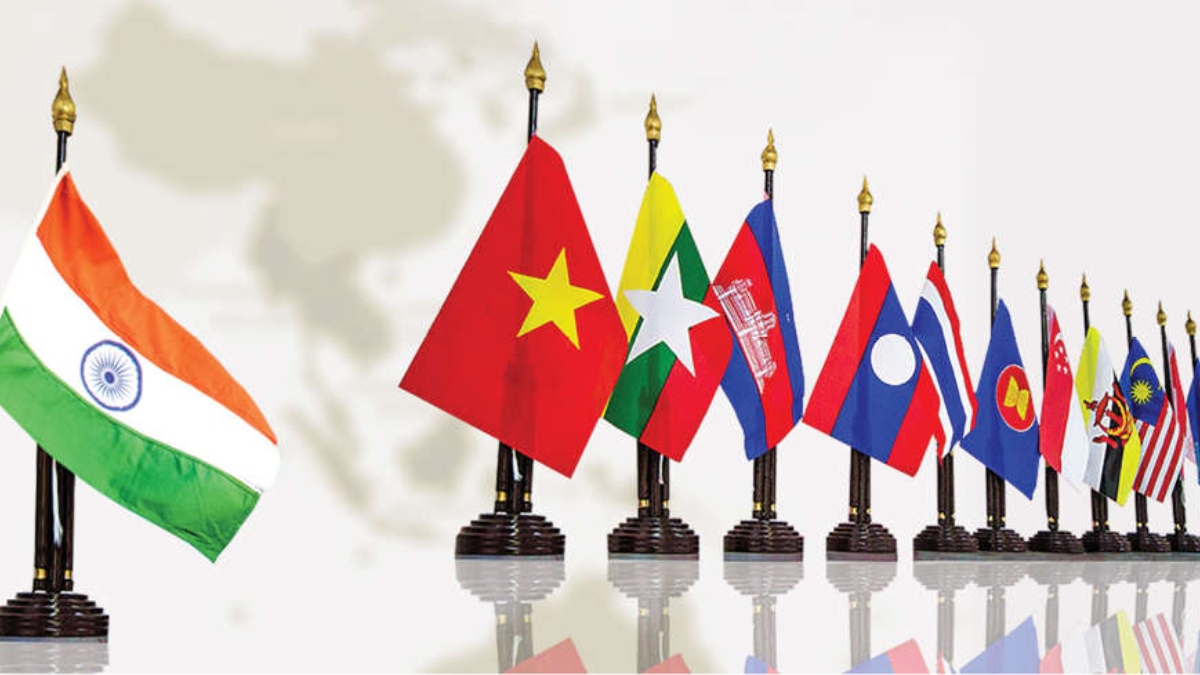
    Coming to what Regional Comprehensive Economic Partnership is, a free trade agreement between several countries in the Asia Pacific region that includes member nations of the Association of Southeast Asian Nations (ASEAN); namely Indonesia, Brunei, Myanmar, Singapore, Thailand, Philippines, Laos, Malaysia, Vietnam and Cambodia. The ASEAN also includes five partners namely Australia, Japan, South Korea, China, and New Zealand. India which was supposed to be the sixth partner opted out of the agreement on November 4th, 2019.

    The RCEP countries had a combined GDP at Purchasing Power Parity of $49.5 trillion and accounted for half of the world’s population and almost 40% of the world’s GDP, according to 2017 figures. RCEP was basically an answer to combat the already powerful NATO and G-8 countries’ influence throughout the world in terms of trade and influencing power.

    Source

    The agreement was primarily formed to increase the free trade between the member nations by reducing trade barriers which would consequentially improve the economies of these countries.

    Advantages and Disadvantages

    To begin with, India’s businesses would have access to a huge market that accounts for 40% of the International Trade. And with the little to no trade barriers, Indian products can easily penetrate the deep reaches of these countries giving the country a much-needed economic boost. With the factors of production on a full drive, the country’s GDP would improve exponentially, that is what basic Macroeconomics dictates. But there is a catch here, and that catch is a huge economic powerhouse by the name of China.

    Source

    The opening of markets is a dual effect, that is in reciprocation of other countries opening their markets to India, it is expected that India will do the same. The problem is that China is extremely good at flooding any country with its low-cost goods and at the present moment, over 60% of India’s trade deficit is on account of China. The situation is further complicated by the fact that India exports services (like IT/ITES services) and these services do not feature prominently in the RCEP agreement.

    Source

    RCEP would bring in opportunities and growth in manufacturing through the process of GVC or Global Value Chain where big corporations delegate production to multiple countries like Vietnam, India and Thailand. But because of a lack of infrastructure, experts think that this benefit would be nullified in India. With labour costs rising in China (as it progresses), companies are looking to shift their bases of production to other countries. Chinese corporations could use this window to dump in extensive products in the country. In addition, India currently has a running trade deficit with the RCEP countries and RCEP countries account for almost 27% of the trade that India does throughout the world. This puts India in further peril as India exports than imports when ideally, it should be the other way around.

    Source

    Modi’s stance on the agreement

    Prime Minister Modi, in his address at the RCEP summit held in Bangkok said, “The present form of the RCEP Agreement does not fully reflect the basic spirit and the agreed guiding principles of RCEP,”(ref). Piyush Goyal, our commerce Minister also lauded the Prime Minister’s decision and said that the move would develop the domestic industry under the “Make In India” campaign.

    “Today, when we look around, we see during seven years of RCEP negotiations, many things, including the global economic and trade scenarios, have changed. We cannot overlook these changes. The present form of the RCEP Agreement does not fully reflect the basic spirt and the agreed guiding principles of RCEP. It also does not address satisfactorily India’s outstanding issues and concerns In such a situation, it is not possible for India to join RCEP Agreement,” (ref) Modi added in the Bangkok RCEP summit.

    Goyal, in a meeting with the MPs, explained that while several small countries have only opened 50% of their markets to foreign players, India opened 74%. Thus, it is easily understandable that with foreign players looking to expand into India, the domestic players would be highly underplayed in the process.

    Source

    “India has maintained that we will not be a signatory to the RCEP unless our domestic concerns have been addressed. We are just one among the 16 countries who have not signed. We were able to take this firm stand because of our strong and stable leadership,”(ref) Goyal said in his meeting before the BJP Parliamentary Party.

    To conclude

    India is a big market and a global economic powerhouse and without India, the whole FTA (Free Trade Agreement) within the RCEP countries would fall short of the ultimate objective of mutual progress. It remains to be seen whether India can convince the other member nations to put pressure on China to accept its terms. But for the time being, the remaining 15 member nations are ready to seal the deal coming year (tentative) and India as of today is out of the RCEP deal. India should use this opportunity to improve its uncompetitive export market which is the primary reason for a huge trade deficit with any advanced economy country in the world. Where Modi’s decision is right, however, remains to be seen. As the proverb goes, “Time will tell”.

    Sources-

    https://economictimes.indiatimes.com/news/economy/foreign-trade/india-decides-to-opt-out-of-rcep-says-key-concerns-not-addressed/articleshow/71896848.cms

    https://www.indiatoday.in/india/story/india-pm-modi-decide-to-not-join-rcep-agreement-1615655-2019-11-04

    https://economictimes.indiatimes.com/news/economy/foreign-trade/india-decides-to-opt-out-of-rcep-says-key-concerns-not-addressed/articleshow/71896848.cmshttps://foreignpolicy.com/2019/11/19/modi-pull-out-rcep-india-manufacturers-compete-china/