The art of making inventions that are original, unique and innovative is called chindogu. While these gadgets may be strange, they are bound to make you laugh and tickle your imagination. Since most of these inventions are absurd, they are never put into practical use or sold. Invented by Dr Nakamats in the late 1980’s Chindogu is an exclusive feature of Japan.
Some features of chindogu are as follows-
It cannot be for real use.
For chindogu to be made; it must be real and have real-world applications.
They are tools for everyday life.
Chindogu is never for sale.
Humour must not be the reason to create a chindogu.
They must never favour anybody, and the owner must never patent them. This way, they can be used by all.
Chindogu is never considered taboo and must not be used as propaganda.
Now let’s look at Digital Dribble’s list of the strangest Japanese chindogu inventions!
Personal Rain Saver
One of the quirkiest inventions ever created, this gadget is your personal rain saver! With the price of bottled water shooting through the roof, what’s better than these rain saving devices that also act as a source of pure drinkable water?
The device seems to be an inverted umbrella connected to a jar via a plastic pipe which fills up the jar gradually. Genius isn’t it? You can use it as your personal water source! Unless of course, you’re too embarrassed to be seen with a device like this in public.
Who doesn’t enjoy a good nap on the subway? Turns out, the Japanese are charmed by the idea and have even managed to create a chindogu for it!
This gadget has a helmet and a vacuum tube that sticks to the glass wall. It even comes equipped with a small piece of paper stating the name of your destination so that a good Samaritan can wake you up once the station arrives!
Vacuum cleaners may be the perfect thing for cleaning up your floor, but why spend so much money when your pet or even your baby could clean those floors and make them shine? Incredible but true!
You can make your cat or even your newborn infant wear these useful duster slippers or clothes and count on them to make your whole apartment spick and span. Granted, they might just move in the same spot repeatedly, but it would be an adorable sight!
Given that Japan is an island nation, they are just as irritated by the erratic weather as other island countries. Therefore, it is not surprising that they have invented so many versions of the umbrella. One particular kind that really catches the eye is the combination of an umbrella and a tie.
Convenient, handy and easy to use, these hybrid products can be used in case of a sudden downpour. Although the fashion statement damaged or redefined by them could still be a cause for worry!
These boyfriend and girlfriend pillows are definitely the epitome of both the originality and the absurdity of chindogu.
Do you feel lonely sometimes? Do you have trouble sleeping alone? Do you crave the warmth of a romantic partner?
If your answers to all the above questions are ‘yes’, then these pillows might be the perfect gift for you! Designed as the cuddly quarter of a person (for women) and a comfortable lap to sleep on (for men) these pillows are sure to be your constant companions till you find the one!
The term ‘blockchain’ has almost become a buzzword today. So much so that even without knowing how a blockchain functions, people quote it as a possible alternative to almost every business process problem. Satoshi Nakamoto, with his white paper on blockchain in 2008, ushered in a whole new era of technological possibilities that baffle the average person even a decade later. This Digital Dribble article aims to examine the role of blockchain technology in businesses.
Challenges in the Adoption of Blockchain
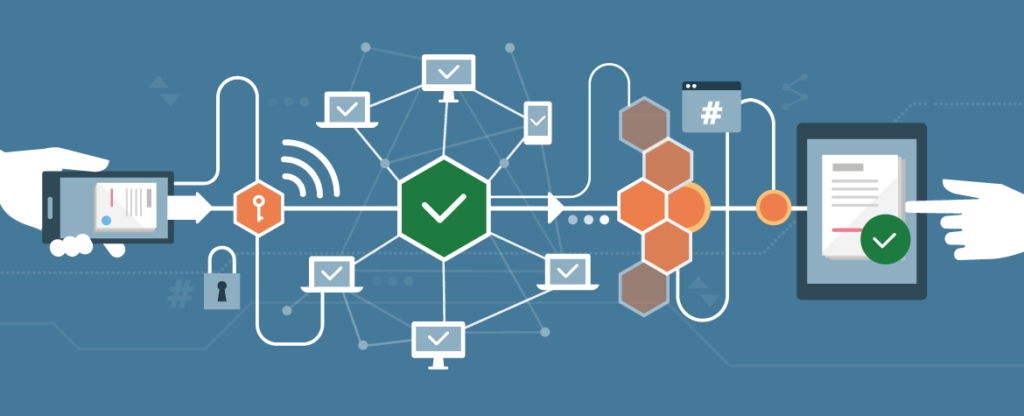
In the simplest of terms, blockchain essentially contains a chain of records (or blocks, hence the name) that keeps growing as more and more data is added to it. Each block of data has a timestamp of the previous block, thereby creating a ledger of sorts that can be used to store data and transactions.
Although there are several major challenges that businesses face while adopting blockchain, there are ways these challenges can be overcome.
One of the major challenges in the implementation of blockchain is the lack of skilled developers. This also makes it one of the major skills that companies are on the lookout for. With several online courses available to train every level of learner, this problem can be easily addressed. It all boils down to whether an individual has the curiosity and determination required to explore new technology and start working on it.
Regulation in the blockchain is a grey area that is an area of contestation for experts and novices alike. Some think that government intervention and regulation are necessary while others feel that the true essence of blockchain is its decentralized nature. Still, a little bit of regulation becomes important to protect those who only have a minimum amount of knowledge regarding blockchain. The primary point to keep in mind is that all the stakeholders must have all the benefits of using a blockchain-enabled system.
Privacy is another core issue that blockchain-enabled systems face. For example, a company that deals with sensitive customer data will never want to implement an open ledger system like blockchain. Therefore, areas will have to be discovered where blockchain principles can be used without exposing public data to the outside world. Again, this ties in with the problem of finding competent people to work on blockchain and extract its benefits optimally.
Scalability is an issue because blockchain is not capable of handling thousands of transactions per second. For scaling blockchain to a big enough level to support transactions of such frequency, the whole system needs to be made robust and durable, especially when sensitive data is involved. Also, since blockchain works on hash functions that are cryptographically encoded, it takes a lot of processor power to run. To overcome these challenges, more research needs to be done on the blockchain, and best practices need to be followed to overcome this seemingly insurmountable challenge.
Last but not least is security. Blockchain is known for its security, but something known as the 51% attack can put this at risk. Through this, users (miners) controlling 51% of the blockchain can prevent the newer transactions in the chain from getting created, thereby halting the process for all new users.
Regulations and Policies
Anything that is widely used by the masses needs regulations and policies guiding it, not only to protect it from being abused but also to make the general public aware of the nuances of the system. The challenge is to regulate a decentralized system through a central institution. Two types of regulation can be followed in this scenario- horizontal regulation and vertical regulation.
Horizontal regulation focuses on the hierarchy of identifiable layers which are involved in the technical structure of applications. The layers which are identifiable in this case involve the blockchain (platform level), tools, and applications running on the platform, such as cryptocurrencies (application level) and the ledgers (the overall ecosystem).
Vertical regulation is the regulation of various sectors by forming vertical lines amongst the multitude of intermediary services in the targeted ecosystem. This is done by building interfaces with traditional, economic, and financial systems.
While services such as Initial Coin Offerings (the blockchain equivalent of Initial Public Offering) are on the rise, there has been an increasing need for a regulatory body that deals with blockchain and its applications. Governments and financial institutions have either been lukewarm or strongly opposed to blockchain until now, but the situation needs to change dramatically soon.
The Edge of Blockchain
Blockchain has an inherent advantage over all other technology that deals with data. Consequently, blockchain can be used in industries that deal with registries. Since blockchain entries are time-stamped, data such as the registry for land ownership can be inherently stored in a blockchain-type platform. This would mean that in the event of any dispute, the title can be tracked through the chain to the point of origin. If blockchain can be implemented on a large enough scale, the caveman approach to storing data would change overnight. Another scenario where blockchain could be used is where contacts are stored only if they meet a certain specification or preference. An example would be insurance claims wherein the provider can put in certain specifications, and the claims can be disbursed provided the specifications are completely met by the claimant.
Interested in reading more articles about technology and business? Check out this article.
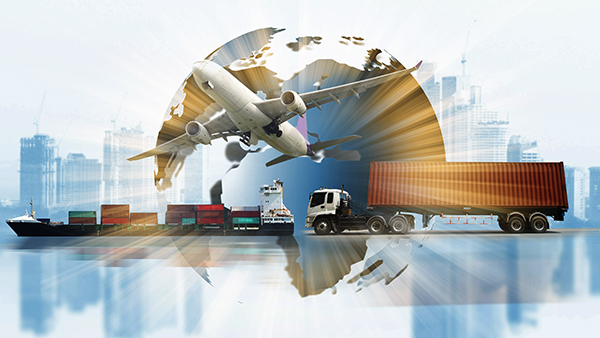
Logistics throughout the world is primarily done via three main channels- air, water and roadways. With increasing globalization, these three modes of transport now intermingle with each other to form a combined system of transportation called Multimodal Transport. With the advent of e-commerce all over the world, Multimodal Transport is essential for the effective transport of goods & services all over the continent.
This Digital Dribble article is divided broadly into 6 sections:
Logistics Industry in India
Upcoming Trends in Logistics
Technology Adoption
Technology in Multimodal Transport
Conclusion
References
Logistics Industry in India
The logistics industry in India is still largely unorganised and inefficient when looked at from a microscopic point of view. This section describes the current condition of the Indian logistics industry with the help of a few parameters.
Developed and maintained by the World Bank , the Logistics Performance Index(LPI) is a tool to identify the potential opportunities and challenges faced by countries in the domain of logistics. The list is maintained for 160 countries across the globe. The graph below shows India’s ranks and LPI scores where the maximum score is 5.
India’s LPI rank and scores have fluctuated over the years. In 2018 India ranked 44th in the Logistics Performance Index. To improve the overall logistics of the country, India should aim to rank in the top 20. It is worth noting that almost all developed countries rank low on this scale.
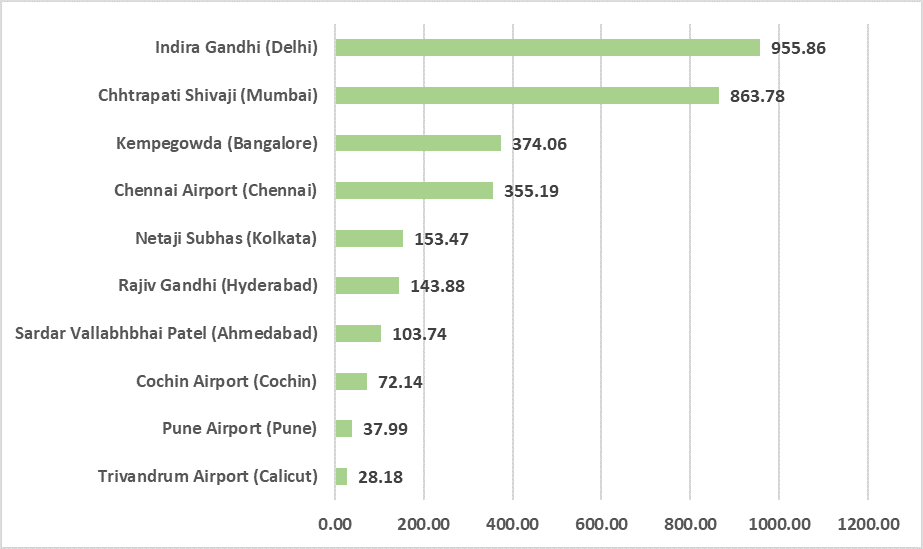
The graphs and the excel image paint a clear picture of the country’s logistics performance. As is visible, there is ample room for improvement. The visible drop in cargo traffic at major ports is due to the detrimental effects of COVID-19. The average State and National Highway length is 7,069 Kms. Most of the states or union territories from Assam to Chandigarh all have below-average lengths. As ports, cargo airways and road networks develop and grow stronger, logistics will follow suit.
Upcoming Trends in Logistics
Upcoming trends in Logistics (2020 and beyond)
Technology is changing and will continue to change the future of logistics for the years to come. The 10 top technologies that will have the most impact in the coming years are:
Internet of Things (IoT)
Artificial Intelligence (AI)
Robotic Process Automation (RPA)
Last Mile Delivery
Warehouse Automation
Data Analytics
Cloud Computing
Blockchain
Autonomous Vehicles and Drones
Elastic Logistics
Percentage breakdown of the trends in 2020 and beyond
Technology Adoption
This section will talk about the various advancements in technology and how it is combined with logistics to provide value addition to all its stakeholders. Here is how the top 5 trends will affect impact logistics:
1. Internet of Things (IoT)- Internet of Things simply means the provision of and the ability to connect and control a wide variety of physical objects (which are meant for normal day-to-day usage) with the help of the internet, sensors and software.
Proposal- Since IoT devices need an underlying internet connection all the time, a strong Wi-Fi connection is integral. The advent of 5G will increase the speed of data transfers, reducing latency. This technology will be particularly helpful in the logistics involved in perishable products.
Usage- Sensors built onto containers or RFID tags that help monitor the product will be used throughout the entire chain of the journey thereby helping achieve Supply Chain Visibility (SCV). Fully integrated logistics companies see a 20% rise in efficiency than non-integrated ones.
Start-up in the field-Fleetroot is an UAE based start-up which offers companies an IoT platform for effective fleet management. It provides fuel management solutions by generating detailed reports about fuel wastage and consumption.
2. Artificial Intelligence (AI)- AI has made huge leaps in recent years and companies have leveraged it to their advantage.
Proposal- AI algorithms juxtaposed with Machine Learning (ML) help companies in a plethora of ways. Artificial Intelligence and Machine Learning are being used by companies in every field possible. The high cost of initial investment is easily justified by the cost savings and returns in subsequent years
Usage- Demand forecasting, optimised routes with the help of Google Maps and process automation are some of the ways AI and ML can be used
Start-up in the field- Adiona is an Australia based start-up that helps other companies improve their logistic processes and reduce overall costs. It also optimises delivery routes and supports complex decision making.
3. Blockchain- Satoshi Nakamoto’s can be used ingeniously in logistics management as well. Despite the fact that the intricacies of blockchain are largely unknown to the general public due to its complicated technicalities, the database is still used by industries across the globe.
Proposal- The open ledger system can be appropriately used to share sensitive data across the logistical journey of the product/asset. No third-party software or companies would be needed to interface at multiple points, a network of seamlessly updating ledgers would take their place
Usage- From enabling card-less B2B payments and tracking of perishable items, to tackling the influence of counterfeits in pharmaceuticals, blockchain is definitely a boon for the logistics industry
Start-up in the field- The USA based start-up,ShipChain manages the end to end shipping process by leveraging the power of blockchain. The platform provided by the start-up allows its customers to track shipment locations at every step of the logistical journey
4. Robotic Process Automation (RPA)- RPA helps in eliminating the need for humans to do repetitive tasks thereby saving precious resources and enabling increased productivity, efficiency and reduced overhead costs and errors.
Proposal- There are a lot of manual, repetitive tasks in logistics that can be minimised by implementing RPA. It is worth noting that RPA involves human processes amalgamated with technology.
Usage- Here are a few ways RPA can be implemented:
Using RFID tags within the logistical process to locate a product instantly
Automatic invoicing, automated inputs of purchase orders
To prevent the counterfeiting or smuggling of important assets using appropriate sensors
Start-up in the field- Actimai combines big data and AI along with RPA to provide customised solutions that are optimizable, manageable and deployable to its customers
5. Autonomous Vehicles and Drones- One of the most anticipated technologies for logistics and warehousing companies is autonomous vehicle and drone technology. Once mainstream, this technology would help reduce human errors and also help connect the inaccessible terrains of any country to the mainland.
Proposal-Drone enabled delivery would increase the efficiency of logistics companies and would tie in with the overall technological strategy of the organisation. Amazon has even patented the idea of a floating warehouse which would have its own set of drones for easier accessibility and fulfilment of orders
Usage- Drones, Unmanned Vehicles and Trucks, Driverless Shipment Transport
Start-up in the field- A start-up from Germany called Spring offers an autonomous fleet of vehicles for transportation of goods along with analytics and intelligent systems
Technology in Multimodal Transport
Multimodal transport uses current as well as upcoming technological trends. Some of the technologies used in multimodal transport are:
Intelligent Transport Systems (ITS)-
Traffic Management and Information Services- provides real time traffic management offering increased efficiency and transparency
River Information Services- RIS is used for the smooth and effective optimization of traffic in the inland navigation and helps in the real time exchange of information between shore and water
Freight response management system- This is a kind of ICT (Information and Communication Technology) that improves operational efficacy, reduces empty runs with the help of better planning of routes, improves utilisation of infrastructure leading to customer satisfaction
Terminal & Port ICT- This technology reduces the unloading and loading times at terminals and improves the utilisation of the terminal infrastructure, achieving seamless transfer of cargo through efficient interfaces between transhipment points. It also reduces operational costs
Conclusion
The future of logistics depends as much on development in the channels (air, water and road) as development in technology. This article aimed to provide a preliminary view into how technology is currently changing and will continue to change the face of logistics management all over the world. Interested in reading more about how technology affects businesses? Check out this article.
1) Read me a eulogy of our times together, so that my soul may shed a tear or two of longing; a microcosm of what we felt without each other. The only downside is that given enough time, almost everything heals.
2) What if we are the product of someone else’s imagination? A figment of their thoughts and their mind limited only by the sheer capacity of their thinking?
3) We are a crude sponge, sucking away on a plethora of emotions, cultures, violence, lust, greed and hate while walking on the year road towards all-consuming eternal oblivion.
4) When we are being made in our mother’s wombs, when we are in the process of being born, the universe whispers all of its secrets to us. Including humanity. When we finally make it outside, we cannot convey the secrets. They are dismissed as babies’ babbles. As we grow up, we eventually forget them. Then maybe an instant before death, we remember it all; but by then, it has already been too late.
5) You’re afraid of love, afraid that once it consumes you, you won’t be able to turn away from it. Yes, one cannot love with the same intensity once the heart’s broken. But you’ll crave love, maybe not like an addict but sometimes you’ll feel alone. And sometimes, love will drizzle on your windows; the leftover lust from the night before.
6)Love is nothing but a stimulus in response to preserving our kind, love is a reaction against extinction. Love is a biochemical reaction spawning fool-hardy reactions and awkwardness among many, but nevertheless, it is beautiful.
7) “And in one swift revelation I realized you cannot survive without me,” said the neck to the noose.
8) When life stares back at you, be afraid, but don’t blink.
9) In a lot of ways love is like magic, when you get to know the secret behind what makes them both work, they both become unnecessary distractions.
10) Isn’t it fascinating that the only stories that can move mountains and souls alike are real ones?