Every one of us has some form of social obligations to attend to, and companies and organizations are no different in this regard. Only when we help others in need will we progress both individually and as a species. Although businesses are profit-driven, companies still spend millions of dollars annually on CSR activities, thereby strengthening the benefits of these initiatives. Choosing the right subject to show support for also matters a lot, and organizations must ensure that their CSR activities align with their core values. For example, a pharmaceutical company may choose to focus on promoting basic health in developing countries.
What CSR does for businesses
Corporate Social Responsibility has many benefits for the employer, some of which are enumerated below-
Public image
Corporate Social Responsibility gives the company a chance to boost its reputation amongst target demographics, thereby improving its standing amongst its competitors. This helps drive a positive image in the minds of their target audiences. Also, companies with better and unique Corporate Social Responsibility policies get better media coverage, which gives them bonus brownie points and helps earn loyal customers for life.
Profit margins
Corporate Social Responsibility practices of a company or organization send a strong message that the company, although profit-driven, keeps in mind the ethical and moral standpoint and understands right from wrong. It strives to be an example of the company that implements rules that contribute to the sustainable development of at least its immediate surroundings. The average consumer is now more educated and knowledgeable than their previous counterparts. They prefer to buy products and services from organizations that take care of society and the environment.
Social and environmental benefits
The effects of Corporate Social Responsibility on the environment and societies are undeniable. The people who benefit from these activities start contributing towards the betterment of their local surroundings, thereby initiating a chain of helping and goodwill.
How CSR strengthens the employer brand
Corporate Social Responsibilities have immense benefits in enhancing the employer brand, too, by directly or indirectly boosting employee perception. Highlighting organizational values and goals attracts employees who feel proud to work for the organization. This, in turn, limits employee attrition and increases employee retention, thereby saving the company resources in recruiting new talent from time to time. A positive image helps the company recruit good talent.
Hiring millennials
Millennials are knowledgeable, demand instant results, are motivated by what is happening around them, and drive positive changes in the environment and societies. Millennials bring diverse life stories and dynamism to the table, which companies can benefit from immensely. Naturally, organizations that practice positive Corporate Social Responsibilities will be more likely to hire much-needed talent in the form of modern-day millennials.
Transparency
Today, everyone, including employees and customers, demands transparency from organizations. CSR activities encourage employee participation and, in many cases, involve client and customer participation too. Employee participation leads to employee engagement at various levels of the organization, which has direct implications for employee pride (how proud employees are to be associated with the company).
To conclude, organizations should create a win-win situation for all stakeholders as it benefits everyone equally. Life itself is not a zero-sum game, and companies getting involved in CSR activities understand that. In addition, to make sure that Corporate Social Responsibility activities get the desired positive effect, companies must make optimum use of social media. Coordinating employees, clients, customers, and an organization’s social responsibility division will give the best results in terms of positive impact on society, environment, and its inhabitants, thereby boosting the organization’s image. It would also help the organization retain the right kind of talent and achieve its core mission and values in the long run.
I have thought of writing on this topic for quite some time, but either due to being inherently lazy or waiting for the perfect impetus to push me over, I have laid off from this project—until now. It is almost 2:30 a.m., and I am rewatching Dexter. At the end of Season 5, I see Micheal C. Hall, who plays Dexter, break down after hearing devastating news from his partner in crime. For fans of the show, it is one of those rare moments when the character, a high-functioning psychopath, truly feels an emotion, that too, rather strongly (no more spoilers)! A familiar epiphany runs through me, as I am certain no other actor would have been able to do justice to the character other than Hall.
Throughout entertainment history, we have had a plethora of actors who became one-off hits, so much so that they never had success playing any other character, or at least not to the level of the one that had immortalized them forever. To run through a few examples to prove my case, you have the likes of Jim Parsons (Sheldon Cooper, Big Bang Theory), Elijah Wood (Frodo Baggins, the Lord of the Rings series), almost the entire Seinfeld cast (Julia Louis-Dreyfus as Elaine, Micheal Richards as Kramer and Jason Alexander as George Costanza), Carrie Fisher (Princess Leia, Star Wars), Daniel Radcliffe (Harry Potter, Harry Potter series), Bryan Cranston (Walter White, Breaking Bad) and Jack Gleeson (King Joffrey Baratheon, Game of Thrones) to name a few. In the case of Gleeson, he allegedly stopped acting due to the amount of negative backlash he faced for portraying the dastardly character on screen.
Thus, one thing is evident, playing the character so well leads to pretty strong and sometimes even violent reactions from the audience. They forget to separate the actor from the character; reel from real. At the heart of the phenomenon is the resultant effect of hundreds of critical as well as microscopic decisions at play—from being the casting director’s preferred choice to the director’s instructions, the actors portraying said characters following those instructions and maybe sometimes adding in some improvised speech or mannerisms that are fortunate enough to pass through the editor’s digital scissors. It is a true butterfly effect at work. I call this the perfect synergy—when both the actor and the character written for them achieve perfect amalgamation. Again, some might argue that this is what method actors essentially do, but then again, not all the examples I listed above are method actors. There must be something else at play here, simple luck? Maybe, maybe not.
What matters at the end of the day, is that the finished product works, and it works damn well too. Because an actor’s popularity is directly correlated with how much money they make for the production houses which again is directly correlated with audience interest and attention. As Monk (Tony Shalhoub, the character playing Monk is another classic example of this phenomenon) would have said, “It’s a blessing and a curse!” A blessing because only a few fortunate actors through their characters, can boast of capturing the audience’s attention so exquisitely and in some rare cases, even the cultural zeitgeist through memes. A curse because it hinders them from ever moulding into a new character, in some cases leading to a possible financial ruin in the future. Royalty checks can support an actor’s lifestyle only for so long! Be that as it may, I am sure the audience who get to witness the visual treats are not complaining as they grab onto the edge of their seats in anticipation of the next scene.
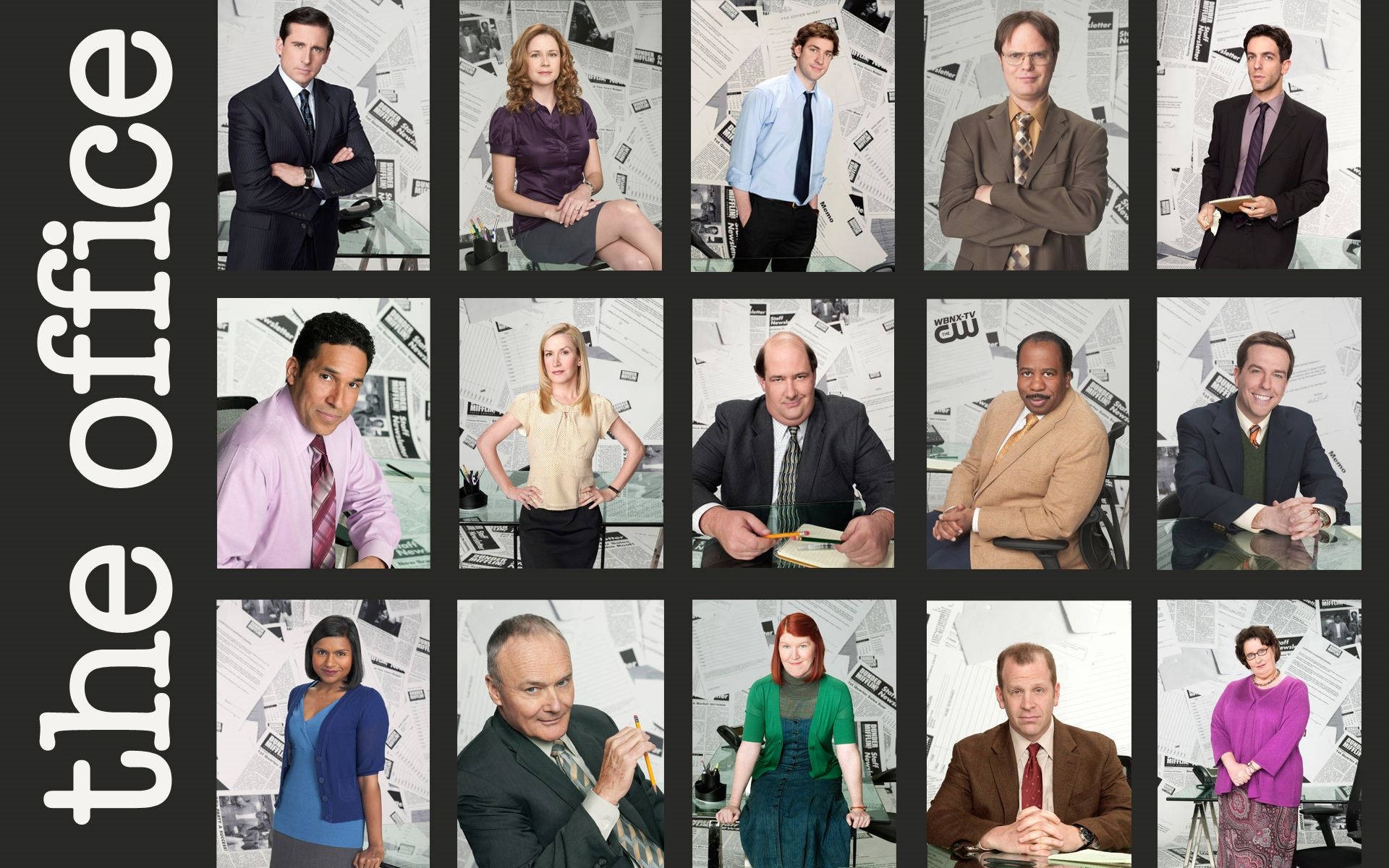
My tryst with “The Office,” the popular US cousin of the British version of the show (also called The Office), began like everything else, through YouTube. I used to watch the most memorable parts of the show, digitally immortalised by their official YouTube channel. As the show took root in my impressionable mind, I often ran to Reddit communities, hosting debates on the best TV show in existence. Two likely contenders would often lock horns: Friends and The Office (the US version). I would contribute my fair share of logically structured sentences and sometimes even heated arguments when the situation got the better of me.
No other species can defend their beliefs as fiercely as humans do; maybe that is what makes us so special. Or stupid. I cannot decide; I guess that is a topic for another day. But I digress…
About the show
The show is set in Scranton, Pennsylvania, and depicts the ongoings of a paper supply company, Dunder Mifflin. Throughout the show, there is always the looming possibility of either the Scranton branch closing, or Dunder Mifflin being completely wiped off the map by its competitors. Layoffs and employee transfers, therefore, are common cost-cutting measures taken by the company. These challenges act as external antagonists against the show’s characters, continuously chasing them and forcing them to make the next hasty decision and face unintended and often hilarious consequences.
Awkwardness as a medium and Micheal as its harbinger
The mockumentary also cleverly uses awkwardness to keep the story moving forward, so much so that it often becomes the ocean to the story’s ship. Michael Scott exemplifies this and embraces it until he becomes the personification of everything awkward this show throws into the audience’s face. A man-child in the truest sense of the term, his subordinates have no other options than to take care of his emotional and physical needs, working only when he is either distracted or asleep.
However, as irritating and obnoxious as he may be, he always finds a way to redeem himself in his subordinates’ eyes. From attending Pam’s art show, displaying considerable stress whenever he is asked to fire anyone, and sometimes sharing genuine good advice, he displays he is only human and has a good side to him. I strongly think that his desperation to be loved by everyone stems from the loneliness that he experienced since he was a child. The show alludes to this when Micheal portrays a businessman in a dress-up competition who longs for friends. Now, he thinks of his subordinates as genuine friends and is not ashamed to leverage his position in a desperate bid to attain companionship. The only exception being Toby, whom Micheal hates with every fibre of his being. I wonder whether this is due to Toby’s not-so-cheerful disposition and his strict adherence to corporate rules (being an HR) that reminds Micheal of Dunder Mifflin HQ.
This is why the show’s quality dips significantly after Steve Carell leaves the cast. None of the other bosses at the helm could effectively entice the audience towards the show. Characters like Robert California, Gabe Lewis, and Andy Bernard seemed extremely obnoxious, toxic, and overall unpleasant to watch. This is when the tolerable awkwardness gave way to visible disgust.
Subtle humor is intelligent humor
One of the positive aspects of the show is the absence of laugh tracks, which, in my opinion, severely limits the potential for comedy. Any show aiming to make the audience laugh need not give them instructions to do so. After all, I do not think any good could ever come out of forcing people to do something.
Comedy flourishes in subtlety, not distractions; it flourishes when the viewer understands the external situations, the character’s motivations, and the unintended consequences the character faces because of said motivations. A laugh track negates everything the script stands for and robs the audience of the chance at their own interpretations. In rare instances, it works seamlessly, a case in point being Seinfeld.
Each character is unique and represents something genuine
The show fleshes out characters superbly, with each character and their relationships with other characters depicting something unique. For instance, the relationship between Dwight and Micheal portrays the meaninglessness of corporate hierarchy and designations.
Dwight: “…and that’s why you have an Assistant Regional Manager.” Michael: “Yes it is…Assistant to the Regional Manager.” Dwight: “Same thing.” Michael: “No it’s not. It’s lower, so….” Dwight: “It’s close.”
Jim and Pam obviously describe the long-term office fling that we all grew up seeing or hearing stories of, only in this case, they happened to successfully be together till the end; however, not without their fair share of problems.
Ordinary workers like Stanley, Phyllis, Kevin, and Oscar, although might differ in their capacity to work, are all stuck in a low-wage job selling paper, the prospects of which are questionable in the long term. This is perfectly summarized by Stanley’s famous quote on Pretzel Day below-
“I wake up every morning in a bed that’s too small, driving my daughter to a school that’s too expensive and then I go to work to a job for which I get paid too little,” he says in the episode. “But on pretzel day, well, I like pretzel day.”
Jim and Dwight are more like brothers who cannot stand each other but are always there for a helping hand. They function as a well-oiled machine during sales calls, donning various personalities, and have helped each other through crises several times. Jim’s pranks sort of balance Dwight’s general obnoxiousness and fierce loyalty to Dunder Mifflin.
All’s well that ends well
Thus, in a nutshell, once one starts to peel off the layers that this show presents (however crude it might seem), a veritable shining gem starts peeking out. Granted, the show is an acquired taste for many, but I think there is much more acceptance for the US version than its grim, dry-witted UK version. Despite its many flaws, this will be one of those shows closest to my heart. Ending on a Micheal Scott note, because why not? “Catch you on the flippity flip!”
For the longest time, I have held the belief that it is not impossible to make the life story of the most boring person interesting to watch, given everything else works out perfectly. By everything else, I mean, a plethora of factors including the utilisation of the environment, the supporting actors, and camera angles; converging perfectly to bring the main premise into the spotlight, for the world to see and appreciate.
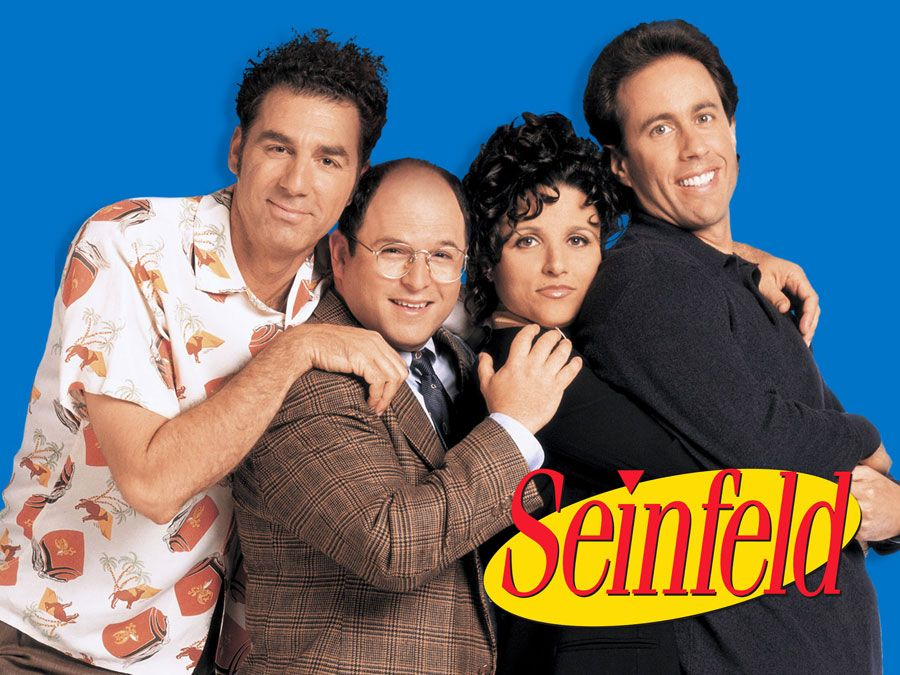
Seinfeld is a glaring example of this phenomenon, on the surface, it is nothing more than a show about the dysfunctional lives of four friends, two of whom had previously been in a relationship, albeit not anymore (yes, just like Elaine/Jerry make it a habit of pointing this fact out everywhere). Each of them showcases a wide variety of physical and emotional traits, however, it is their lack of accountability, general apathy, and their never-ending habit of being trapped in the cogs of society that unites them. This is driven to great lengths at the end of the series when they face the brunt of the “Good Samaritan Law” and every one these four have been in contact with is portrayed as a victim, unfortunate enough to encounter them.
Seinfeld (Jerry) often seems to be the voice of reason, but even he is not infallible to cynicism, ego messaging and selfishness. He also seems to be the most successful of the four and has a carefree attitude towards life. I would go as far as to predict, after seeing Jerry course through the situations that he finds himself in, that he enjoys getting tangled up in them, even at the cost of great physical or economic harm. This is because this serendipity, no matter positive or negative, ensures the constant flow of new material for his standup shows.
George, on the other hand, takes the cynicism and nihilism a step further, sometimes perhaps a little too self-aware about his inadequacies. He is thrifty, often overvalues his position, and is entirely deprived of any empathy. The show does allude to George developing these unique characteristics due to his parents, who often seem to be bickering, at the most trivial of things.
Kramer is perhaps the best part of the show, bringing in a breath of fresh air every time he appears on screen. His prowess with physical comedy puts him in the same stature as Chaplin, Mr. Bean or Buster Keaton. I think this quote by George describing Kramer sums up the entirety of his personality, “His whole life is a fantasy camp. People should plunk down two thousand dollars to live like him for a week: do nothing, fall ass backwards into money, mooch food off your neighbours, and have sex without dating. That’s a fantasy camp.”
Elaine or Laney as she is affectionately known, brings with her, her trademarked amalgamation of charm and awkwardness. A staunch feminist and somewhat of an activist, she often gets into fights with other characters on the show, on topics ranging from the legality of abortions, the environment, and fur trade. Some of Elaine’s best screentime was evidenced because of her interactions with her boss, J. Peterman. What I learned recently, was the fact, that J. Peterman is a real-life company and the actor who played him, John O’Hurley, is now a partner in the same. Truth, really is, stranger than fiction!
The stories in Seinfeld go everywhere and nowhere at the same time. Interestingly, in season four of the show, Jerry and George get a chance to pitch a show to NBC and they pitch the idea of “a show about nothing” to executives at the network, proving Seinfeld was “meta” even before it was considered cool. However, what is truly fascinating is how the sitcom manages to attract the audience’s attention; when in fact a large chunk of the characters’ lives is spent in recurring locations. Fans of the show would recognize Monk’s (the café they frequent), Jerry’s apartment and car, and less frequent, but equally recognizable places like Newman’s and Kramer’s apartments and George’s house, among others. Even the standup shows that Jerry performs across a plethora of clubs all seem to have the exact same backgrounds. However, these recurring (sometimes even mundane) places witness some of the most wild, hilarious, and outright unearthly situations imaginable. One would not be wrong in assuming these dreary backgrounds help provide the right amount of contrast to the situations the characters in the show often go through.
As I am wrapping up my third rewatching of the series, to conclude, Seinfeld is truly a show about nothing; but it also is a show about everything and it is this existential tussle between the two, that makes the show an evergreen product of the Hollywood imagination.
With emerging technology playing a crucial part in today’s gaming experience, it makes sense for Microsoft, a leading technology and gaming company, to acquire Activision, a leading game publisher. Microsoft is set to benefit from the deal to a great extent by leveraging an ecosystem composed of its products and services which complement one another. However, Activision brings many positives and negatives, and it is up to Microsoft to strategically address them. The path ahead is difficult but, if properly implemented, would prove invaluable for Microsoft’s global gaming domination.
Gaming is a multi-billion dollar industry today
From pixelated characters on screen to stunning visual graphics and player experience, the gaming industry surely has come a long way. It is a multi-billion-dollar industry currently and is expected to cross $200 Bn in 2023.
Current scenario of the gaming industry
Gaming has been an integral part of society, and as the world goes increasingly digital, the prospects of the gaming industry look even more enticing. The total gaming market is expected to balloon further as mobile penetration increases amongst the masses.
Some key gaming trends
Rise of mobile gaming
Mobile gaming has seen a tremendous rise since the advent of application stores like Google Play and Apple’s iOS store. Mobile gaming revenue reached $76.7 Bn at the end of 2020 and is expected to increase steadily. The pandemic’s negative impact on the mobile gaming section has also been largely limited since the hardware is not a limiting factor, unlike gaming PCs and consoles.
Popularity of e-Sports
Gaming is now a lucrative career option, and tournaments are watched by millions of eager spectators and sponsored by game publishing and developer companies. Esports is gaining both popularity and acceptance amongst the masses and is aided by a digital mediums like YouTube and Twitch where streamers play their favorite games and earn donations from fans.
Asia Pacific to be an important gaming region
The Asia Pacific is emerging as one of the most important geographies for gaming, accounting for almost half of worldwide gamers. The primary drivers for this leadership can be attributed to increasingly better internet infrastructure, an increase in online population, and affordable internet. Countries like Japan, China, and South Korea are the torchbearers of the Asian gaming industry.
Role of emerging technologies in gaming
Emerging technology is one of the key aspects of the gaming industry currently, as it is directly related to the overall gaming experience. Top gaming companies like Microsoft, Tencent, and Sony understand this well, and to a large part, their expertise in technology has enabled them to become leading gaming companies today.
For Microsoft, it can leverage its years of hardware experience in the form of its running Xbox consoles, its acquisition of several important gaming studios and developers, and its leadership in cloud and artificial intelligence to further strengthen its position as a go-to choice for gaming, especially when the role of emerging technologies is becoming ever so important.
What does the acquisition bring to Microsoft Xbox?
Although Xbox will have many potential advantages with the acquisition of Activision Blizzard, there are some areas of concern as well. The following pointers will strive to throw some light on them-
Benefits of the acquisition
I. Activision’s share in e-Sports
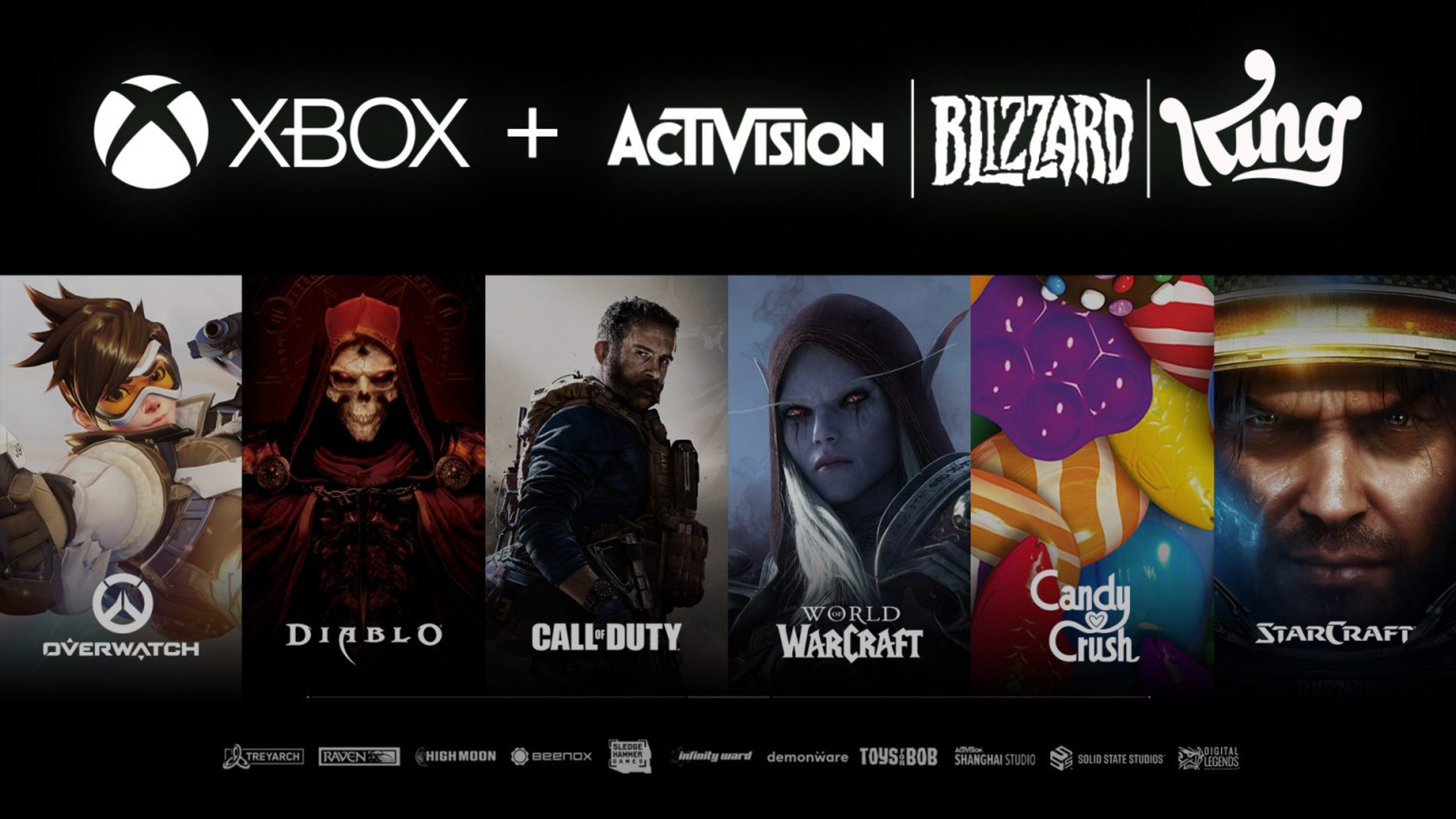
Activision has a good presence in the e-Sports industry as its subsidiary Blizzard entertainment owns massive IPs like Overwatch, StarCraft II, and Hearthstone, which are some of the best-known first-person shooters (FPS), strategy, and turn-based games respectively.
ii. Mobile gaming potential
Xbox can leverage the Candy Crush series developed by King, which Activision Blizzard acquired in 2016 to fulfill its mobile gaming aspirations. There is a huge market for cross-platform gaming, and mobile gaming is a key component of the PC-Console and Mobile trinity. Two of its highly rated games, Candy Crush Saga and Candy Crush Soda Saga each have more than a billion downloads on the Google Play store.
iii. Player base
Xbox can now use Activision’s existing player base of 400 million active players spread across 190 countries, in addition to 30 game development studios. This will also help Xbox add subscribers to its cloud-based gaming subscription service, Game Pass, which is already 25 Mn subscribers strong. The acquisition will also add around 10,000 of Activision’s experienced gaming employees to the Xbox umbrella.
iv. Popular Activision IPs
Activision owns popular games like Call of Duty, Candy Crush Saga, and World of Warcraft. Its most popular title, Call of Duty has been running since 2003 and has sold millions of copies to date. With the current subscription-type revenue model in gaming combined with Activision’s massively popular IPs, Xbox is well-positioned to benefit to a great extent.
v. Technology additions
Activision’s IW engine, created by Infinity Ward has been powering its Call of Duty franchise and is currently in its eighth version. Microsoft can make use of the IW engine for further developing large map-based first-person shooter games and combine it with XNA, a set of frameworks and tools which helps develop games.
Detriments of the acquisition
i. Declining sales
The sale of Call of Duty has dropped in recent years, with the peak sales being attributed to Black Ops which was released in 2010. In the UK, in 2021, Call of Duty: Vanguard sold 36% fewer copies compared to its previous year’s game, Call of Duty: Black Ops Cold War. Xbox will have the hefty task of reigniting public interest in the series. Maybe we will see much more marketing and perhaps several e-Sports tournaments being organized around the game in the near future.
ii. Losing brand value
Activision’s brand value has been taking a hit as it has been embroiled in scandals, specifically in 2021 when-
California’s Department of Fair Employment and Housing (DFEH) sued Activision Blizzard for violations related to equal pay, sex discrimination, and sexual harassment in July. Former female employees of the company shared negative experiences during their term at the company, and a massive walkout and protest were organized by the employees during the same time.
Activision Blizzard in September agreed to settle a lawsuit by the U.S. Equal Employment Opportunity Commission (EEOC) which alleged discrimination and harassment in the workplace. Activision, as a result, will create an $18 Mn fund to compensate and fund claimants, and any remaining amount will be divided between charities
iii. Revenue performance
Although Activision seems to have performed well in recent years, its revenue growth dropped steeply from ~25% in 2020 to 8.9% in 2021 with periodic crests and throughs throughout, suggesting which is an area of concern. In its Q4FY21 earnings, its quarterly earnings fell by 10.3% as compared to last year driven by low sales in its Call of Duty franchise.
iv. Lack of new games
Activision has essentially not put a new game on the market since Overwatch, in 2016. Although, in late January this year, it announced via Twitter it is building a new survival game which would be the studio’s first survival game. Time will tell how this would compare with the best out there in this category, namely The Forest, DayZ, Subnautica, and of course, Minecraft.
Microsoft’s strategy to become the gaming market leader
Key acquisitions by Microsoft in the past
It should be noted that Microsoft’s acquisition of Activision Blizzard is not the first gaming-related acquisition; it has been busy acquiring gaming studios for the past few decades. However, this acquisition, in monetary terms, is more than 8 times its next most expensive gaming acquisition, that of Zenimax Media.
Although the Rare deal happened decades ago, it set into motion Microsoft’s subsequent game studio acquisitions. It is also one of the major deals for Microsoft right after it started Xbox. It is the market consolidation, in terms of adding exclusive present and future titles and active players that Xbox has aimed at with these acquisitions. Brand value plays an important role in this aspect as well as adding well-known titles will translate to better Xbox subscriptions and console sales.
Another important aspect is the fact that Microsoft has allowed several of its acquired studios to function as independent bodies under the Xbox banner. This has allowed the studios creative freedom and enabled them to make their own decisions for their respective game titles. It remains to be seen whether Microsoft will function independently as well.
The Metaverse angle
Metaverse is now much more than just a buzzword, and the gaming industry is uniquely aligned with the metaverse concept. Interaction and digital worlds are at the very heart of the metaverse, and the gaming industry provides just that. Minecraft, developed by Mojang studios already has a huge digital world in place with in-game player interactions in the form of combat, base building, and exploration. Another important aspect is digital transactions, and because of micro-transactions already being a major revenue-driving force in the gaming industry, the synergy between gaming and metaverse is greatly increased. Microsoft has already put in place a metaverse technology stack that makes use of its present ecosystem of products and services, and the gaming component will act as an experience layer with which the user will interact.
Microsoft wants to position its Xbox ecosystem (including Xbox Game Studios, Game Pass subscriptions, and gaming consoles) to be an overarching destination for all things related to gaming. Since 2018, Microsoft has combined all its Xbox hardware and software services comprising Xbox Live subscriptions, advertising and transactions, video games, and third-party video game royalties into a condensed section called gaming. Microsoft also appointed Phil Spencer as the CEO of Microsoft Gaming in January 2022, after the acquisition. This strengthens the reason that Microsoft is viewing Xbox not solely as a game console division but as a one-stop destination for all things gaming.
Xbox’s revenue has been continuously on the rise in the past couple of years, and with this acquisition, it is only expected to increase as loyal Activision fans will be added to Xbox’s player numbers who in turn will get involved with micro-transactions inside the game.
Xbox has been battling Sony’s PlayStation for many years now in the console games market, and this acquisition is aimed at strengthening its position in the console and games market. The scale of Microsoft’s Activision acquisition can be appreciated much more when we consider that at $ 68.7 Bn, it is only $ 1.3 Bn short of the combined value of its next 5 biggest acquisitions. The addition of Activation games into the subscription services will help Microsoft further position its subscription service as a preferred alternative to Sony’s PlayStation Plus.
With the acquisition, Xbox will most probably become the third biggest gaming company by revenue after Sony and Tencent. This trend of acquisitions is expected to continue for Microsoft as they will always be on the lookout to acquire popular gaming titles for their Xbox portfolio.
Conclusion
To conclude, Microsoft, with this acquisition will not only strengthen its gaming portfolio but will also be able to fortify its place in the metaverse race with the help of its already flourishing ecosystem of products and services. Microsoft is well on the path to making use of this ecosystem in the increasing trend of cloud-based cross-platform gaming that is being observed across the industry. This acquisition is thus a key move made at a strategic time when the importance of emerging technologies and an ever amalgamation of the physical and digital world is becoming increasingly prevalent.
For Activision, aligning with a technology giant will allow it to have the crucial assets it needs to become future-ready. Additionally, its brand will definitely get a much-needed boost. For Microsoft, it gained strong steps toward realizing its aspirations of becoming a gaming market leader by adding Activision’s huge player base, popular I.P.s, and employees. What matters next is how the integration will be done as it is key for Microsoft to reap the intended benefits which in turn will dictate the return on investment.
India is a land of cultural diversity. A festival not only means joy and happiness, but also an essential display of tradition and values. These festivities are entwined with the culture and lives of people and have impacted them greatly. Every state in India has its own major festival that showcases the vibrancy of its people. Here’s presenting Digital Dribble’s list of a few of these vital festivals:
Durga Puja (West Bengal)
Undoubtedly the most important festival of Bengal, the Durga Puja happens during the time of ‘shukla paksha’ (according to the Hindu calendar) and covers six days namely Maha Panchami, Maha Shashti, Maha Saptami, Maha Ashtami, Maha Navami and Bijaya Dashami. The Mahalaya marks the inception of the festival and on that auspicious day, people pay a tribute to their deceased relatives by commemorating them. The festival ends with ‘Kojagori Lakshmi Puja’, which is the worship of Goddess Lakshmi on a full moon night. Durga Puja marks the victory of good over evil and is celebrated in October.
The largest fair in the state of Rajasthan is held in the town of Pushkar. As the name of the town suggests, it is a camel and livestock fair held all across the town of Pushkar. The fair attracts tourists from across the country and the world. Apart from livestock transactions, it also involves competitions. Some of them are ‘the longest moustache’, ‘the bridal competition’, and ‘breaking the pot (matka phod)’. The men focus on goats, camels, sheep, and cows while the women pass their time in the stalls selling native jewelry, clothes, and textiles. The fair is held during the months of October and November.
The Hornbill festival is celebrated in the state of Nagaland and is generally called the ‘Festival of Festivals’. It takes place between the dates of 1st and 7th December in Kohima. Every tribe of the state takes part by displaying their own colours and traditions. Nagaland has a rich culture and heritage, which is evident in this festival with its plethora of events. The name is derivative of the Indian Hornbill which is an essential character of the folk tales of the state. The events and stalls include- art and craft, herbal medicine, games, beauty contests, rock bands, traditional archery, dance, Naga wrestling, and much more!
Held annually in Kerala specifically at the Vadakkunnathan Temple situated at Thrissur, the festival has deep cultural and traditional implications for the people of the state. On the occasion of Pooram which is the day when the moon rises with the Pooram star, is the largest of all programs. It was started by Raja Rama Verma and the temples surrounding the Vadakkunnathan participate in the festival too. It has events like flag hoisting (Kodiyettam), displays of firecrackers, exhibitions of ornamental caparisons, royal fans, peacock feathers, and sacred bells. A Hindu festival, the Thrissur Pooram has borrowed heavily from the local culture of Kerala.
Source
Konark Dance and Sand Art Festival (Odisha)
Organized for the first time in 1989, this festival is organized to spread knowledge and awareness about the magnificent Sun Temple in Konark, Odisha. Situated thirty-five kilometres to the northeast of Puri, the Sun Temple has millions of visitors all the year-round and is a world heritage site. The extravagant and exquisite architecture of gods, chariots, elephants and horses is a remarkable sight. The annual festival held in an open-air auditorium showcases different forms of dance including Chau, Mohiniattam, Odissi, Kathak, Kuchipudi, Manipuri, and others. Beautiful sand art is also displayed.
Popularly also known as the ‘Rural Olympics’, this festival takes place in Kila Raipur in Ludhiana covers a wide variety of sports. It is celebrated every year in February and thousands of people including foreigners attend the event. In addition to sporting events, animals like bulls, dogs, camels, donkeys, mules and other animals are also used as part of the festival. The purpose is to cultivate individual strength to allow people to work in the fields. The winners are rewarded in kind but they also garner the respect of the town.
The Ladakh festival is a mélange of festivals that are collectively referred to as a whole. Some of these festivals are Hemis, Ladakh, Losar, and Sindhu Darshan. The Ladakh festival takes place in September and is organized by the state tourism department. Almost all festivals are performed either inside a monastery or in the vicinity of one. The summer transforms the valley into a combination of vibrant colours, which stay during the course of the festival. The festival has dance, art, processions, yak, and even dragon dances!
India is a land of cultural and ethnic diversity and the best example of this is the wide plethora of movies and films produced throughout the year. Some of these directors have produced legendary films that have become an indelible part of our lives. Here is Digital Dribble’s list of revolutionary directors who have changed the face of Indian cinema.
Satyajit Ray (1921-1992)
Always on the top of any list of this sort, Ray was a talent house and had many feathers in his hat. Born in Kolkata, he was not only a talented filmmaker but also an author, having written short stories and novels aimed mainly at children and young adolescents. His famous films include- Pather Panchali,The Apu trilogy [Pather Panchali, Apur Sansar, and Aparajito], Devi, Charulta, and Kanchenjungha (his first colour film) – all of them masterpieces. Ray won several international and national prizes, including the honorary Academy Award on his deathbed.
Mrinal Sen (1923-)
Mrinal Sen, also a Kolkata-based director is a representative of Indian cinema to the whole world. Born in the town of Faridpur located in Bangladesh, Sen directed his first film Raat Bhore in the year 1955 with Uttam Kumar in the lead role. Some of his critically acclaimed films include- Chorus, Khandar, Genesis, and Akash Kusum, while Ajanbi, Jit, and Shawl. Prestigious prizes have been bestowed upon him at various events. These include the Moscow Film Festival (Silver), Berlin Film Festival (Grand Jury prize), and Chicago Film festival.
Anurag Kashyap (1972-)
Anurag Kashyap is an Indian filmmaker, screenwriter, actor, and producer who is held in high esteem for his realistic movies. He got his first break as a co-writer in Satya, which was Ram Gopal Verma’s crime drama. In 2004 he made his directorial debut in Black Friday, a film about the 1993 bomb blasts (his previous endeavor Paanch never saw the light of the day due to censorship issues). Some of his most admired films are No Smoking, Gangs of Wasseypur (Parts I and II), Gulaal, Ugly, and Dev-D. He was awarded the Ordre des Arts et des Lettres (Knight of the Order of Arts and Letters) in 2013 by the French Government.
Aparna Sen (1945-)
Aparna Sen was born in Kolkata to a Bengali family but is originally from Jessore, Bangladesh. A brilliant actor and director, Aparna Sen has acted in films like Jay Jayanti, Teen Kanya, Paromitar Ekdin, and many others. She made her directorial debut with 36 Chowringhee Lane and went on to make other films like 15 Park Avenue, The Japanese Wife and Iti Mrinalini among others. Sen received National Film Award for Best Director for her debut film.
Mani Ratnam (1956-)
Mani Ratnam, born as Gopala Ratnam Subramaniam Iyer in Madurai, Tamil Nadu is an Indian director, producer, and screenwriter. He is said to have revolutionized the Tamil film industry. A Padma Shri awardee, Ratnam also received a National Film Award for Geethanjali. He is most famous for his ‘Terrorism trilogy’ consisting of Roja, Bombay, and Dil Se.
Raj Kapoor (1924-1988)
Widely hailed as the Founding Father of Modern Cinema, Raj Kapoor was a fantastic director. He was popularly known as ‘The Show Man’ and was an actor and producer of the finest quality. A winner of two National Film Awards and nine Filmfare Awards, Kapoor was even nominated for the prestigious Palme d’Or grand prize at the Cannes Film Festival for two of his films Awaara (1951) and Boot Polish (1954) respectively. Raj Kapoor’s fame has transcended Europe and Asia for he is known worldwide for his masterful direction today.
Ritwik Ghatak (1925-1976)
During his short life span, this man did what many directors could not in a lifetime. Ghatak, along with Satyajit Ray and Mrinal Sen formed a unique parallel cinema world through which each of them drew inspiration. Born in Dhaka in Bangladesh, his works strongly reflect the famines of Bengal in 1943 and the Liberation War of Bangladesh. Ghatak’s notable films include Megehe Dhaka Tara, Nagarik, and Ajantrik. He received the Padma Shri, National Film Award and the Best Director’s Award from the Bangladesh Cine Journalist’s Association.
Did reading about so many directors from Bengal make you want to experience the art and culture of the place for yourself? Check out this article to read more about what makes the capital of the state so vibrant.
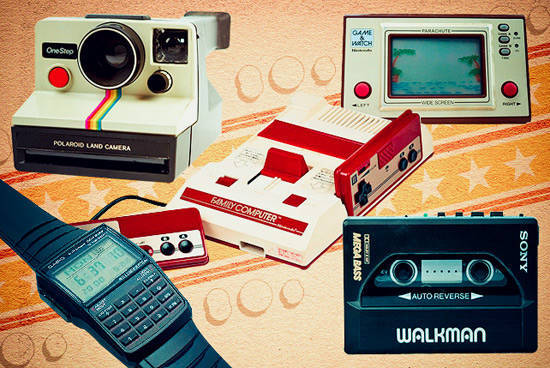
Life today without gadgets is unthinkable, isn’t it? Be it smartphones, tablets, laptops or a wide plethora of other goods and gadgets, we cannot imagine a single moment bereft of them. Without these gadgets would be like going back to the Stone Age! So take a moment to imagine how life would have been in the ’80s and ’90s when all these were just a dream and kids and teenagers were more than happy and content using the gadgets of that time (and going out more to play). Here are some gadgets which were hit back at that time-
Cameras
Remember the Kodak/Yashika camera running on reels? Before the advent of its digital counterparts, these cameras ruled our world, well our albums at least. With a limited photo quantity (Read: 36) these were our travelling companions and definitely the keeper of memories. Nowadays we have digital cameras, DSLRs and mobiles which can take umpteen photos. With a 47 mm lens and no pixel CCD sensor, photographers would have to look through the tiny glass hole present at the upward portion of the camera for adjustments as there was no screen on the camera.
Another one of our favourites, the boom box was our constant companion over to the gym/aerobics class and also the best way to kill time. What could be more pleasant than sitting back and listening to your favourite song at high volume? The same instrument also served as a recorder and we did record the voices of our near and dear ones, even of our own! These boom boxes or tape recorders had different kinds of cassettes; unlike the CDs and DVDs which we see flooding the market these days. They had magnetic tapes.
Another great addictive addition to this list, we all loved playing video games as children. Be it Super Mario, Duck Shooting, Olympic Games or Contra we were addicted to these games throughout our childhood. Who knew these video games would be replaced with computers and laptops in the coming decade. My personal favourite was the shooting games like Duck Hunt and Clay Shooting using the fake plastic gun which possibly contained an infrared mechanism attached to the video game CPU. My favourite companies were Nintendo, Sony, Sega and a couple of Indian version brands.
Before mobile phones took the world by storm and made it even smaller, pagers were the closest to their mobile counterparts. They could deliver alphanumeric messages or even voice messages in costlier models. I still remember how people with pagers would fondly and proudly display their device which was (most of the time) attached to their belts. Pagers have a small green screen where the messages flash on. Pagers support direct connection protocols and are faster than cellular-based communication and cannot be traced. Some of the popular companies which manufactured them were Motorola, Sony, Beetel etc.
This golden period also gave birth to headphones and walkman companies like Sennheiser, Bose, Sony Walkman and many others. The first step towards iPods these walkmans were our first personalized music companions and I remember starting to headbang with my first walkman!
Thus in addition to the above-mentioned gadgets, there were other gadgets too that rocked and ruled our world in the ’80s and ’90s. Listing them all would be a tough job to do! These were the top ones according to me.
Doing things en masse can be a great activity for socializing and having fun. Festivals all around the world are aimed at that, aren’t they? However, we humans have a tendency and affinity to celebrate the bizarre and the gross! We celebrate festivals to invoke a sense of togetherness and to enjoy ourselves. But what do you do when these festivals get more peculiar than you could imagine? Sit tight as Digital Dribble presents to you the 7 strangest festivals celebrated around the world!
Monkey Buffet Festival (Thailand)
While it may sound like quite the opposite, at the monkey buffet festival monkeys are (thankfully) not served on plates. Platters of fruits and vegetables are laid out for them. Held originally at Lopburi in Thailand, the monkeys are revered as forms of God. The macaque population there is so huge that they would be considered pests in other corners of the globe.
Every year on November 25th, huge plates of food are brought in for the monkeys of the region to feast and enjoy. While it has no significance, this spectacle is witnessed by hundreds and thousands of visitors every year in Thailand, boosting their tourism.
How can we not mention a major festival in the city which houses one of our favourite TV shows? (Read: Breaking Bad). In this event, a patrol balloon is released to make sure that all the weather conditions are suitable. Then several hundred balloons are launched from a massive 78-acre field. The celebration involves a host of activities including target dropping and races. Sometimes the participants travel as far as Canada!
The Albuquerque balloon festival began in early 1972 only with a handful of balloons. Today, the festival is the largest of its kind and it attracts visitors and tourists from all over the world.
The cheese rolling festival is believed to have first started in a village near Gloucester in England where there is a hill called Cooper’s hill. The first participant to get a hold of a block of cheese running down the hill wins!
If you doubt the popularity of this festival, then this might change your mind. Despite being an English festival, in 2013 the event had an American and a Japanese winner! Although the prize is the cheese itself, since the heavy cheese can reach speeds up to 70 miles per hour it is often replaced with foam. People have been known to seriously injure themselves while participating, so beware!
Now, this is one heck of a festival, surely. This festival is mainly dedicated to the city of Roswell which is famous for its alien encounters and the famous ‘Roswell UFO incident’. It aims to bring together believers and sceptics alike in a three-day grand event where everybody is encouraged to dress in alien costumes.
According to theories and reports, there was a UFO landing (rather a crash landing) at the site and the UFO contained extraterrestrial life. There is even an international UFO museum at Roswell The festival takes place every year in July which becomes a meeting point for alien enthusiasts and fun-loving people alike.
Another unbelievable and spooky festival is held in Spain where people who have barely escaped death celebrate together. And how! Though there are religions and cultures celebrating life as well as death, this festival celebrates people who have managed to evade death. In Spain, Santa Marta de Ribarteme is the saint associated with resurrection and therefore these people celebrate their newly found lives by marching in coffins!
Yes, you heard that correct! These coffins are borne by their family members and are done only after the attendees celebrate Mass. Hundreds of people watch as the people who have had near-death experiences are carried to a nearby cemetery on a hill where the procession moves in a circle and then returns.
Thaipusam Festival (Asian countries like India and Malaysia)
While it is a fashion statement for some, it is a ritual for others. An inordinate amount of body piercing can be seen in the middle of January in South-Indian states with a Tamilian majority. In Singapore too, the Tamil community celebrates this bizarre festival by walking three miles to seek blessings from the gods and asking for forgiveness.
The main ethos of the festival is to endure as much pain as possible- the more the pain endured the more blessings people expect to receive. Some devout devotees even attach hooks and pull heavy objects and vehicles like cars and trucks. This is usually preceded by a month-long strict vegetarian diet and abstinence as Hindus believe the purer the body, the more will be the capacity to endure pain.
This is the last one on our list and features an amazing battle of handmade rockets on the night between the Saturday and Sunday of Easter. The battle takes place between the people of the Virgin Mary Erethianis Church and the people of Saint Mark Church. It is advisable to book hotels well in advance as this event draws crowds numbering in thousands.
The road in between is filled with sparks and ear-deafening noise as the rockets swish past from one side to the other. Every year tourists visit this place for the spectacular display of fireworks and rockets and they even cheer for their team. Winning is decided on the number of rockets sent to the other side.
Crop circles were first discovered in the 1600s and are can be seen even today in large fields around the world, predominantly in the United Kingdom (UK). They got mainstream popularity in the late 1970s and to date, many such crop circles have been invented so far (more than 10,000), they have been researched and documented but nobody could find out the creator of these massive crop circles and it remains a mystery so far. As intriguing and mysterious as it may sound these crop circles spanned about hundreds of feet and the whole figure can only be visible from the sky and nowhere else. Although the crops would be burnt in most cases, they could also be fallen a few inches from the ground. Here we present to you 7 reasons why these crop circles are an enigma to all of us?
Who built them?
The first question that pops up in your mind is who built these massive patterns on the crop fields? Are these some kinds of hoax? Or built by someone else? Anyway, either of these theories is cool enough! Some cerealogists (people who study crop circles) say that these are messages left by intelligent life forms outside that of Earth. Others say these are mistakes or blunders caused by them! Fascinating isn’t it? But think of this: why travel intergalactic distances just to build a crop circle on a planet called Earth! WHY? But they are not from now and are mentioned even in the Bible and folklores preceding hundreds of years back.
Not only the United Nations, but countries such as Russia, Japan, and Canada have also all experienced crop circles. In most cases, they tend to be elliptical rather than circular. They have been found in more than 29 countries like Austria, New Zealand, Peru, Romania, Israel, Egypt, Chile, Uruguay, Malaysia, Spain, Turkey and many others in addition to the ones mentioned above. All of the above countries and countless others experience crops that are either burnt or bent and intertwined to form such massive complex geometrical structures. Thus the term ‘circle’ in a crop circle does not imply they are only comprised of circles, there are straight lines, triangles and a variety of other shapes and sizes that form a complex pattern.
In the 1970s Doug Bower and Dave Chorley claimed that they caused most of the crop circle hoax and their inspiration was an instance when a UFO flattened a swamp reed in Australia. Of course, the UFO was a rumour! The general idea was that any UFO when settles on such big fields tends to form an impression of its chassis by either burning or bending the crops and thus these crop circles would form. In the year 1991, these pranksters also came into the news when they claimed they created the crop circles by using simple tools like ropes, a plank of wood and some simple improvised machinery. But these too were declared as hoaxes, but Bower and Chorley did inspire many artists around the globe to create their own crop circle.
Another valid question that comes to our minds is if there are changes to the crops which are present inside the circle as opposed to the normal crops outside them. Well, guess what! Many scientists have claimed many different theories! According to some, these crops within the circle show long term exposure to damage while in some other cases they grew under controlled environments, studies show. Still, there is some heavy debate on that topic among various scientists. Some even believe a magnetic force causes the plants to re-align. A detailed study shows crops were heated from inside which caused such abnormalities, and that can only be caused by infra-sonic or ultra-sonic waves.
As mentioned earlier, they come in various forms and shapes. Elliptical crop patterns are much harder to produce than circular ones and some of them have so complex geometry that you could not even remotely imagine! They are shaped into vortexes or spinning and swirling circles of epic proportions. Some are done according to the Golden Ratio or ‘phi’ that exists all around us and is called the God Ratio. In another case, the inner circle was one-fourth of the outer circle in precise measurements. Such mind-boggling accuracy is hard to achieve by hand with the most modern tools available! Some even have the famous Pythagorean theorem or Euclidean geometry in them!
The soil inside these patterns are also examined for traces of ‘out-of-this-world-materials’ and you would not believe it when I tell you that researchers found the composition of soil inside them had traces of radioactive isotopes having short spans. Also, the composition of soil which is present there would be achieved only if the soil is baked to 1500C or more to produce distinct crystalline structure within it and the crops as well. Radioactive isotopes like Ytterbium 169, Vanadium 48, Bismuth 205, Rhodium 102, Tellurium 119m, Lead 203, Iodine 126, Europium 146, Rhodium 102m, and Protactinium 230 were also found and it must be noted that they can only be created at nuclear reactors! Little iron beads were also found at the site of the crop circles.
Who is out there?
At the end of the article, we can conclude by saying such precision and the presence of such radioactive isotopes suggests something bigger is at play here. Perhaps the most famous encounter was of Colin Andrews who wrote the book “Crop Circles- signs of contact” where he also explains his cow to have been slaughtered by laser and its internal organs and nerves removed; as if surgery had been done. Many people also claimed to have seen balls of light/energy trying to communicate with them and some scientists believe, extra-terrestrials are trying to send information to us via geometry and numbers. He also claimed to have seen a live crop circle form in front of his eyes and look like a small tornado. There are many films based on crop circles, “Signs” by M.Night Shyamalan being one of them. Have you seen it yet?






:max_bytes(150000):strip_icc()/jason-alexander-seinfeld-111323-d0a75da133ea4e9fb1ee786fb16bcc33.jpg )