India walked out on the Regional Comprehensive Economic Partnership deal and this article will serve to look at the critical aspects of India’s exit and explain the consequences in a broader aspect.
Coming to what Regional Comprehensive Economic Partnership is, a free trade agreement between several countries in the Asia Pacific region that includes member nations of the Association of Southeast Asian Nations (ASEAN); namely Indonesia, Brunei, Myanmar, Singapore, Thailand, Philippines, Laos, Malaysia, Vietnam and Cambodia. The ASEAN also includes five partners namely Australia, Japan, South Korea, China, and New Zealand. India which was supposed to be the sixth partner opted out of the agreement on November 4th, 2019.
The RCEP countries had a combined GDP at Purchasing Power Parity of $49.5 trillion and accounted for half of the world’s population and almost 40% of the world’s GDP, according to 2017 figures. RCEP was basically an answer to combat the already powerful NATO and G-8 countries’ influence throughout the world in terms of trade and influencing power.
The agreement was primarily formed to increase the free trade between the member nations by reducing trade barriers which would consequentially improve the economies of these countries.
Advantages and Disadvantages
To begin with, India’s businesses would have access to a huge market that accounts for 40% of the International Trade. And with the little to no trade barriers, Indian products can easily penetrate the deep reaches of these countries giving the country a much-needed economic boost. With the factors of production on a full drive, the country’s GDP would improve exponentially, that is what basic Macroeconomics dictates. But there is a catch here, and that catch is a huge economic powerhouse by the name of China.
The opening of markets is a dual effect, that is in reciprocation of other countries opening their markets to India, it is expected that India will do the same. The problem is that China is extremely good at flooding any country with its low-cost goods and at the present moment, over 60% of India’s trade deficit is on account of China. The situation is further complicated by the fact that India exports services (like IT/ITES services) and these services do not feature prominently in the RCEP agreement.
RCEP would bring in opportunities and growth in manufacturing through the process of GVC or Global Value Chain where big corporations delegate production to multiple countries like Vietnam, India and Thailand. But because of a lack of infrastructure, experts think that this benefit would be nullified in India. With labour costs rising in China (as it progresses), companies are looking to shift their bases of production to other countries. Chinese corporations could use this window to dump in extensive products in the country. In addition, India currently has a running trade deficit with the RCEP countries and RCEP countries account for almost 27% of the trade that India does throughout the world. This puts India in further peril as India exports than imports when ideally, it should be the other way around.
Prime Minister Modi, in his address at the RCEP summit held in Bangkok said, “The present form of the RCEP Agreement does not fully reflect the basic spirit and the agreed guiding principles of RCEP,”(ref). Piyush Goyal, our commerce Minister also lauded the Prime Minister’s decision and said that the move would develop the domestic industry under the “Make In India” campaign.
“Today, when we look around, we see during seven years of RCEP negotiations, many things, including the global economic and trade scenarios, have changed. We cannot overlook these changes. The present form of the RCEP Agreement does not fully reflect the basic spirt and the agreed guiding principles of RCEP. It also does not address satisfactorily India’s outstanding issues and concerns In such a situation, it is not possible for India to join RCEP Agreement,” (ref) Modi added in the Bangkok RCEP summit.
Goyal, in a meeting with the MPs, explained that while several small countries have only opened 50% of their markets to foreign players, India opened 74%. Thus, it is easily understandable that with foreign players looking to expand into India, the domestic players would be highly underplayed in the process.
“India has maintained that we will not be a signatory to the RCEP unless our domestic concerns have been addressed. We are just one among the 16 countries who have not signed. We were able to take this firm stand because of our strong and stable leadership,”(ref) Goyal said in his meeting before the BJP Parliamentary Party.
To conclude
India is a big market and a global economic powerhouse and without India, the whole FTA (Free Trade Agreement) within the RCEP countries would fall short of the ultimate objective of mutual progress. It remains to be seen whether India can convince the other member nations to put pressure on China to accept its terms. But for the time being, the remaining 15 member nations are ready to seal the deal coming year (tentative) and India as of today is out of the RCEP deal. India should use this opportunity to improve its uncompetitive export market which is the primary reason for a huge trade deficit with any advanced economy country in the world. Where Modi’s decision is right, however, remains to be seen. As the proverb goes, “Time will tell”.
“Marketing is no longer about the stuff you make; but about the stories you tell.”
-Seth Godin
Defining Experiential Marketing
Experiential Marketing may be defined as a marketing strategy that aims to engage customers into participating in the primary brand experience. Experiential Marketing aims to directly involve customers into active co-creation rather than just being passive respondents. A glaring example of this would be Apple retail stores.
Delving deeper
We are living in the era of the experience economy; more focus is being given upon creating a positive and relatable consumer experience. The entire marketplace has gotten rid of the primordial concept of selling a product and has embraced the concept of selling experiences. And storytelling is one of the major pathways that brands choose to share their side with their consumers.
In essence, any experiential marketing campaign must have the following three key elements-
Participation in the form of active engagement from the audience
Brand promotion (about its core message and values)
With the ongoing digital revolution and the interconnectedness of technologies and industries, consumers now look towards brands that provide them with much-needed value addition in their lives. And allowing the consumers to experience that value addition changes the game entirely, to a level that experiential marketing is a disruptor; disrupting the way primitive marketing used to work.
A positive value addition in a customer’s life reflects on the company too. One of the most efficient forms of marketing is the word of mouth which experiential marketing taps in effectively. Customers are more likely to believe their friends and family members than a campaign run by a brand.
Examples of Experiential Marketing
Following are few of the prime examples of experiential marketing-
Sensodyne in 2013 set up three zones beside the iconic Tower Bridge in London that provided different experiences to the people; Zone 1 had a dental check, Zone 2 had a giant molar where interested people could take selfies and Zone 3 served as an official Guinness World Record attempt for the Largest Oral Hygiene Lesson in the world.
Globetrotter in 2016 introduced a weather room in their stores that allowed customers to test out the German sporting and outdoor company’s gear on a more realistic level.
What is common in all these examples
In all the above examples, customer interaction with the brands was the maximum, thereby allowing customers the prime control on the steering wheel of decision and answer questions like- why to buy the product, how does this impact my life positively, what value addition will I get from this and so on. Today, companies and brands have already realized the effectiveness of experiential marketing and are leaving no stone unturned to effectively implement the same.
COVID-19 has delivered a devastating blow to the world economy and has forced companies to drastically change the way business is done. Seeing the condition at hand, companies must choose between two options. Either drastically reinvent themselves and their business process in the wake of the worldwide pandemic or succumb to the virus and surrender everything to it. Functional units within companies, therefore, need to reinvent the wheel in terms of basic business processes that drive the entire organization forward. Marketing, as an important function of any company, is no different in this regard.
Delving Deeper
Organizations are inherently very slow to change and require careful strategic planning in case of massive overhauling. This is truer for organizations that span multiple countries and geographies than start-ups that are quite reactive to macro-economic changes. The image below shows the three levels of Management of an organization. The bottom level has all the employees while the middle level has the middle Management, and the top tier consists of business leaders who steer the company’s growth and direction.
Operational Management contains within it, all the functional units like Marketing, Operations, HR, Sales, and Accounts, to name a few. Each function of a company serves a different purpose that together makes up the company as a whole. This Digital Dribble article will focus on marketing and how it has evolved during the pandemic to better serve the customer and the company alike.
COVID-19 has drastically changed the way consumers behave, and therefore it is fundamental that marketing efforts also align in that direction. Certain industries like essentials, e-commerce, gaming, edtech, and entertainment have flourished during the lockdown and have seen increased activity/business while other industries like travel and tourism, and hospitality have seen better days. This section aims to cover the current trends in marketing during COVID-19 to understand how global catastrophes urge marketers to change their way of thinking to suit their customers.
Online Marketing Boom
The image below shows a comparison of Google Searches along with the graph of rising COVID-19 cases. Three of the most important search terms were, ‘online shopping’, ‘online doctor’, and ‘food delivery’ and the image shows that as cases started to rise, the frequency of these terms being searched rose alongside it. Companies like Zomato and Swiggy have upped their ad spending on digital marketing, especially their YouTube advertisements while simultaneously focusing on ‘No Contact Delivery’ of the customer’s favorite food.
E-Commerce sales skyrocketed (30.1%) from 2019 to 2020, thereby driving digital adoption in many cases. At the same time, retail growth has been limited to only 4% showing the declining scenario of retail in the country (USA) in data compared between the first six months of 2019 vs 2020. Online spending accounted for almost 19% of the total retail sales in the first two quarters of the year 2020
Amazon.com is one of the few companies that have received a significant boost since the lockdowns began with data showing steady growth YoY (year on year) from the previous year. As more and more lockdowns were announced traffic increased further contributing to sales on the website. Customers on Amazon spend a whopping US$ 11,000 per second!
User Content Consumption Pattern
To understand the marketing efforts, it is important to understand the potential customer/consumer first, and during COVID-19 user content consumption changed drastically. It is evident that digital mediums have gained traction in the pandemic, but it is difficult to estimate quantitively due to the recency of the data and the fact that work across all spectrums has not resumed with full force yet impeding research. People in isolation are turning to entertainment to keep themselves occupied. Thus, this section will primarily aim to study the before and after consumption patterns of certain websites/apps/channels.
1. Social Media Platforms
Platform
Facebook
Instagram
Snapchat
LinkedIn
Twitter
Reddit
Parent
Facebook
Facebook
Snap Inc.
Microsoft
Twitter
Advance Publications
Google Play Store Downloads
5 Bn+
1 Bn+
1 Bn+
500 Mn+
1 Bn+
50 Mn+
Unique Users
2.6 Bn
1 Bn
315 Mn
660 Mn
330 Mn
430 Mn
Average Minutes per User
58 Minutes
53 Minutes
30 Minutes
17 Minutes
3.39 Minutes
10.38 Minutes
Use Case (Facebook)-
Facebook monthly active users have increased from 2,498 Million to 2,603 Million (4.2% increase) from Q4, 2019 to Q1, 2020.
Voice and video calls have recorded a 50% usage increase, while group calls have surged over 1000%. In Italy, people are spending 70% more time on Facebook and its sister applications.
In March more than 3billionusers logged on to any of Facebook’s applications.
The chart shows the usage of YouTube in the USA increased in the pandemic significantly (63.7%) as opposed to before. The data was from a survey conducted during the initial months of the pandemic, and as time progresses, the increase is only going to be more apparent.
3. Miscellaneous-
There are several different aspects of content consumption, and although it would be impossible to cover them all, the miscellaneous section attempts to cover at least the most important among them.
Virtual Conferencing Applications-
Zoom, Microsoft Teams, Google Meet have gained millions of users with Zoom’s usage jumping 30-fold in April 2020
Microsoft Teams recorded 560 Million minutes on March 12, 2020, which increased to 2.7 Billion on March 31st
Fig 4.1 Google trends of virtual meetings
Online Gaming-
Paytm First Games reported a 200% increase in its user base during the lockdown
Rummy Circle grew by more than 100%, and the target age group playing these games is the 18-45 group
Games that have seen an uptick in their activity are-
Marketing is one of the most crucial areas for a company. It is also one of the most unique as it is one of the few functions that face both the customer and the company. This involves understanding the customer and collecting key data that drives insights and in turn, strategies for the organization.
Some of the key strategies that are being followed throughout industries in the case of marketing are enumerated below:
A.Observing changes in customer behaviour and sentiment closely
Customers have been more trustful of local businesses than big corporations, and COVID-19 has only accelerated this consumer behaviour. Therefore, it is imperative that brands now more than ever:
Listen to customers and understand what drives customer decisions: They can do this by studying the impact of global phenomena like recessions or pandemics like COVID-19 on customer actions and correlate these with why customers are distrustful of big brands.
Stay true and honest to the claims that the brand makes: Marketers need to protect the sanctity of customer relationships and must stay true to what the organization can and can’t deliver to the end consumer. Customer trust is an asset for the marketer as well as the organization as a whole
B. Making the marketing plan adaptable
A good marketing plan is any plan that adjusts for the future. It is prudent to use base, worst- and best-case scenarios for any decision-making related to campaign spending and otherwise. Other areas that need focus are:
Brands must develop creative, alternate marketing efforts since events that target large groups of people within places like malls is not possible at the moment. They should focus on digital marketing since it is an arena that is becoming increasingly relevant each day.
Since everyone has the same opportunities and channels available to them businesses must focus on securing media to ensure that their products are seen by a larger audience.
C. Being ready for operational impacts
COVID-19 has significantly impacted supply chains all across the world. Factories & manufacturing facilities are closed all over, and supply chains and logistics have been disrupted, affecting the supply side of the equation. This led to wild price fluctuations of products. In this scenario:
It is essential to strip everything down to the bare necessities. Marketers must coordinate with other departments (especially manufacturing and production, sales, logistics, and finance) to understand which products can and can’t be produced due to the capacity constraints along with supply chain difficulties. For products that cannot be produced in the current scenario, it is prudent to remove all campaigns related to it so that the bottom line can be given space to breathe, so to speak.
Digital marketing is the most effective and efficient tool at hand. Therefore, marketers must realize that during times of global unrest, it is best to fall back on something reliable. Digital delivery needs to be ramped up by promotion of Facebook/LinkedIn Pages, Mobile Applications, Amazon/eBay shops, and by incorporating payments into the website or application.
Leveraging technology for eliminating redundancies is crucial for cutting costs. Business Process Re-engineering is one of the ways to do it. This ensures that the return on investment for any function inside the company is good and keeps continuously improving.
D. Other trends to keep in mind
The following trends need to be followed to reap maximum benefits:
Market from home: Home is the current battleground, with almost all organizations making work from home an option for their employees. Keeping this in mind, marketers can quickly design and deploy campaigns from the comfort of their homes, thereby having an edge over others.
Engage with empathy: As said before, listening to customers is now extremely important, perhaps more than ever. Market research teams need to deliver real-time customer data so that they can be converted into insights and implemented to further marketing efforts by the company.
Analysing the changing marketing strategies gives an insight into what works during times of stress. Detailed research on how to adapt to these uncertainties can better guide the organization into the future.
Interested in reading about how brands can revive themselves? Check out this Digital Dribble article.
The lexicon defines a “differently-abled individual” as someone who has a physical or mental disability that limits the individual from performing normal day to day functions. But the cold-hearted definition does not take into account emotions, it only defines the term as it is. It is therefore much prudent to refer such individuals not as disabled, but differently-abled, as there are examples aplenty wherein differently-abled people have achieved so much more than people without disabilities.
Statistics
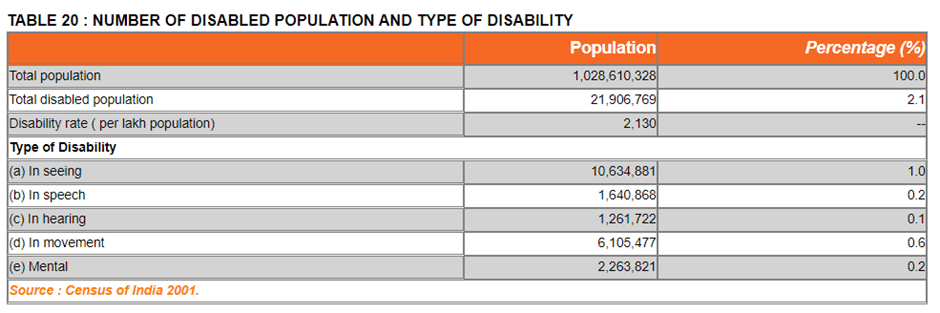
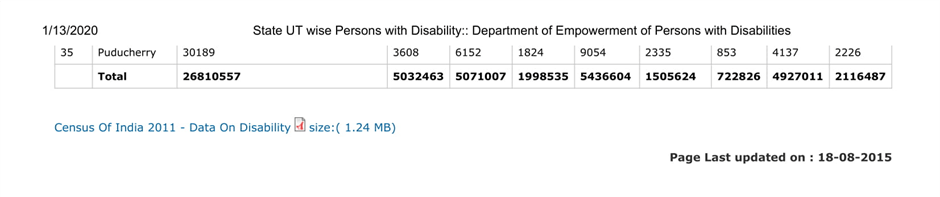
In India, according to the 2001 census, over 21 million people (2.1% of the population) are classified as differently-abled. Disability is sight is leading the list (owing to a severe shortage of corneas for replacement) followed by others.
Statewise, Uttar Pradesh leads the tally in the total disabled population and Lakshadweep has the lowest amongst all the states and the Union Territories.
Infrastructure can be both tangible and intangible and in the case of differently-abled, both hold equal and paramount importance. A country should not see its differently-abled population as a liability but as an opportunity.
Corporates
Law in developed countries such as Germany requires that at least 5% of their organizations must be filled by the differently-abled which if flouted will lead to heavy penalties by the government. Sensitivity training is another important issue that needs to be addressed by corporations in India; given how people are prone to treating the differently-abled as second class citizens.
Education
Education is of primary importance to a developing country such as India, and more so for its differently-abled personnel and for this, the universities, schools, and colleges must take up combined onus. Firstly, differently-abled students must be facilitated into various courses and basic guidance regarding career choices must be provided to all such students. Awareness and sensitization of teachers and fellow students and scholars is of utmost need, and of the ways of doing this is to observe important days like World Disability Day.
Basic infrastructures
Basic infrastructure must not be forgotten, and the following are some of the ways basic infrastructure can be enabled across a plethora of important landmarks-
All Banks, ATM’s and other places of importance should have a ramp for differently-abled individuals
Offices and even public restrooms must have a differently-abled section (there is a handbook of guidelines under the Swachh Bharat Mission)
Specialized entry and exit for differently-abled across the public transportation system
Footpaths (both outside and within public buildings/offices) that are friendly to walk for the differently-abled
Applications (mobile and PC based) that help in navigation and day to day functionality to be made more accessible to the differently-abled so that they gain value from the same.
Differently-abled people should have special legal support to ensure they don’t face discrimination.
To conclude, it is sufficient to say that gradual and steady steps in this direction, as mentioned above, will not only help the differently-abled, but will help the country and its economy as a whole.
“What mental health needs is more sunlight, more candor, and more unashamed conversation.”
Glenn Close
Setting the premise
Setting the premise
As the situation around us worsens progressively every day, something that needs to be talked about but isn’t given enough importance is mental health. The psychological impacts of quarantine on the brain can be significant.
The disorientating fact about mental health during a global pandemic is the fact that there are multiple dimensions to it. As more and more existing employees are furloughed and terminated and new employee offers rescinded, this induces extreme pressure and stress on the minds of those affected.
The state of lockdown triggers emotions of claustrophobia and induces a sense of desperation that arises from a need to move out of closed quarters. All this combined with the fear of contracting the virus itself bogs down on the mind deep enough to start causing problems.
Millennials and Mental Health
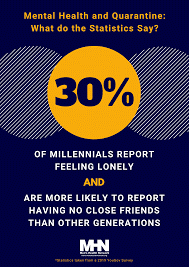
Millennials are one of the worst affected by the virus and studies show that millennial women are more prone to stress and anxiety. Some of the key contributors to this are financial independence, worries about parents and loneliness. It is ironic that in today’s technically advanced world with so many social networking websites available at the touch of a button, millennials are more friendless than ever.
For the last three years, I have been diagnosed with misophonia, a sound sensitivity disorder that had taken root within me causing anxiety and mild depression. Here are a few things that I at Digital Dribble, have personally been able to benefit from-
Guided Meditation- One of the best ways of combating anxiety, stress, and other mental issues is guided meditation. I have been personally using Headspace, a guided meditation application, and it has helped me tremendously to overcome my issues related to anxiety and misophonia.
Brahmi and Ashwagandha tablets/powder- Both of these help in relaxing the nerves of our body, thereby providing a soothing effect in addition to improving concentration, maintaining proper sleep, and also improving memory. A detailed account can be found in one of my Quora answers, here.
A healthy diet- As cliche as it may sound, a healthy diet can work wonders for the mind. In addition to eating, cooking healthy meals can also be relaxing as studies show that cooking your food has mental health benefits!
Daily freehand exercise- The effects of exercising daily cannot be underestimated. Exercise, even in closed-off surroundings, helps keep the brain fresh and active.
Furthermore, maintaining a daily routine by breaking up tasks into subparts can help a lot. It is crucial to focus on the positive aspects of life right now and to limit the amount and kind of media you consume to prevent an anxiety attack or stress. If you do find yourself struggling, you can combat loneliness by staying connected to your loved ones.
Stuck at home with a partner? Read how an exercise partner can improve your results!
AI adoption is happening at a breakneck speed all around the world and this article aims to find if COVID-19 has sped up or slowed down the adoption amongst various industries. In order for comparing the adoption during COVID-19, it is important to check the adoption undertaken to date. That will strive to give a base reference point for further study of the same. The chart below shows in percentage the adaptation of AI in different industries and under different functions.
Chart 1 – Adoption of AI in different industries under different functions (in %) (2019)
As seen from the chart above, Service Operations function dominates in the overall category while Product/Service development comes in at a close second. The particular function where AI is adopted also depends heavily upon the type of business as evident from the fact that the Automotive sector use most of its AI adoption in Manufacturing and Telecom uses it in Service Operations. Businesses remain lukewarm towards the adoption of AI citing reasons such as spending increased amounts of resources like money and time.
AI adoption entails a number of key factors and questions and some of them are enumerated below-
Whether it is relevant for the business in the long term
How much of a positive impact does AI adoption create?
Does the cost justify the benefits that can be reaped into the future?
What are the processes that are improved and how does that impact the current business?
Therefore, even if it is evident for businesses to adopt AI, they do not do so keeping in mind the short- and long-term prospects and other factors like Return on Investment (RoI).
Diving deeper
AI is an overarching term that encompasses many technologies such as Machine Learning and Natural Language Processing so it makes sense to look at the adoption rates keeping in mind the industry and the technology involved. The graph below shows the breakdown of AI Adoption in 2019 and again the type of technology used in a particular industry depends heavily upon the characteristics of the industry itself. High Tech is leading the other industries in usage and adoption of Machine Learning while Robotic Process Automation is rightly mostly used in Automotive Industry. Businesses in developing economies are increasingly utilizing the benefits of AI with each passing year. Reports by McKinsey show that high performing companies have a couple of key strategies that are similar to each other-
AI strategy is heavily aligned towards the business goals
Investing in AI training and talent pool
Collaboration that cuts across functional teams
Data Practices that follow a best practices pattern
Fig 2.1- AI in depthChart 2.2- Distribution of AI adoption under various specialized technologies (2019)
AI Adoption amidst COVID-19
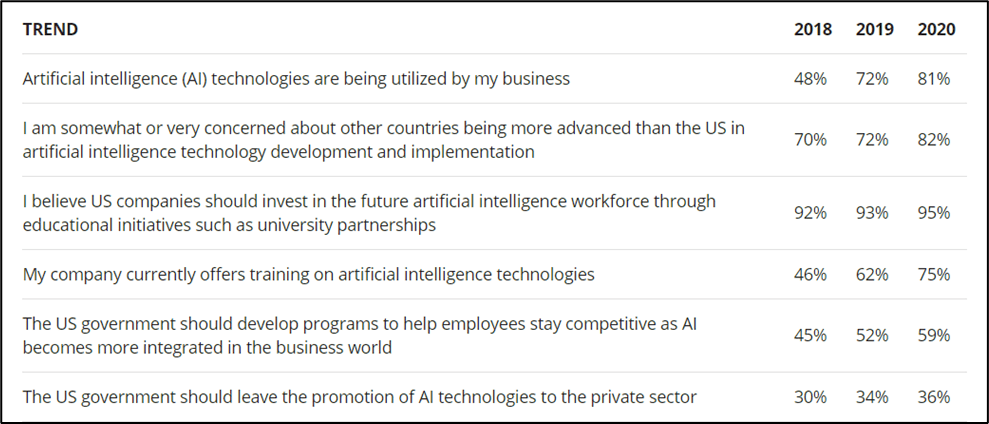
COVID-19 has accelerated the adoption of AI across industries with the Bain COVID-19 IT Buyer Survey stating that three out of four companies are planning to accelerate automation initiatives due to COVID-19. It is very likely that COVID has transformed permanently, the way businesses are conducted and now many are considering AI adoption to stay ahead of the curve. According to a RELX survey dated October 2020, AI usage has shot up massively to 81% which is a huge 33 percentage points increment over 2018 in the USA. The following image shows a three-year trend in the usage and adoption of AI across industries.
With COVID-19 dictating our lives and with the increased dependence on social distancing and work from home cultures, it is imperative that businesses embrace the AI advantage. AI ensures that there is minimal redundancy and the need for human labour for trivial, repetitive tasks is abolished. In addition, technologies such as the 5G will support and help AI adoption. Healthcare is one such area that is rapidly making use of AI amidst a massive paradigm shift. Some of the data points pertaining to AI adoption in COVID-19 are-
68% increased the spending on AI during the pandemic
77% of those surveyed agreed to the fact that AI technologies helped slow the spread of the virus
63% businesses agreed that AI helped them achieve a strategic advantage amidst the pandemic
However, there are concerns about the ethical usage of AI as many fear that in the wrong hands, AI can have devasting consequences. Decades of dystopian science fiction movies have done nothing to alleviate those fears and instead helped reinforce them. Fortunately, most AI usage in businesses are harmless and only strive to improve processes, optimize them and help reduce costs over the long run. AI adoption is one of the key factors of success against uncertainties and it is only fair that businesses start realizing that, for their own survival.
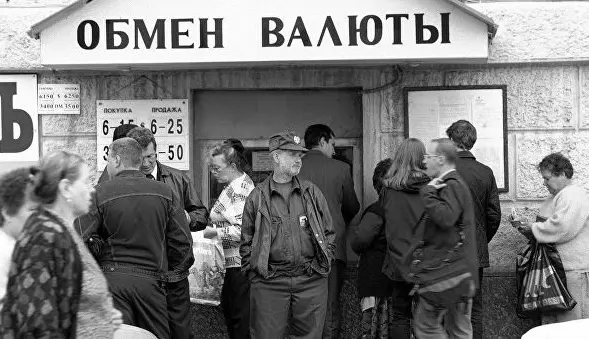
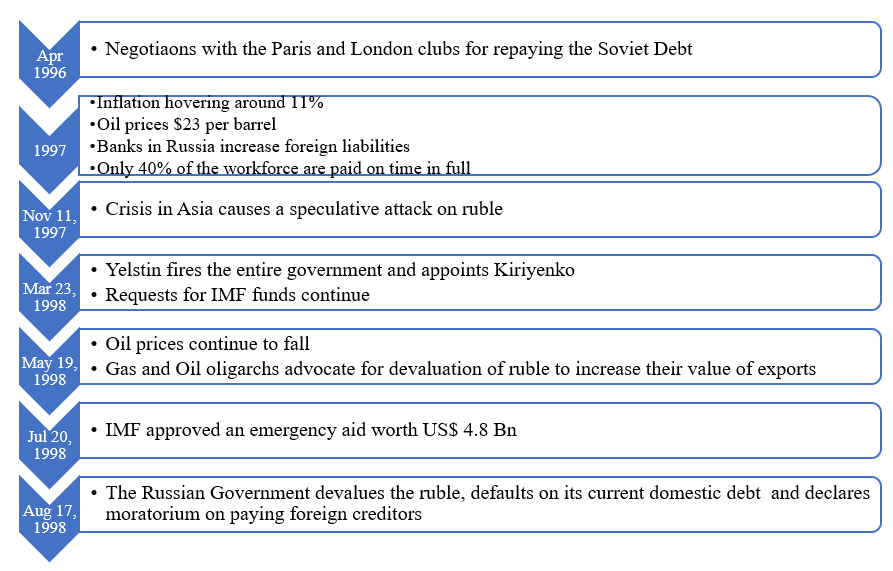
The Russian Crisis of 1998, also known as the Ruble crisis, hit the country on August 17th, 1998, against the backdrop of the collapse of the Soviet Union. The Union was then broken down into 15 independent countries. With Mikhail Gorbachev resigning from his post as the President of the Soviet Union, Russia came out of the post-Soviet period into a market economy. This economy witnessed a massive drop in living standards and inflation rose to a massive 300%.
As is common with many highly inflated currencies, people usually switch to a barter system rather than choosing to transact in the same currency. The massive inflation could be attributed to the fact that the Russian Government had huge deficits in their budget, which was financed by the Central Bank of Russia. This Digital Dribble article attempts to discuss the crisis in detail to understand the extent of the damage and pinpoint the effects it had on the Russian economy.
Visualizing the Fall
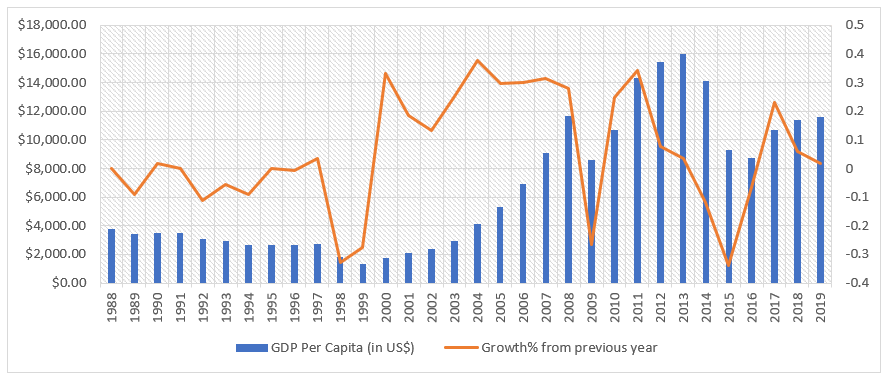
The chart below shows the year-wise per capita GDP and the growth rate for the same period.
According to the chart, the highest per capita GDP was achieved during the year 2013 when it almost touched US$ 16,000, and the lowest point was in the year 2000 with a GDP per capita of only US$ 1331.
Exhibit-1 (GDP Per Capita and Growth % over the years- 1988 to 2019)
Exhibit-1 (GDP Per Capita and Growth % over the years- 1988 to 2019)
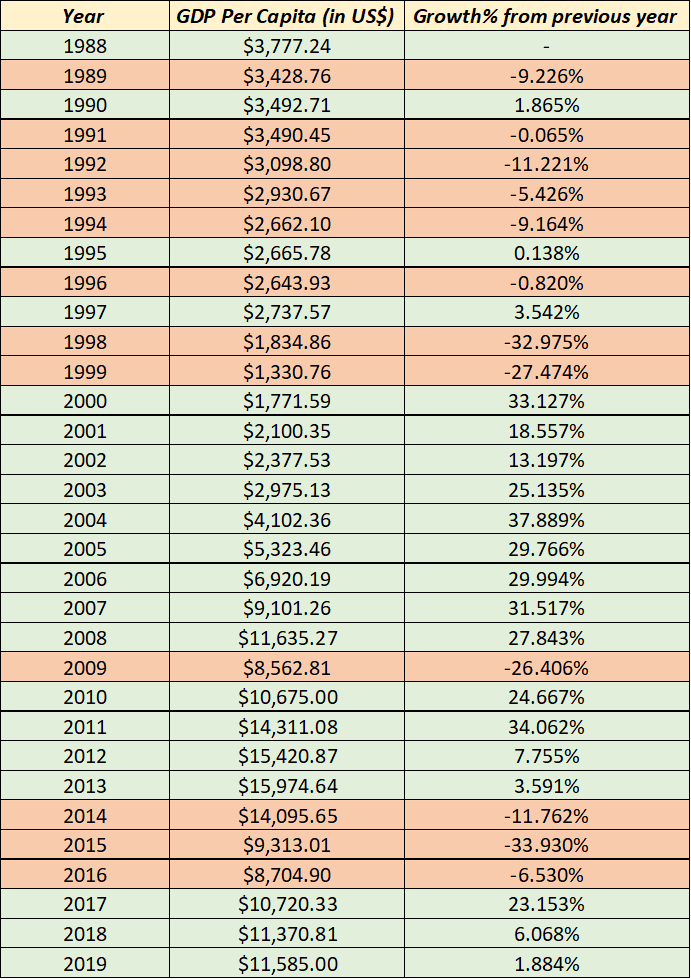
In the table below, the negative growth rates are highlighted in red. In 1998, the per capita GDP fell by almost a third (33%) which was followed by another big fall of more than 27% in the year 1999.
Exhibit -2 (Table of data showing the information for the graph above)
Exhibit -2 (Table of data showing the information for the graph above)
Surprisingly, the highest negative growth was not in the crisis of 1998 but in the 2014-16 Russian financial crisis in which the fall in per capita GDP was almost 34%, higher than that of 1998. The sharp dips in the growth percentage graph shown above will generally coincide with an economic crisis of epic proportions.
Delving Deeper
There is a need to dive deeper into the heart of the story of this crisis to analyze and dissect the lesson that can be learnt to steer clear of future mishaps.
There was some amount of effort, albeit feeble, to attempt to cut the deficit in the year 1995, before the crisis set in. The Government wanted to control the growth of money in inflation by maintaining the prices of the Ruble vis-à-vis the dollar
Exhibit -3 (Comparing Rubles with Dollars for the stock market)
Exhibit -3 (Comparing Rubles with Dollars for the stock market)
This helped in a way as the inflation was lowered to less than 50% in 1996 and Russia had access to strong international markets. Foreigners acquired Russian bonds, which helped in the appreciation of exchange rates. A rise in international reserves, a strong external current account and the appreciation of exchange rates helped cover the debt servicing costs of the country
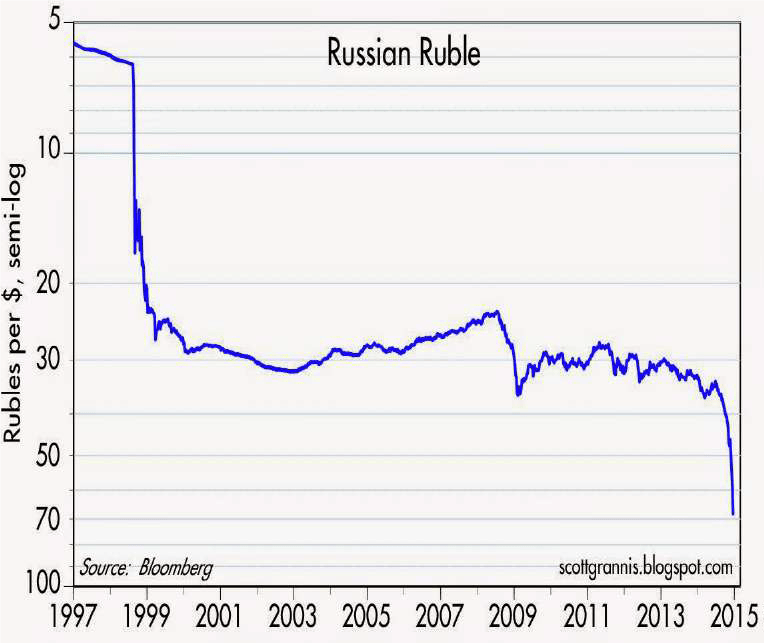
The sudden onset of the Asian crisis in 1997 deteriorated Russia’s position and terms of trade. There was a net 25% fall in the total exports
There were lower inflows from international markets, and the cost of access to foreign capital also rose steadily. Faced with a massive US$ 20 Bn debt repayment directive, the Central Bank of Russia intervened and sold foreign exchange reserves to defend the exchange rate
Exhibit-4 (Semi-log representation of Rubles per US$)
Exhibit-4 (Semi-log representation of Rubles per US$)
All these uncertainties were beginning to pile up on top of each other. To make matters worse, there was no effective macroeconomic policy to counter the disastrous effects of the crisis for the initial 6 months.
One of the key reasons for the fall was the contemporary Asian crisis which pushed the Russian crisis in the worst direction.
Timeline of Events
Impact on the Russian Economy
The financial crisis served as a wake-up call for the entire country. Besides having an immediate effect, it had long-term consequences, especially towards Russia’s efforts toward becoming a market economy.
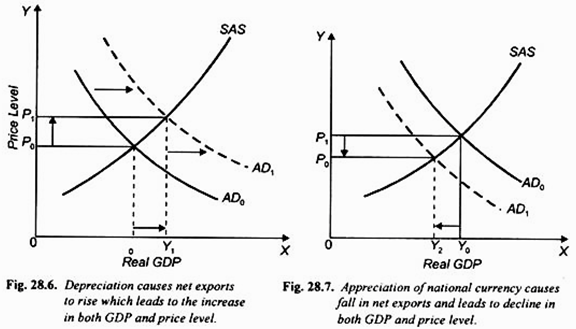
The depreciation of the ruble caused a rise in the prices of imported goods which led to greater inflation again. On the other hand, a devalued currency is more competitive for exports and aids in increasing the GDP of the country
Unpaid wages and pensions are another glaring issue that needs to be addressed for an estimated 30 billion rubles (US$ 1.7 billion by the end of 1998) remains unpaid
Exhibit-5 (Effects of Depreciation on the net exports and output of a country)
Exhibit-5 (Effects of Depreciation on the net exports and output of a country)
Investor confidence was also ruined because of the crisis; Russia had around US$ 40 billion in debt to both domestic and foreign investors, with foreign investors holding about US$ 17 billion of the debt share. The Central Bank of Russia announced that it wanted to pay back these investors using a combination of short-term zero-coupon bonds, cash and four-five-year-old coupon bonds paying variable interest rates (beginning with 30%)
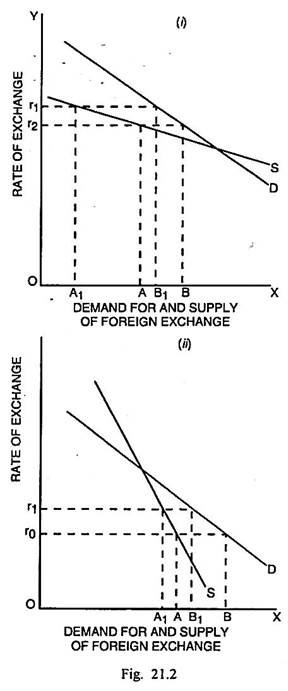
Exhibit-6 (Effect of the exchange rate change on Forex)
Exhibit-6 (Effect of the exchange rate change on Forex)
As shown by the picture above, the payments deficit for exchange rate r2 is AB and a depreciation in the exchange rates from r2 to r1 results in the reduction of export proceeds by an amount of AA1. This also reduces the payments for imports by BB1.
Finding a Silver Lining
Finding the good in the bad requires a lot of introspection, a positive outlook and courage. Here are some good things that came out of the financial crisis:
The high price of the imports (because of the devaluation of the currency) allowed local industries (like food processing) to manufacture goods and flourish, thereby setting up a strong domestic manufacturing system
The crisis taught the banking system of the country to diversify its assets into a well-built portfolio
Exports now became competitive, and Russia could now sell oil at highly competitive prices
Conclusion
There was bound to be some amount of friction post the collapse of the Soviet Union because Russia essentially changed everything that it was defined by until that point in time. Since 1991 when the country embarked on executing reforms and becoming a market-driven economy, there has been a continuous fall in per capita GDP, as shown by the graph and image at the beginning of the article.
The Ruble crisis further aggravated Russia’s journey toward a market-driven economy, and there has been a common consensus on this topic. However, history is not without invaluable lessons. With the lessons learnt, Russia could quickly recover from the crisis because of its dependence on oil prices which increased during 1999- 2000, leading to large trade surpluses with countries.
As is evident, the Central Bank of a country needs to maintain a monetary policy. The primary lesson from this article, in my opinion, would be the fact that the central bank of a country should anticipate threats before their arrival and prepare the economy to absorb any shocks, no matter how harmful they may be.
Logistics throughout the world is primarily done via three main channels- air, water and roadways. With increasing globalization, these three modes of transport now intermingle with each other to form a combined system of transportation called Multimodal Transport. With the advent of e-commerce all over the world, Multimodal Transport is essential for the effective transport of goods & services all over the continent.
This Digital Dribble article is divided broadly into 6 sections:
Logistics Industry in India
Upcoming Trends in Logistics
Technology Adoption
Technology in Multimodal Transport
Conclusion
References
Logistics Industry in India
The logistics industry in India is still largely unorganised and inefficient when looked at from a microscopic point of view. This section describes the current condition of the Indian logistics industry with the help of a few parameters.
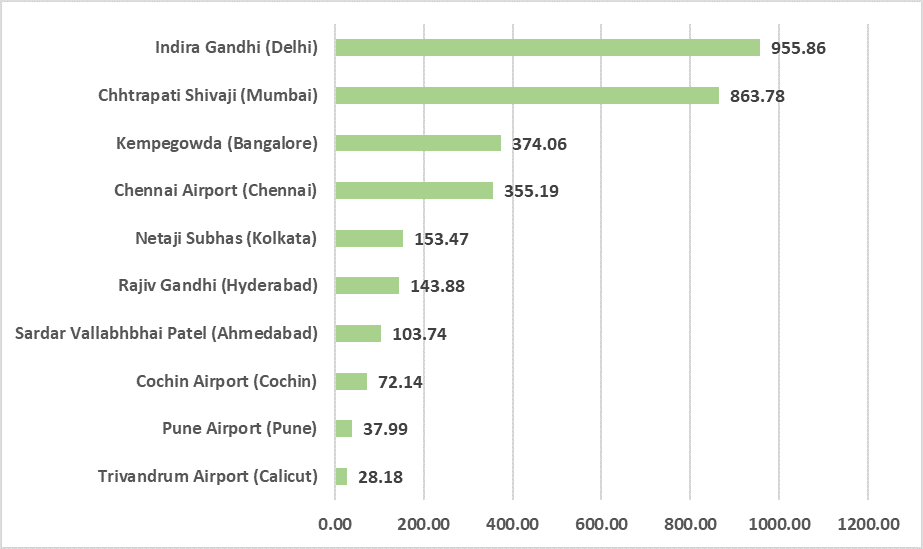
Developed and maintained by the World Bank , the Logistics Performance Index(LPI) is a tool to identify the potential opportunities and challenges faced by countries in the domain of logistics. The list is maintained for 160 countries across the globe. The graph below shows India’s ranks and LPI scores where the maximum score is 5.
India’s LPI rank and scores have fluctuated over the years. In 2018 India ranked 44th in the Logistics Performance Index. To improve the overall logistics of the country, India should aim to rank in the top 20. It is worth noting that almost all developed countries rank low on this scale.
The graphs and the excel image paint a clear picture of the country’s logistics performance. As is visible, there is ample room for improvement. The visible drop in cargo traffic at major ports is due to the detrimental effects of COVID-19. The average State and National Highway length is 7,069 Kms. Most of the states or union territories from Assam to Chandigarh all have below-average lengths. As ports, cargo airways and road networks develop and grow stronger, logistics will follow suit.
Upcoming Trends in Logistics
Upcoming trends in Logistics (2020 and beyond)
Technology is changing and will continue to change the future of logistics for the years to come. The 10 top technologies that will have the most impact in the coming years are:
Internet of Things (IoT)
Artificial Intelligence (AI)
Robotic Process Automation (RPA)
Last Mile Delivery
Warehouse Automation
Data Analytics
Cloud Computing
Blockchain
Autonomous Vehicles and Drones
Elastic Logistics
Percentage breakdown of the trends in 2020 and beyond
Technology Adoption
This section will talk about the various advancements in technology and how it is combined with logistics to provide value addition to all its stakeholders. Here is how the top 5 trends will affect impact logistics:
1. Internet of Things (IoT)- Internet of Things simply means the provision of and the ability to connect and control a wide variety of physical objects (which are meant for normal day-to-day usage) with the help of the internet, sensors and software.
Proposal- Since IoT devices need an underlying internet connection all the time, a strong Wi-Fi connection is integral. The advent of 5G will increase the speed of data transfers, reducing latency. This technology will be particularly helpful in the logistics involved in perishable products.
Usage- Sensors built onto containers or RFID tags that help monitor the product will be used throughout the entire chain of the journey thereby helping achieve Supply Chain Visibility (SCV). Fully integrated logistics companies see a 20% rise in efficiency than non-integrated ones.
Start-up in the field-Fleetroot is an UAE based start-up which offers companies an IoT platform for effective fleet management. It provides fuel management solutions by generating detailed reports about fuel wastage and consumption.
2. Artificial Intelligence (AI)- AI has made huge leaps in recent years and companies have leveraged it to their advantage.
Proposal- AI algorithms juxtaposed with Machine Learning (ML) help companies in a plethora of ways. Artificial Intelligence and Machine Learning are being used by companies in every field possible. The high cost of initial investment is easily justified by the cost savings and returns in subsequent years
Usage- Demand forecasting, optimised routes with the help of Google Maps and process automation are some of the ways AI and ML can be used
Start-up in the field- Adiona is an Australia based start-up that helps other companies improve their logistic processes and reduce overall costs. It also optimises delivery routes and supports complex decision making.
3. Blockchain- Satoshi Nakamoto’s can be used ingeniously in logistics management as well. Despite the fact that the intricacies of blockchain are largely unknown to the general public due to its complicated technicalities, the database is still used by industries across the globe.
Proposal- The open ledger system can be appropriately used to share sensitive data across the logistical journey of the product/asset. No third-party software or companies would be needed to interface at multiple points, a network of seamlessly updating ledgers would take their place
Usage- From enabling card-less B2B payments and tracking of perishable items, to tackling the influence of counterfeits in pharmaceuticals, blockchain is definitely a boon for the logistics industry
Start-up in the field- The USA based start-up,ShipChain manages the end to end shipping process by leveraging the power of blockchain. The platform provided by the start-up allows its customers to track shipment locations at every step of the logistical journey
4. Robotic Process Automation (RPA)- RPA helps in eliminating the need for humans to do repetitive tasks thereby saving precious resources and enabling increased productivity, efficiency and reduced overhead costs and errors.
Proposal- There are a lot of manual, repetitive tasks in logistics that can be minimised by implementing RPA. It is worth noting that RPA involves human processes amalgamated with technology.
Usage- Here are a few ways RPA can be implemented:
Using RFID tags within the logistical process to locate a product instantly
Automatic invoicing, automated inputs of purchase orders
To prevent the counterfeiting or smuggling of important assets using appropriate sensors
Start-up in the field- Actimai combines big data and AI along with RPA to provide customised solutions that are optimizable, manageable and deployable to its customers
5. Autonomous Vehicles and Drones- One of the most anticipated technologies for logistics and warehousing companies is autonomous vehicle and drone technology. Once mainstream, this technology would help reduce human errors and also help connect the inaccessible terrains of any country to the mainland.
Proposal-Drone enabled delivery would increase the efficiency of logistics companies and would tie in with the overall technological strategy of the organisation. Amazon has even patented the idea of a floating warehouse which would have its own set of drones for easier accessibility and fulfilment of orders
Usage- Drones, Unmanned Vehicles and Trucks, Driverless Shipment Transport
Start-up in the field- A start-up from Germany called Spring offers an autonomous fleet of vehicles for transportation of goods along with analytics and intelligent systems
Technology in Multimodal Transport
Multimodal transport uses current as well as upcoming technological trends. Some of the technologies used in multimodal transport are:
Intelligent Transport Systems (ITS)-
Traffic Management and Information Services- provides real time traffic management offering increased efficiency and transparency
River Information Services- RIS is used for the smooth and effective optimization of traffic in the inland navigation and helps in the real time exchange of information between shore and water
Freight response management system- This is a kind of ICT (Information and Communication Technology) that improves operational efficacy, reduces empty runs with the help of better planning of routes, improves utilisation of infrastructure leading to customer satisfaction
Terminal & Port ICT- This technology reduces the unloading and loading times at terminals and improves the utilisation of the terminal infrastructure, achieving seamless transfer of cargo through efficient interfaces between transhipment points. It also reduces operational costs
Conclusion
The future of logistics depends as much on development in the channels (air, water and road) as development in technology. This article aimed to provide a preliminary view into how technology is currently changing and will continue to change the face of logistics management all over the world. Interested in reading more about how technology affects businesses? Check out this article.
“I knew that if I failed, I wouldn’t regret that, but I knew the one thing I might regret is not trying.”
-Jeff Bezos, founder, and CEO of Amazon
Entrepreneurship is tough and not everyone’s cup of tea. It means fighting continuously for an idea that someone believes in. This Digital Dribble article shows the various aspects of entrepreneurship during this global pandemic.
We will begin by analyzing the current impact of COVID-19 on the world as a whole and India in particular. Then we will delve into the impact of COVID-19 on entrepreneurship. Finally, we will look at a few examples of entrepreneurs battling against the current and making their mark.
The Impact of COVID-19
Covid-19 has been disastrous for the world and although the death rate has steadily declined, it continues to wreak havoc even today. The deadly virus is now ubiquitous but not all countries have been hit equally hard. While there are supply chain issues that need to be addressed. vaccinations have already begun in several countries
Despite its massive population, India has been able to control the virus much better than other countries. With mass vaccinations of target age groups already in progress, it is not long before India becomes completely free of the current nightmare.
Impact of COVID-19 on Entrepreneurship
COVID-19 has been pernicious for entrepreneurship, as is evident from the image below. It shows the drop in the creation of firms/companies during March and April 2020, the inception of the pandemic, and a grim foreshadowing of the harshest months to come. Portugal’s 70% decline and Turkey’s almost 60% decline support the statement that COVID took a harsh toll on the economy.
However, there is also a silver lining to be noted here. Many start-ups have emerged from crises. Uber, Airbnb, Groupon, and Pinterest were all formed post the global financial crisis. Companies that offer radical change and innovations in the fields of home delivery, telemedicine, ed-tech, and medicine delivery can become overnight stars in the age of the pandemic.
The image below shows the amount of post-entry employment growth for digital and non-digital companies after a specific number of years. Digital companies have the highest post-entry employment growth which helps in job generation and changing the face of the economy.
How has COVID-19 Changed the Entrepreneurship Landscape?
In addition to disrupting entire industries, COVID-19 has turned the entrepreneurship landscape on its head. It has forced entrepreneurs to adapt to survive and become creative with the limited number of options in their hands. The transitional effect of COVID-19 is here to stay and entrepreneurs would be prudent to embrace the disruption instead of allocating resources to combat it.
Some of the changes that have now become part and parcel of an entrepreneur’s life are enumerated below:
The Increased Usage of Webinars
With lockdowns and social distancing in effect for more than two years now, webinars have become the norm of the day. They are being actively used by entrepreneurs to discuss ideas, achieve thought leadership, get funding and find leads for their companies. These webinars offer a slew of advantages:
Webinars have now taken the place of traditional conferences at a fraction of the cost of their counterparts
Webinars are soon to become a mainstream marketing strategy as they offer an excellent way to interact with customers and get them on board to buy the company’s new products/services.
Companies like Zoom, Microsoft Teams, Skype are facilitating the supply of catering to an increase in demand for video conferencing options. Zoom’s share price has more than tripled during the pandemic.
Content=King!
Research shows that COVID-19 has accelerated digital adoption by 2 to 3 years. As brands, entrepreneurs and organizations understand the importance of digital marketing and, more specifically social media marketing, the importance of content will become increasingly evident. Social media marketing has to be utilized effectively to reap benefits. For instance, being overtly promotional discourages potential customers from interacting with the brand. Content must add value to the customer’s life.
Entrepreneurship is one of the most challenging endeavours to take up during a pandemic. This section is the literal embodiment of the phrase, “when the going gets tough, the tough get going”.
Combining Social Cause and Business
This LinkedIn post is the perfect example of thinking out of the box and making decisions that benefit society. Kushal had an offer from one of the best colleges in the country (Indian School of Business) but instead chose to manufacture PPE kits to help frontline workers and essential personnel combat the pandemic. It is because of entrepreneurs like Kushal Agarwal that India which started as a country deficient in PPE kits, went to became its 2nd largest manufacturer during the span of the pandemic.
Mumbai housewife Veena Manek’s life changed when she got a request to bake a birthday cake amid the ongoing lockdowns. This led to the inception of ‘Blissful Indulgence Mumbai’ which went from receiving 1 to 2 orders a week in the first month, to receiving 7 to 9 orders a day! This goes on to show that finding and exploiting someone’s niche area of interest can lead to successful businesses during times when even large corporations are struggling.
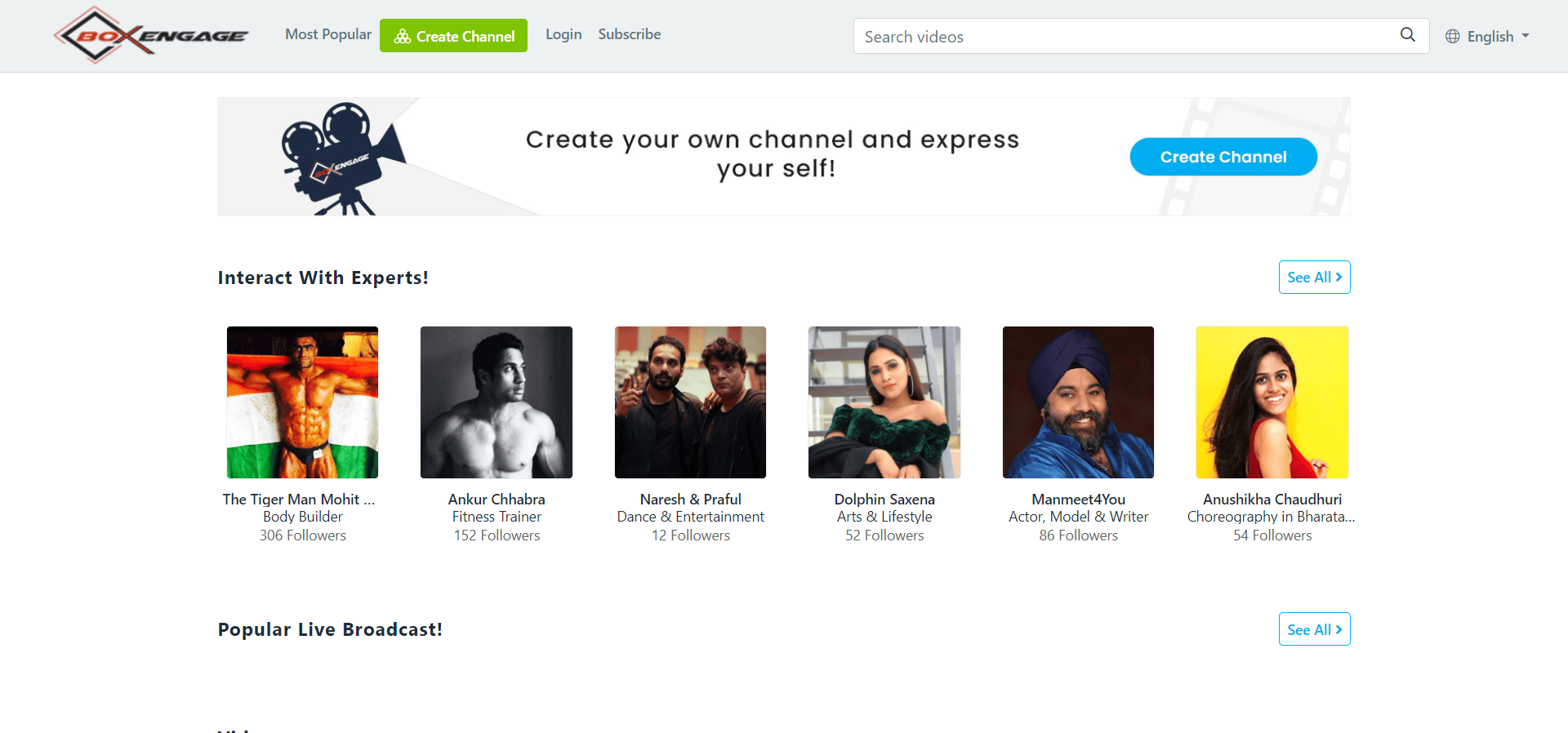
GoParties was an entertainment tech start-up that focused on giving real-time updates about all things entertainment like parties, concerts, bands and artists in the user’s city. COVID-19 had hit the entertainment sector pretty hard and the founder Shivaarti Bajaj knew that the landscape post-COVID would be entirely different.
GoParties pivoted to BoxEngage, an online video-sharing platform that is touted as the next Twitter. It became viral as the government banned 59 Chinese Apps throughout the Indian subcontinent. With more than a million users currently using the platform, it is seeing organic growth to the tune of 70% to 80% and there are plans to launch an app soon.